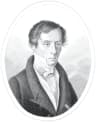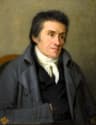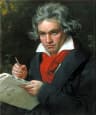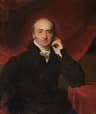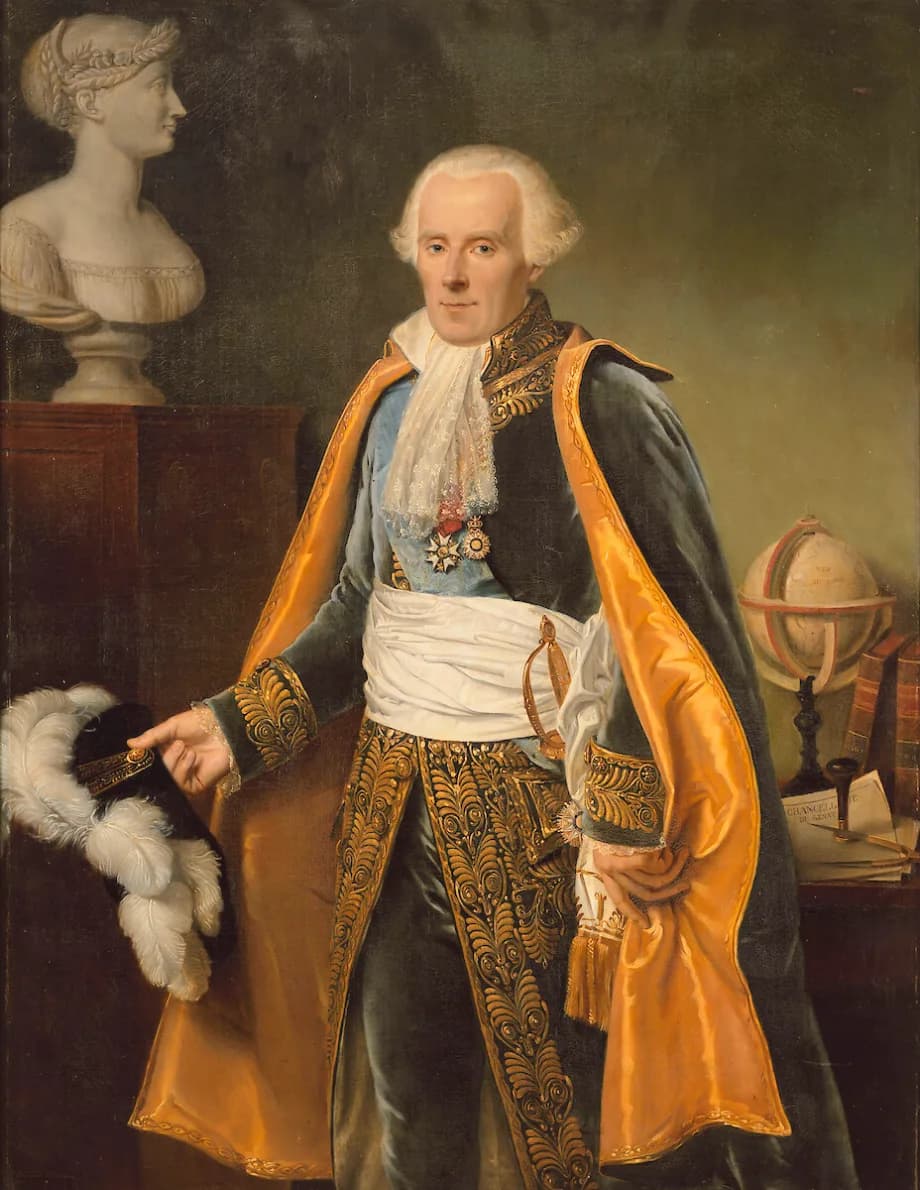
Jaioa
March 23, 1749
Beaumont-en-Auge, France
Hila
March 5, 1827
Paris, France
Ezaugarriak
French mathematician and astronomer
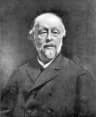
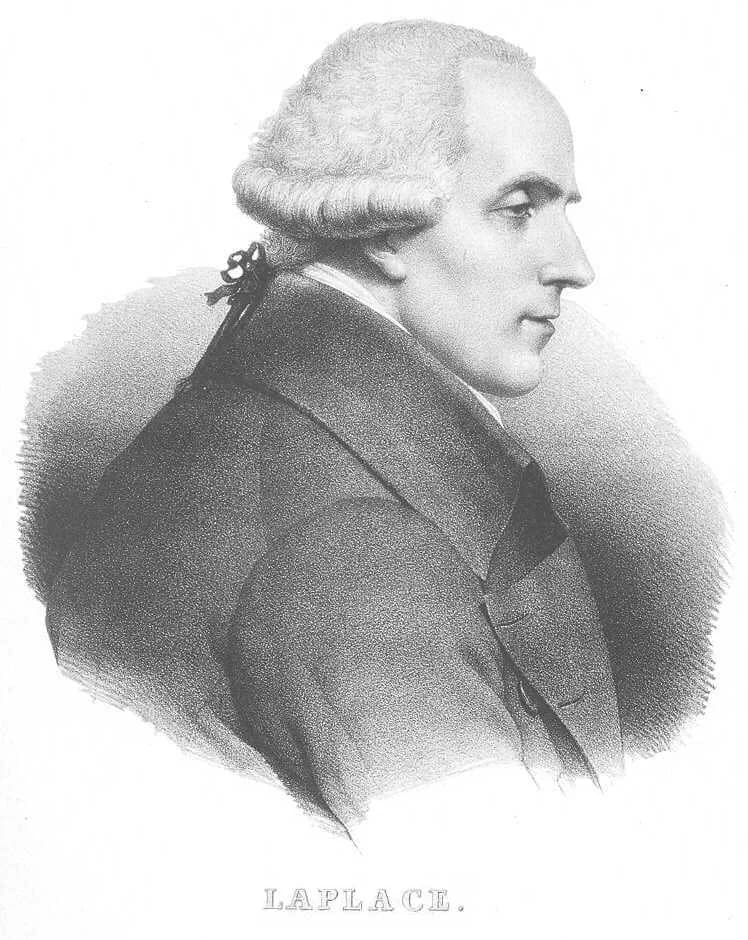
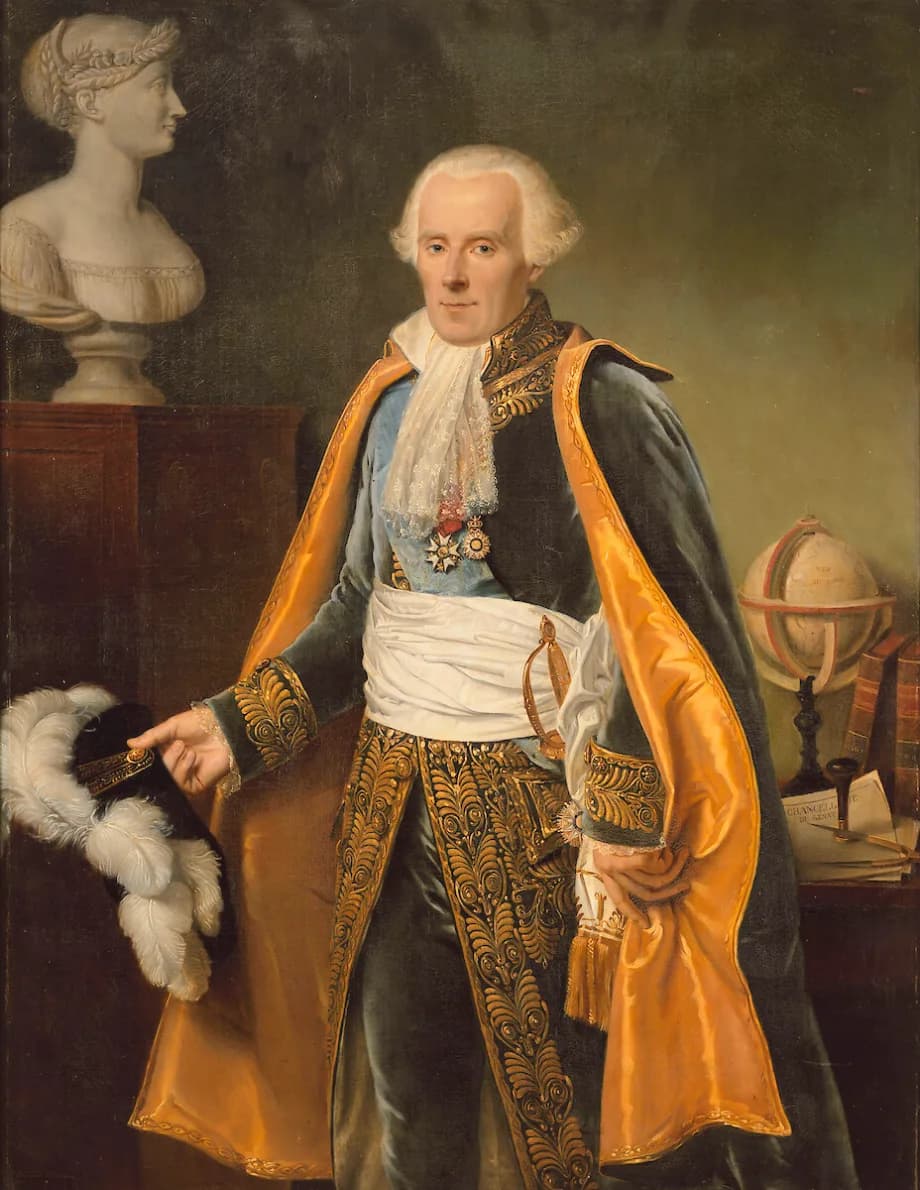
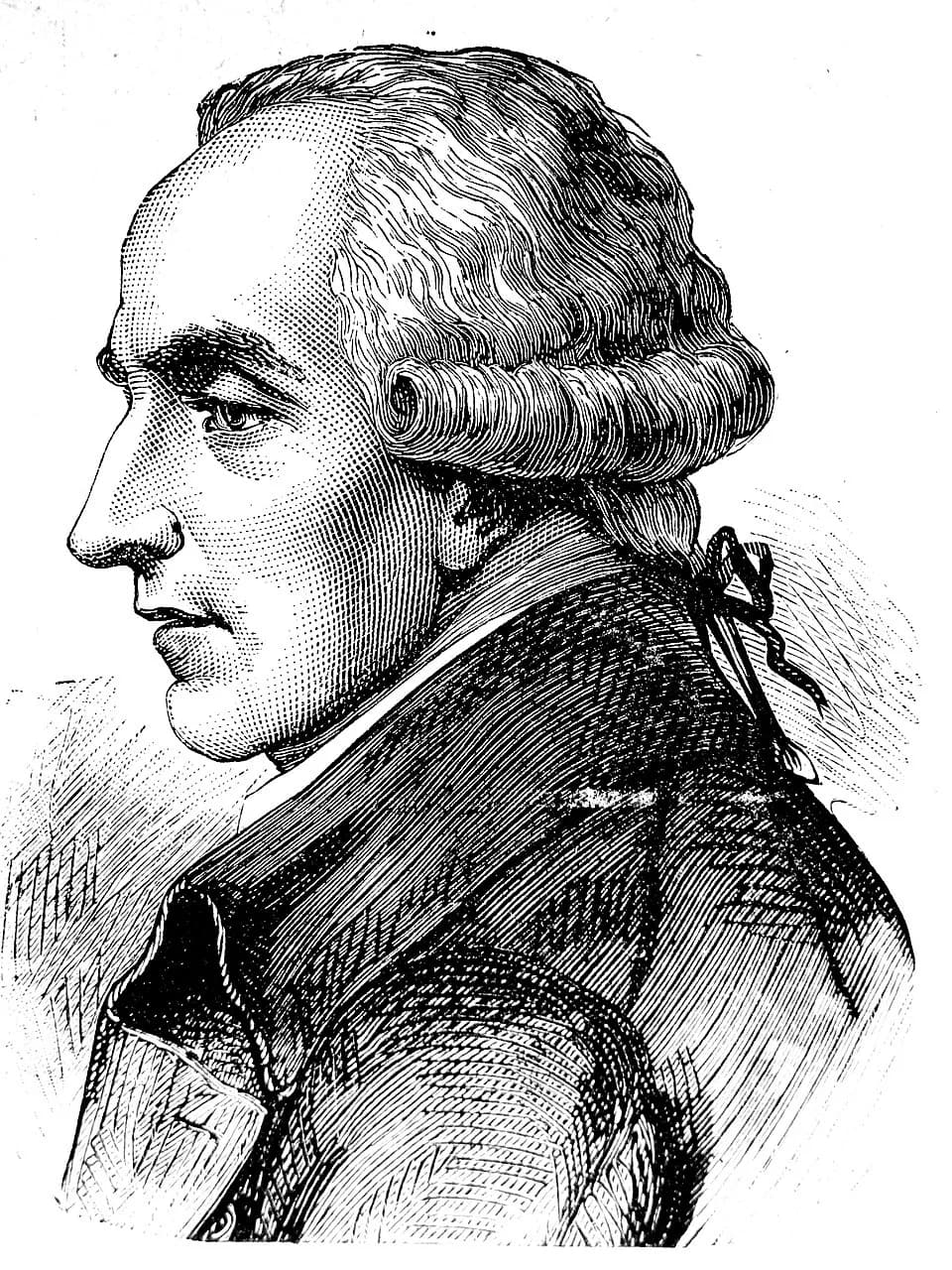
Pierre-Simon Laplace (1749–1827) was France best known for French mathematician and astronomer.
Pierre-Simon Laplace (March 23, 1749 – March 5, 1827) was a French mathematician and astronomer from Beaumont-en-Auge. He was instrumental in summarizing classical mechanics and developing the Bayesian interpretation of probability, leaving a lasting impact across scientific fields.
0 kapitulua
Bizitzako kapituluak
1 kapitulua · 1749· 1. kapitulua 8tik
Opening
Pierre-Simon Laplace (1749–1827) was a distinguished French mathematician and astronomer, whose extensive work spanned numerous scientific disciplines. He was a polymath, making instrumental contributions to fields such as physics, astronomy, mathematics, engineering, statistics, and philosophy. His intellectual rigor and prolific output left an enduring mark on scientific thought.
2 kapitulua · 1749· 2. kapitulua 8tik
Early Life and Origins
Pierre-Simon Laplace was born on March 23, 1749, in Beaumont-en-Auge, France. Details of his early family life are not extensively provided, but his birth in this region of France marked the humble beginnings of a future scientific giant. His early environment in Beaumont-en-Auge nurtured the intellect that would later redefine several scientific realms.
3 kapitulua· 3. kapitulua 8tik
Career Beginnings
Laplace embarked on a career that quickly established him as a significant figure in the scientific community. His foundational work built upon the insights of his predecessors, which he meticulously summarized and expanded. He dedicated himself to translating the geometric study of classical mechanics into a framework based on calculus, opening new avenues for problem-solving in the field.
4 kapitulua · 1799· 4. kapitulua 8tik
Major Achievements and Career Highlights
Laplace's career was marked by numerous significant achievements that advanced scientific understanding. His most celebrated work, the five-volume Mécanique céleste (1799–1825), served as a grand synthesis of classical mechanics, moving it from a geometric perspective to one rooted in calculus. This monumental undertaking expanded the scope of problems that could be addressed in celestial mechanics. Beyond his original contributions, Laplace also played a crucial role in popularizing and reinforcing Sir Isaac Newton's earlier work, ensuring its broader acceptance and understanding. In the field of statistics, he was a primary developer of the Bayesian interpretation of probability, a concept that continues to be fundamental in modern statistical analysis.
5 kapitulua· 5. kapitulua 8tik
Personal Life
While Pierre-Simon Laplace's professional accomplishments are extensively documented, specific details regarding his personal life, family, relationships, or private interests are not provided in the available information. His dedication to science likely consumed much of his time and focus.
6 kapitulua· 6. kapitulua 8tik
Notable Works or Contributions
Laplace's legacy is firmly established through his prolific writings and academic endeavors. His seminal Mécanique céleste is a cornerstone of modern astronomy and physics, embodying his shift to calculus-based mechanics. Another significant contribution is the Essai Philosophique Sur les Probabilités (Philosophical Essay on Probabilities), which elaborated on the principles of probability theory. Other notable works include Séances des Écoles Normales; Volume 1, various volumes simply titled Oeuvres de Laplace, OEuvres Complètes de Laplace (Volume 13 and Volume 3), and Précis de l'histoire de L'astronomie. These works collectively demonstrate his vast intellectual range and commitment to disseminating scientific knowledge.
7 kapitulua · 1827· 7. kapitulua 8tik
Later Years
Pierre-Simon Laplace continued his scientific and public service endeavors throughout his life. He passed away on March 5, 1827, in Paris, France, leaving behind a profound intellectual heritage. His death in the vibrant scientific hub of Paris marked the end of an era for one of France's most influential thinkers.
8 kapitulua· 8. kapitulua 8tik
Legacy and Impact
The enduring legacy of Pierre-Simon Laplace is evident in the fundamental shifts he brought to several scientific disciplines. His work in physics, astronomy, and mathematics provided a robust framework for future generations of scholars. By translating classical mechanics into a calculus-based system, he equipped scientists with more powerful tools for understanding the universe. The Bayesian interpretation of probability, developed largely by Laplace, remains a vital concept in statistics and continues to influence diverse fields today. His comprehensive summaries and extensions of earlier works solidified existing knowledge while paving the way for new discoveries, ensuring his name remains synonymous with scientific excellence.
Bizitza uneetan
Bizitza moldatu zuten uneak

Ohiko galderak
Maiz egindako galderak
Noiz hil zen Pierre-Simon Laplace?
Pierre-Simon Laplace 1827(e)ko martxoaren 5(a) hil zen Paris, France-n, 77 urte zituela.
Non jaio zen Pierre-Simon Laplace?
Pierre-Simon Laplace Beaumont-en-Auge, France-n jaio zen 1749(e)ko martxoaren 23(a).
Zertarako da ezagunena Pierre-Simon Laplace?
Pierre-Simon Laplace ezagunena da French mathematician and astronomer-rengatik.
Zenbat urte zituen Pierre-Simon Laplace-k hil zenean?
Pierre-Simon Laplace-k 77 urte zituen hil zenean.
Zer nazionalitatekoa zen Pierre-Simon Laplace?
Pierre-Simon Laplace France-koa zen.
Denbora-lerroa
Bizitza begirada batean
Argazki galeria
Bizitza iruditan
Egin klik edozein polaroidetan handitzeko · 50 argazki
QR kodea
Partekatu Biografia Hau
Inprimatu eta partekatu
Eskaneatu biografia orri hau bisitatzeko. Inprimatu ekitaldi, erakusketa edo hezkuntza materialetarako.