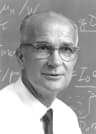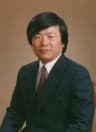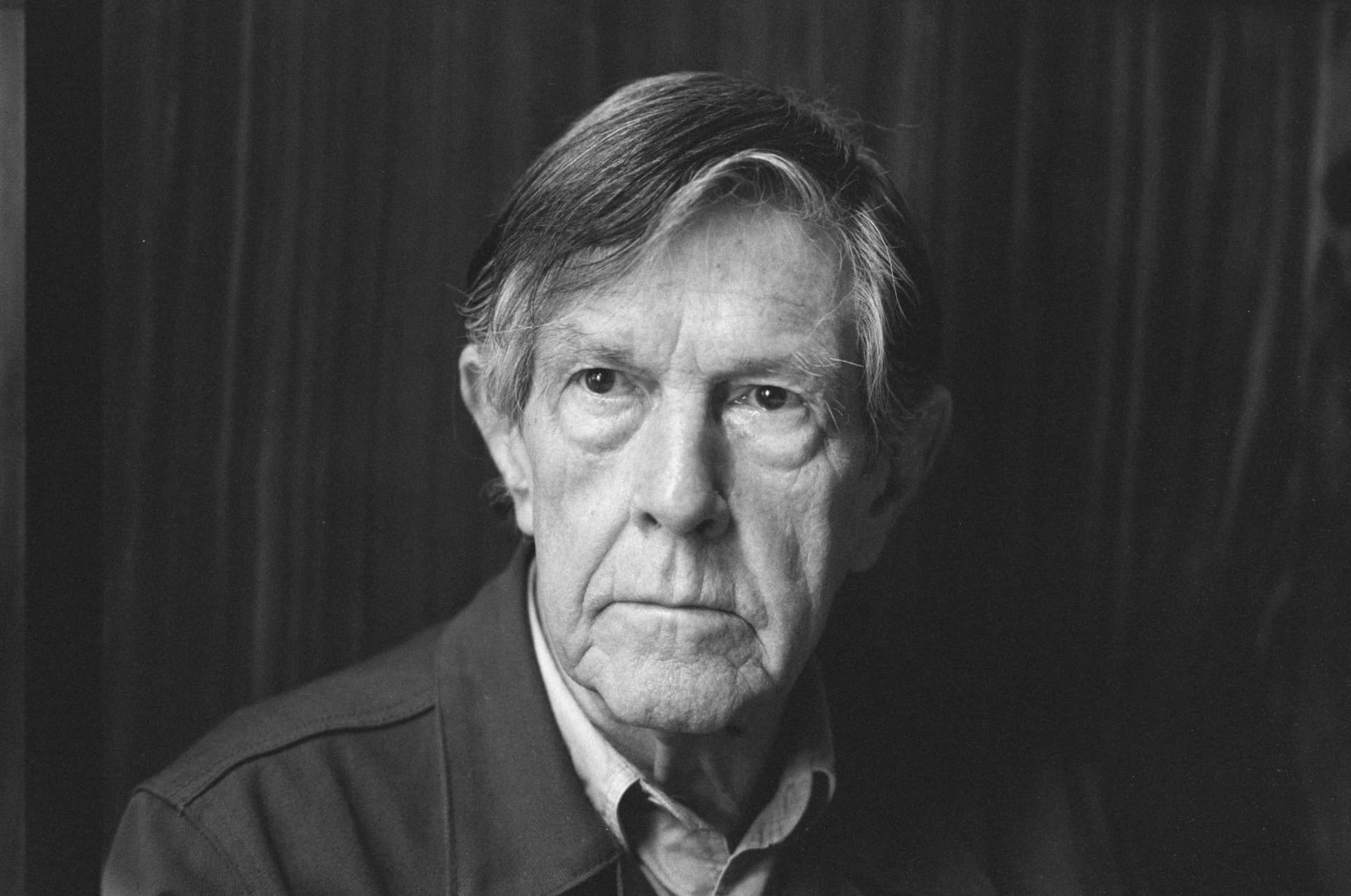
Jaioa
September 5, 1912
Los Angeles, United States
Hila
August 12, 1992
New York City, United States
Ezaugarriak
American avant-garde composer
John Cage (1912–1992) was United States best known for American avant-garde composer.
John Milton Cage Jr. (September 5, 1912 – August 12, 1992) was an American avant-garde composer. He pioneered indeterminacy in music and electroacoustic sound, redefining musical boundaries. His work continues to influence artists across many disciplines.
0 kapitulua
Bizitzako kapituluak
1 kapitulua · 1912· 1. kapitulua 9tik
Opening
John Milton Cage Jr. (September 5, 1912 – August 12, 1992) was an American avant-garde composer, artist, and music theorist. Born in Los Angeles and passing in New York City, Cage reshaped the trajectory of 20th-century art, pioneering concepts such as indeterminacy in music and the non-standard use of musical instruments. His work expanded the definition of what constitutes music and art, positioning him as a leading figure in the post-war avant-garde movement. He was recognized not only as a composer but also as a writer, poet, philosopher, and visual artist, among many other professions.
2 kapitulua · 1912· 2. kapitulua 9tik
Early Life and Origins
John Cage was born in Los Angeles, United States, on September 5, 1912. His early life in California set the stage for a career that would defy conventional artistic boundaries and explore diverse intellectual pursuits. While specific details of his upbringing are not provided, his later engagement in professions such as mycologist, musicologist, and conceptual artist suggests a broad curiosity cultivated from an early age.
3 kapitulua· 3. kapitulua 9tik
Career Beginnings
Cage's journey into the world of experimental music began with explorations that challenged established musical norms. He quickly developed an interest in the possibilities of electroacoustic music and the innovative application of musical instruments beyond their traditional roles. This early focus laid the groundwork for his reputation as a pioneer who continuously sought new avenues for artistic expression, establishing his unique voice in the artistic world.
4 kapitulua · 1951· 4. kapitulua 9tik
Major Achievements and Career Highlights
A central achievement in Cage's career was his pioneering work in indeterminacy in music, a compositional approach where elements of a work are left to chance or the performer's choice. He was also instrumental in advancing electroacoustic music, utilizing technology to create sounds previously unimaginable. His explorations included non-standard uses of musical instruments, notably with his prepared piano compositions such as "Sonatas & Interludes for Prepared Piano" from 1951, which became a landmark work.
Cage's contributions extended beyond specific techniques; he became one of the leading figures of the post-war avant-garde, consistently pushing the boundaries of artistic thought and practice. His influence significantly shaped the development of modern dance, mostly through his association with choreographer Merce Cunningham. Critics lauded him as one of the most influential composers of the 20th century for his innovative concepts.
5 kapitulua· 5. kapitulua 9tik
Personal Life
Throughout much of his life, John Cage shared a deep personal and professional relationship with choreographer Merce Cunningham. Their romantic partnership was also a significant artistic collaboration, deeply influencing the development of modern dance and fostering a cross-pollination of ideas between music and movement. Their collaborative spirit became a cornerstone for avant-garde performance in the mid-20th century, inspiring many other artists.
6 kapitulua · 1951· 6. kapitulua 9tik
Notable Works or Contributions
Cage's discography showcases his adventurous spirit and diverse musical genres, including avant-garde, experimental, indeterminacy, classical, modern classical, musique concrète, opera, sound collage, and spoken word. Beyond "Sonatas & Interludes for Prepared Piano" (1951), notable releases include "Berio: Circles / Bussotti: Frammento / Cage: Aria With Fontana Mix" (1961), demonstrating his engagement with other contemporary artists. Further electronic explorations are evident in "Fontana Mix - Feed (Six Realizations of John Cage)" (1966) and "Electronic Music" (1967), alongside "New Electronic Music From Leaders of the Avant-Garde" (1967).
His innovative approach continued with "Cage: Concerto for Prepared Piano & Orchestra / Foss: Baroque Variations" (1968) and the collaborative "Cage & Hiller: HPSCHD / Johnston: String Quartet no. 2" (1969), illustrating his wide-ranging interests. The year 1969 also saw the release of "John Cage: Atlas Eclipticalis • Winter Music • Cartridge Music / Dieter Schnebel: Glossolalie," which presented more of his large-scale experimental compositions. Later recordings like "Works for Percussion" (2012) and "No Islands" (2019) continue to explore his extensive body of work posthumously.
As a prolific writer and poet, Cage contributed significantly to the discourse of experimental art, with notable bibliographic works including "Silence" and "A year from Monday," which articulate his philosophical stances on art, music, and life. Other significant titles are "Empty Words," "X," and "John Cage." His compositions included vocal pieces like "5 songs for contralto, with piano acc," radical performance art like "0'00"," and instrumental works such as "Music for carillon no. 5" (1967) and the evocative "Roaratorio."
As a visual artist, painter, graphic artist, illustrator, and conceptual artist, Cage produced a distinct body of work. His "R 2/1 (where R=Ryoanji)" (1983), "R 2/2 (where R=Ryoanji)" (1983), and "R 2/3 (where R=Ryoanji)" (1983) are held at the Met Museum, along with "2R + 13·14 (where R=Ryoanji)" (1983). The Art Institute of Chicago (AIC) holds "Lithograph A from Not Wanting to Say Anything About Marcel" (1969), "Where R = Ryoanji 10R/6 – 5–87" (1987), "Atlas Eclipticalis (Mixer Manipulation)" (1961), and "S.M.S. #4 (Deluxe Edition)" (1968), illustrating his diverse artistic media and conceptual depth.
7 kapitulua · 2017· 7. kapitulua 9tik
Academic Publications
John Cage also engaged with academic thought, reflected in his h-index of 2 from 9 papers. His academic publications, though fewer in number than his artistic output, still reflect his intellectual contributions. Among his top cited works is "The Future of Music: Credo" (2017), which received 30 citations and encapsulates his forward-thinking philosophy on sound and musical evolution. Other papers like "Freshman English: In Whose Service?" (1982) and "Intersemiotic Translation as a Creative Thinking Tool From Gertrude Stein to Dance" (2019) showcase his diverse scholarly interests.
8 kapitulua · 1992· 8. kapitulua 9tik
Later Years
John Cage continued his prolific work as a composer, artist, and philosopher throughout his later years. He maintained an active creative life, consistently exploring new ideas and challenging artistic conventions until his passing. His death in New York City on August 12, 1992, marked the end of an era for experimental music and art, but his lasting influence was by then firmly established across the globe.
9 kapitulua· 9. kapitulua 9tik
Legacy and Impact
John Cage's legacy is lasting and significant, particularly in the fields of avant-garde music, modern dance, and conceptual art. He changed the way artists and audiences perceived sound, silence, and performance, opening new possibilities for artistic expression. His pioneering work in indeterminacy and electroacoustic music continues to inspire generations of creators. Critics widely acknowledge him as one of the most influential composers of the 20th century, whose philosophical approaches to art continue to resonate and provoke thought, solidifying his place as a visionary artist.
Bizitza uneetan
Bizitza moldatu zuten uneak
Ohiko galderak
Maiz egindako galderak
Noiz hil zen John Cage?
John Cage 1992(e)ko abuztuaren 12(a) hil zen New York City, United States-n, 79 urte zituela.
Non jaio zen John Cage?
John Cage Los Angeles, United States-n jaio zen 1912(e)ko irailaren 5(a).
Zertarako da ezagunena John Cage?
John Cage ezagunena da American avant-garde composer-rengatik.
Zenbat urte zituen John Cage-k hil zenean?
John Cage-k 79 urte zituen hil zenean.
Zer nazionalitatekoa zen John Cage?
John Cage United States-koa zen.
Denbora-lerroa
Bizitza begirada batean
Argazki galeria
Bizitza iruditan
Egin klik edozein polaroidetan handitzeko · 23 argazki
QR kodea
Partekatu Biografia Hau
Inprimatu eta partekatu
Eskaneatu biografia orri hau bisitatzeko. Inprimatu ekitaldi, erakusketa edo hezkuntza materialetarako.