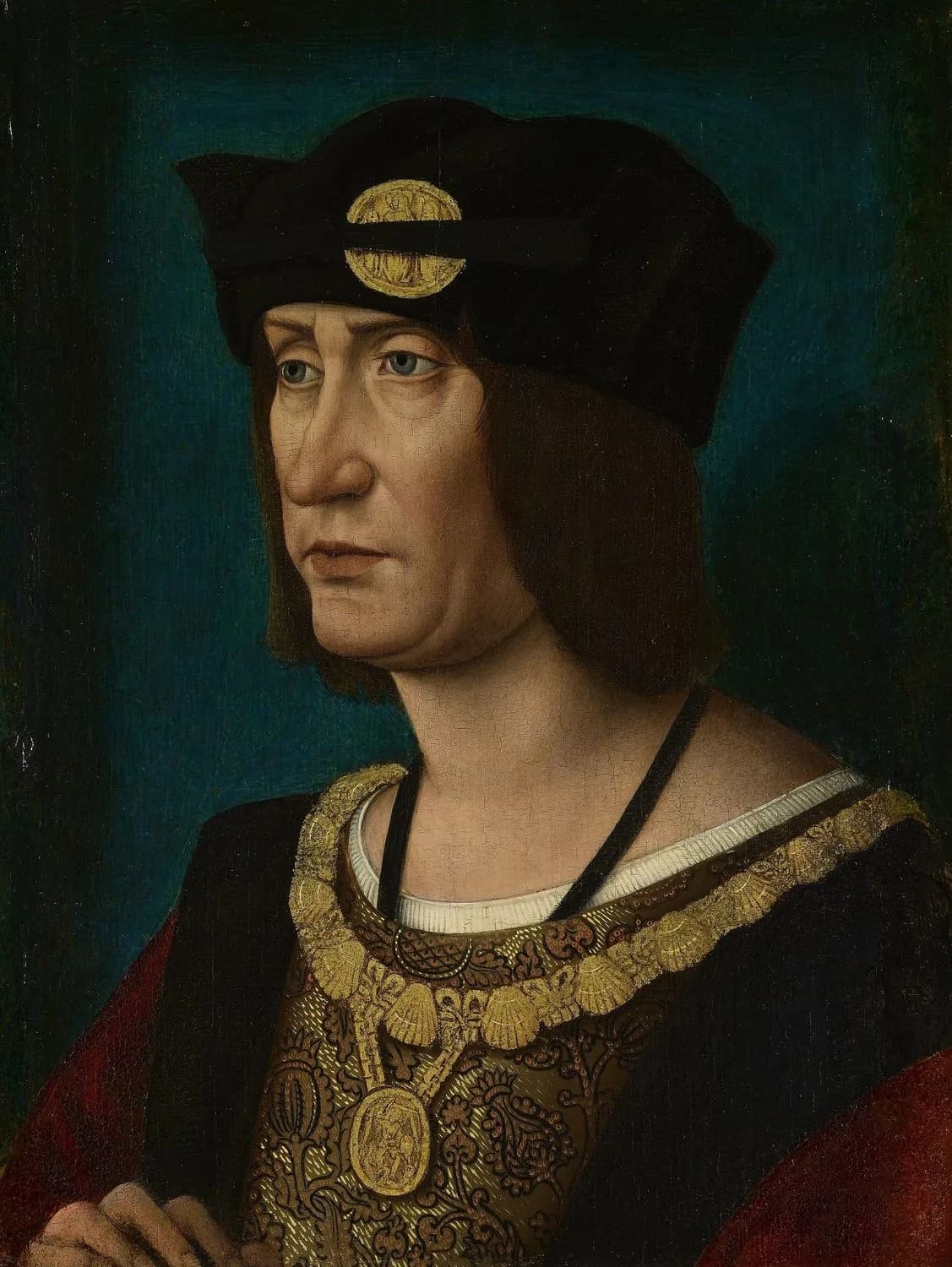
Sündinud
July 6, 1462
Château de Blois, France
Surnud
January 11, 1515
Hôtel des Tournelles, France
Tuntud kui
King of France from 1498 to 1515
Louis XII of France (1462–1515) was France best known for King of France from 1498 to 1515.
Louis XII (July 6, 1462 – January 11, 1515) was a sovereign of France. He was known as the "Father of the People" for reducing taxes, reforming the legal system, and fostering civil peace. His reign brought significant domestic improvements and strengthened the French state.
Peatükk
Elu peatükid
Peatükk 1 · 1488· Peatükk 1 / 3
The Unexpected Ascent
Louis of Orléans, born at the Château de Blois, never expected to wear the crown. His father was nearly seventy when Louis was born, and the young duke grew up a leading feudal lord, clashing with royal authority in what became known as the Mad War. Captured after the Battle of Saint-Aubin-du-Cormier in 1488, he faced an uncertain future. Yet, King Charles VIII pardoned him, a decision that inadvertently set the stage for Louis XII's reign. Charles VIII died childless in 1498, making his cousin, Louis, the unexpected heir to the throne of France.
Peatükk 2 · 1484· Peatükk 2 / 3
Father of the People's Reforms
Upon his ascension, Louis XII acted with vigor. He did not impose an absolute monarchy, choosing instead to respect the power of local governments and the nobility's privileges. Recognizing the burden on his subjects, he dramatically reduced the taille, a key tax, and offset the revenue loss by cutting pensions for nobles and foreign princes. He also reinstituted the Pragmatic Sanction, strengthening the independence of the French Church from papal influence. These actions, directly addressing the grievances raised in 1484, fostered a period of civil peace within France. His commitment extended to the justice system, where he expanded the powers of royal judges and sought to curb corruption, notably through the Ordinance of Blois in 1499, which codified customary law, and the Ordinance of Lyon in 1510, which tightened tax collection.
Peatükk 3 · 1499· Peatükk 3 / 3
Ambitions in Italy
Though celebrated for his domestic reforms, Louis XII also pursued inherited claims in Italy, particularly to the Duchy of Milan, through his paternal grandmother, Valentina Visconti. He carefully navigated the complex European political landscape, securing peace treaties with Emperor Maximillian I and Spain, and renewing the historic Auld Alliance with Scotland. Before embarking on his ambitious Italian campaigns, he also forged crucial agreements with the Swiss Confederation and the Duchy of Savoy, ensuring troop recruitment and passage. His efforts to rebuild the French army, which had suffered neglect, bore fruit when he finally marched into Milan in 1499. Though he would later cede Naples to Spain, his legacy as Duke of Milan remained, marking a king who balanced popular domestic governance with strategic international ambition.
Elu hetkedes
Hetked, mis elu kujundasid
KKK
Korduma kippuvad küsimused
Millal Louis XII of France suri?
Louis XII of France suri 11. jaanuar 1515 Hôtel des Tournelles, France-s, 52-aastasena.
Kus Louis XII of France sündis?
Louis XII of France sündis Château de Blois, France-s 6. juuli 1462.
Mille poolest on Louis XII of France kõige tuntum?
Louis XII of France on kõige tuntum King of France from 1498 to 1515 poolest.
Kui vana oli Louis XII of France surres?
Louis XII of France oli surres 52-aastane.
Mis rahvusest oli Louis XII of France?
Louis XII of France oli pärit France-st.
Ajajoon
Elu lühidalt
Fotogalerii
Elu piltides
Klõpsake mis tahes polaroidil laiendamiseks · 48 fotot
QR-kood
Jaga seda biograafiat
Prindi ja jaga
Skannige selle biograafialehe külastamiseks. Printige üritusteks, näitusteks või õppematerjalideks.