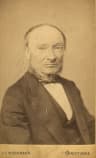
Sündinud
July 12, 1813
Saint-Julien, France
Surnud
February 10, 1878
Paris, France
Tuntud kui
French physiologist
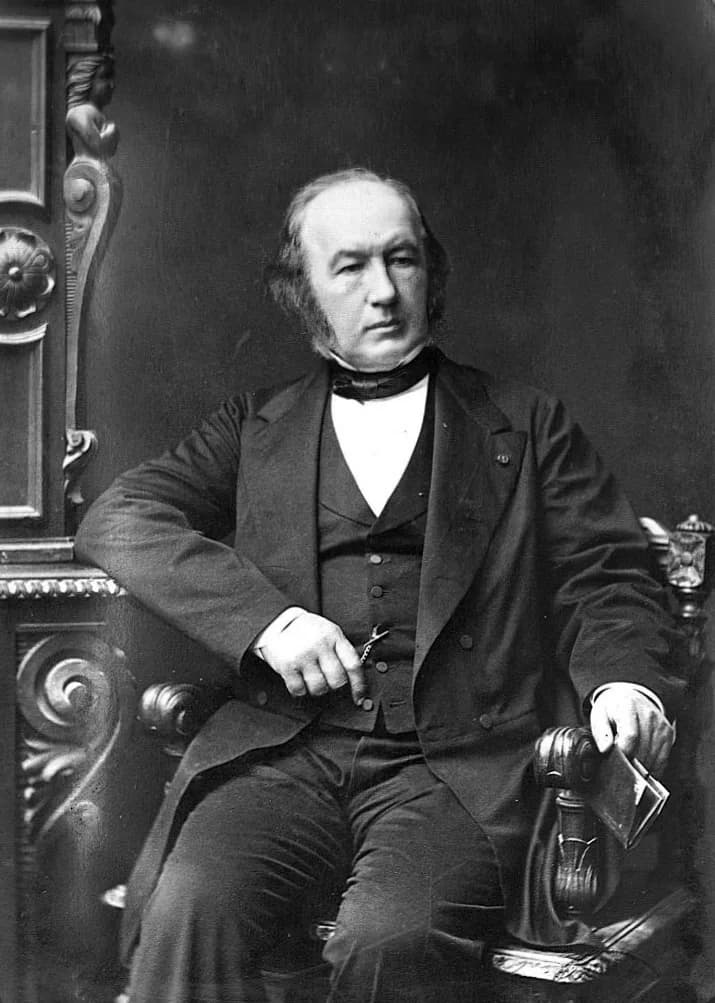
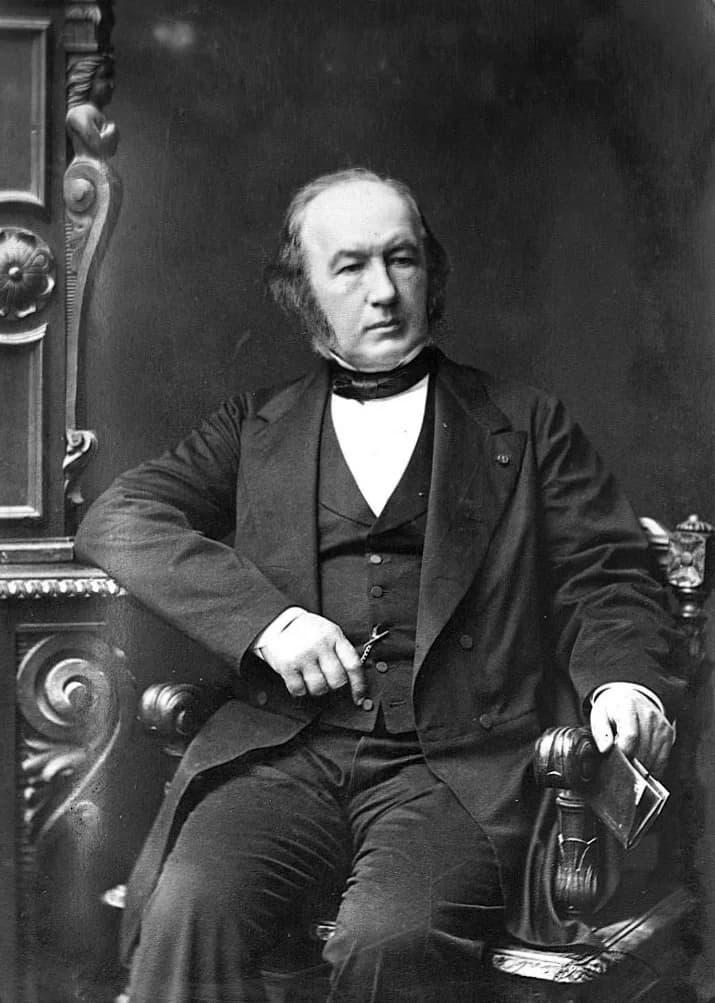
Claude Bernard (1813–1878) was France best known for French physiologist.
Claude Bernard (July 12, 1813 – February 10, 1878) was a French physiologist from Saint-Julien, France. He originated the concept of <em>milieu intérieur</em> and the associated idea of homeostasis, fundamentally changing biology. His work established experimental physiology as a modern scientific discipline.
Peatükk
Elu peatükid
Peatükk 1 · 1813· Peatükk 1 / 7
Early Life and Origins
Claude Bernard began his life in Saint-Julien, France, a rural commune where he was born in the early summer of 1813. This period of early 19th-century France was a time of significant change and intellectual ferment, providing a backdrop for the emergence of new scientific thought. His formative years in Saint-Julien likely instilled in him a grounded perspective, which he would later apply to complex biological investigations.
The precise details of Bernard's family background and early education are not provided in the available information, yet his later accomplishments suggest a robust intellectual development. His trajectory from a small French town to the scientific heart of Paris speaks to an inherent drive and an exceptional capacity for learning and inquiry. The foundations laid in his youth undoubtedly supported his later extensive and varied professional pursuits.
Peatükk 2· Peatükk 2 / 7
Career Beginnings and Diverse Professions
Bernard's professional life was characterized by a remarkable breadth of interests and expertise, showcasing a truly Renaissance mind. He engaged in multiple significant professions, including physician, politician, professor, psychologist, physician writer, physiologist, and epistemologist. This diverse array of roles points to a deep engagement with both the practical and theoretical aspects of science and society.
His early career as a physician provided him with a direct understanding of human health and disease, informing his physiological research with clinical relevance. As a professor, he dedicated himself to the dissemination of knowledge and the training of future scientists, shaping the next generation of researchers. His role as a politician, though perhaps less known, suggests an engagement with public life and the societal implications of scientific progress.
Bernard's work as a psychologist and physician writer indicates an interest in the mental aspects of life and the communication of scientific ideas. Crucially, his primary identity as a physiologist defined his most lasting contributions to experimental biology. Furthermore, his engagement as an epistemologist reveals a deep commitment to understanding the nature of scientific knowledge itself and the methods by which it is acquired, laying a philosophical groundwork for his empirical work.
Peatükk 3· Peatükk 3 / 7
Major Achievements and Career Highlights
Among Claude Bernard's most enduring achievements was his origination of the concept of the milieu intérieur, or the 'internal environment.' This revolutionary idea proposed that higher organisms maintain a constant internal state, independent of external conditions, which is essential for life. This recognition shifted biological thought towards understanding the dynamic regulatory processes within the body.
Building upon the milieu intérieur, Bernard also formulated the associated concept of homeostasis, a term later coined by Walter Cannon but directly flowing from Bernard's work. Homeostasis describes the self-regulating processes by which biological systems maintain stability while adjusting to changing conditions. These concepts laid the groundwork for modern physiology and medicine, providing a framework for understanding how organisms survive and adapt.
Bernard's contributions earned him immense respect from his peers and subsequent generations of scientists. I. Bernard Cohen's praise, identifying him as “one of the greatest of all men of science,” underscores the profound and lasting impact of his scientific insights. His work established experimental physiology as a rigorous scientific discipline, moving biology beyond mere description to systematic investigation of bodily functions.
Peatükk 4· Peatükk 4 / 7
Personal Life
While the provided information highlights Claude Bernard's prolific professional and scientific career, specific details about his personal life, family, relationships, or hobbies are not available. His immense dedication to his multifaceted professions and ground-breaking research suggests a life largely consumed by intellectual pursuit and scientific discovery. The depth and breadth of his published works and conceptual contributions speak volumes about his commitment.
Despite the lack of personal anecdotes, one can infer a profound passion for understanding the natural world and a relentless drive to uncover its secrets. His legacy is etched in his scientific contributions, which continue to inform and inspire. The absence of details about his private world emphasizes the monumental scale of his public scientific endeavors.
Peatükk 5· Peatükk 5 / 7
Notable Works and Contributions
Claude Bernard was a prolific author, leaving behind a significant bibliography that reflects the scope of his investigations. His collaborative work, Cl. Bernard und Ch. Huette Atlas der chirurgischen Operationslehre, published with Ch. Huette, demonstrates his engagement with practical surgical applications and anatomical understanding, essential for a physician.
A key physiological discovery was detailed in his work, Neue Funktion der Leber als zuckerbereitendes Organ des Menschen und der Thiere, which elucidated a new function of the liver as an organ that produces sugar in both humans and animals. This contribution was vital for understanding metabolism and the regulatory role of organs. His interest in biological chemistry is further shown in Des matières colorantes chez l'homme, likely exploring pigments or other colored substances within the human body.
Bernard also contributed to practical medical education with his Illustrated manual of operative surgery and surgical anatomy, a resource that would have been invaluable for medical students and practitioners of his time. His philosophical inclinations are evident in works such as El pensamiento vivo de Claude Bernard (The Living Thought of Claude Bernard) and Facsimile of document on philosophy and science, which reflect his deep thinking about the principles underlying scientific inquiry.
His foundational text, La science expérimentale (Experimental Science), laid out his rigorous methodology for scientific investigation, advocating for careful observation and controlled experimentation. In clinical physiology, he authored De l'hémianesthésie de la sensibilité générale et des sens dans l'alcoolisme chronique, a specific study on neurological deficits related to chronic alcoholism. Another significant physiological treatise was Mémoire sur le pancréas et sur le role du suc pancréatique dans les phénomèmes digestifs, which provided essential insights into the digestive functions of the pancreas. Finally, his pedagogical influence is captured in Leçons de physiologie opératoire (Lectures on Operative Physiology), indicating his role as a leading educator in his field.
Peatükk 6 · 1878· Peatükk 6 / 7
Later Years
Claude Bernard concluded his remarkable life in Paris, France, where he passed away on February 10, 1878. Paris, at the time, was a vibrant center of scientific and intellectual activity, a fitting place for the final years of a scientist of his caliber. His death marked the end of an era of pioneering research that had irrevocably altered the course of biological science.
Even in his later years, Bernard's influence continued to grow, solidified by his extensive body of work and the lasting impact of his concepts. He remained a prominent figure, celebrated for his scientific rigor and his ability to synthesize complex physiological observations into overarching principles. His passing was a loss to the scientific community, but his legacy was already firmly established.
Peatükk 7· Peatükk 7 / 7
Legacy and Impact
Claude Bernard's legacy extends far beyond his lifetime, cementing his place as one of the most significant figures in the history of science. His concepts of the milieu intérieur and homeostasis remain cornerstones of modern physiology, biology, and medicine. They provide the conceptual framework for understanding how living systems maintain stability and function in a dynamic world.
His emphasis on experimental method transformed physiology from a descriptive discipline into a rigorous, experimental science. He championed the use of controlled experiments and precise measurements, setting new standards for scientific inquiry that influenced generations of researchers. I. Bernard Cohen's statement that Bernard was “one of the greatest of all men of science” is a testament to the profound and enduring nature of his contributions, recognizing him not just as a physiologist, but as a scientific thinker of universal importance.
Bernard's diverse professional background—as a physician, professor, and epistemologist—underscores his holistic approach to understanding life. He not only discovered new facts but also provided a deeper philosophical understanding of how science itself should be conducted. His insights continue to be relevant in fields ranging from endocrinology to neuroscience, demonstrating the timeless value of his pioneering work.
Elu hetkedes
Hetked, mis elu kujundasid
![Claude Bernard - Bernard [bärnar], Claude, fransk fysiolog, f. 12 juli 1813 i Villefranche](/_next/image?url=https%3A%2F%2Fcdn.whowasthisguy.com%2Fgallery_wikimedia_commons_1777978252130_5_11164aa64d.webp&w=1920&q=75)
KKK
Korduma kippuvad küsimused
Millal Claude Bernard suri?
Claude Bernard suri 10. veebruar 1878 Paris, France-s, 64-aastasena.
Kus Claude Bernard sündis?
Claude Bernard sündis Saint-Julien, France-s 12. juuli 1813.
Mille poolest on Claude Bernard kõige tuntum?
Claude Bernard on kõige tuntum French physiologist poolest.
Kui vana oli Claude Bernard surres?
Claude Bernard oli surres 64-aastane.
Mis rahvusest oli Claude Bernard?
Claude Bernard oli pärit France-st.
Ajajoon
Elu lühidalt
Fotogalerii
Elu piltides
Klõpsake mis tahes polaroidil laiendamiseks · 47 fotot
QR-kood
Jaga seda biograafiat
Prindi ja jaga
Skannige selle biograafialehe külastamiseks. Printige üritusteks, näitusteks või õppematerjalideks.