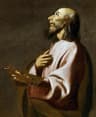
Γεννήθηκε
December 5, 1562
Madrid, Spain
Πέθανε
August 27, 1635
Madrid, Spain
Γνωστός/ή για
Spanish playwright and poet
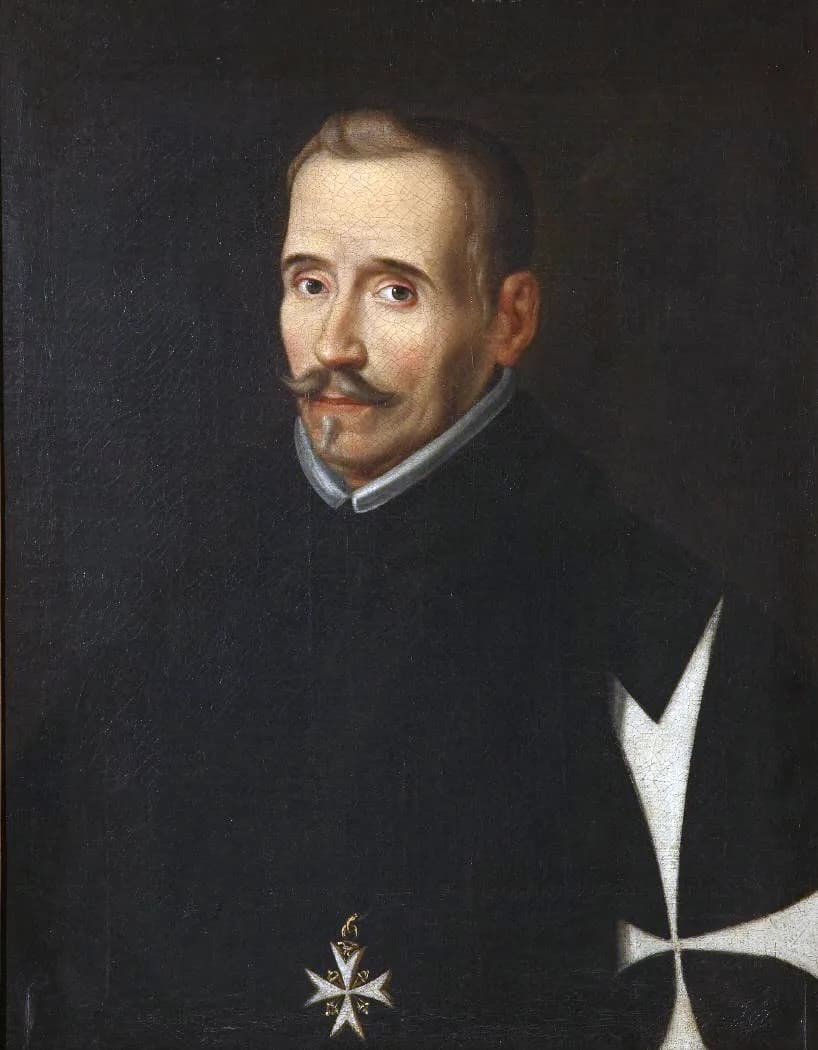
Lope de Vega (1562–1635) was Spain best known for Spanish playwright and poet.
Félix Lope de Vega y Carpio (December 5, 1562 – August 27, 1635) was a Spanish playwright, poet, and novelist from Madrid. A key figure in the Spanish Golden Age, he revolutionized Spanish drama and was known as "The Phoenix of Wits." His immense body of work continues to influence literature and theater.
Κεφάλαιο
Κεφάλαια ζωής
Κεφάλαιο 1 · 1562· Κεφάλαιο 1 από 7
Early Life and Origins
Lope de Vega was born on December 5, 1562, in Madrid, Spain, the vibrant capital city that would remain the nexus of his entire existence. His early life unfolded against the backdrop of late 16th-century Spain, a period of immense cultural and political transformation. While specific details of his upbringing are not extensively documented in the provided information, his extraordinary intellectual capabilities must have been evident from a very young age. This environment undoubtedly fostered the fertile imagination and exceptional talent that would define his future literary career.
Κεφάλαιο 2· Κεφάλαιο 2 από 7
Career Beginnings
Lope de Vega's entry into the literary world began early, and he swiftly established a reputation for his astonishing productivity and versatile talent. He embarked on a career that saw him become a writer, poet, and playwright, distinguishing himself rapidly in each domain. His initial creative endeavors showcased a burgeoning genius, laying the groundwork for the unparalleled literary output he would achieve. These early contributions were crucial in setting the stage for his eventual prominence as a central figure in Spanish letters.
Κεφάλαιο 3 · 1492· Κεφάλαιο 3 από 7
Major Achievements and Career Highlights
Lope de Vega's career was characterized by an incredible volume of work and significant innovations in Spanish theatre. He played a crucial role in defining the structure of Spanish comedy, popularizing a new dramatic form that masterfully blended serious and comic elements to appeal to a wide audience. This ability to consistently produce an astounding number of successful plays made him the dominant force in the theatre of his era, effectively shaping the theatrical scene and audience expectations. His profound influence solidified his place as a key figure in the Spanish Golden Age (1492–1659) of Baroque literature.
The esteem in which he was held by his contemporaries is evident in the accolades from Miguel de Cervantes, who lauded Lope de Vega as "The Phoenix of Wits" and "Monster of Nature." These celebrated descriptions highlight not only his prolific output but also the exceptional and almost supernatural nature of his talent. Lope de Vega's impact extended beyond individual works, as he effectively revolutionized the entire theatrical paradigm, setting new standards for dramatic artistry and popular appeal.
Κεφάλαιο 4· Κεφάλαιο 4 από 7
Personal Life
Beyond his prolific literary pursuits, Lope de Vega led a life marked by diverse experiences and professional roles. Throughout his distinguished career, he not only worked tirelessly as a writer, poet, and playwright but also took on the significant vocation of a Catholic priest. This transition to the priesthood later in his life added a spiritual dimension to his already rich and complex existence. His varied experiences, encompassing both secular artistic endeavors and religious devotion, undeniably infused his extensive body of work with profound emotional depth and a wide array of thematic explorations.
Κεφάλαιο 5· Κεφάλαιο 5 από 7
Notable Works or Contributions
Lope de Vega's literary legacy is an immense bibliography spanning numerous genres and forms. Among his most celebrated contributions are theatrical pieces such as the acclaimed [Comedia Famosa de] Amar sin saber a Quién and the powerful drama La estrella de Sevilla. These plays are prime examples of his innovative approach to dramatic art and his mastery of compelling storytelling. He also made significant contributions to the world of poetry, as evidenced in collections like Poesias escogidas de Lope de Vega y de D. Juan de Jauregui.
His versatility extended to prose, including Novelle per Marzia Leonarda, showcasing his talent for narrative fiction. Practical and instructional works also flowed from his pen, such as Para secretarios de señores, y todo genero, demonstrating his broad intellectual interests. His epic historical play, El nuevo mundo descubierto por Cristóbal Colón, illustrates his engagement with significant contemporary and historical events. Additionally, his work encompassed moral philosophy, as seen in Prouerbios morales de Alonso de Barros, criado del Rey N.S.. These diverse titles collectively reflect his unparalleled artistic range and tireless creative energy.
Κεφάλαιο 6 · 1635· Κεφάλαιο 6 από 7
Later Years
Lope de Vega maintained his astonishing creative pace and literary output well into his later years. Despite the passage of time, his imaginative spirit and commitment to his craft remained undiminished, leading to the creation of many more influential works. His dedication ensured that he continued to enrich Spanish literature until the very end of his life. Lope de Vega passed away on August 27, 1635, in his cherished birthplace of Madrid, Spain, leaving behind a monumental and enduring literary inheritance for the world.
Κεφάλαιο 7· Κεφάλαιο 7 από 7
Legacy and Impact
The legacy of Lope de Vega is foundational to Spanish literature and theatre, representing a pinnacle of the Golden Age. He revolutionized Spanish drama, shaping it into a more flexible, dynamic, and universally appealing form that resonated with vast audiences. His voluminous body of work provided an essential framework and inspiration for countless subsequent playwrights and poets, consolidating the innovations of Baroque literature. His name stands as a cultural icon, forever intertwined with the flourishing of Spanish arts during one of its most glorious historical periods.
Today, Lope de Vega's plays continue to be performed and studied, a testament to their enduring relevance and artistic merit. His profound contributions ensured that the literary and dramatic traditions of Spain were irrevocably transformed and enriched. He remains a powerful symbol of creativity, productivity, and artistic genius, ensuring that the spirit of the "Phoenix of Wits" continues to enlighten and inspire.
Μια ζωή σε στιγμές
Οι στιγμές που διαμόρφωσαν μια ζωή

Συχνές Ερωτήσεις
Συχνές ερωτήσεις
Πότε πέθανε ο/η Lope de Vega;
Ο/Η Lope de Vega πέθανε στις 27 Αυγούστου 1635 στο Madrid, Spain, σε ηλικία 72 ετών.
Πού γεννήθηκε ο/η Lope de Vega;
Ο/Η Lope de Vega γεννήθηκε στο Madrid, Spain στις 5 Δεκεμβρίου 1562.
Για τι είναι περισσότερο γνωστός/ή ο/η Lope de Vega;
Ο/Η Lope de Vega είναι περισσότερο γνωστός/ή για Spanish playwright and poet.
Πόσων ετών ήταν ο/η Lope de Vega όταν πέθανε;
Ο/Η Lope de Vega ήταν 72 ετών τη στιγμή του θανάτου του/της.
Ποια ήταν η εθνικότητα του/της Lope de Vega;
Ο/Η Lope de Vega καταγόταν από Spain.
Χρονοδιάγραμμα
Η ζωή με μια ματιά
Συλλογή φωτογραφιών
Μια ζωή σε εικόνες
Κάντε κλικ σε οποιοδήποτε polaroid για μεγέθυνση · 45 φωτογραφίες
Κωδικός QR
Μοιραστείτε Αυτή τη Βιογραφία
Εκτύπωση & Κοινή Χρήση
Σκανάρετε για να επισκεφτείτε αυτή τη βιογραφική σελίδα. Εκτυπώστε για εκδηλώσεις, εκθέσεις ή εκπαιδευτικό υλικό.