Γεννήθηκε
June 8, 1936
Waltham, United States
Πέθανε
June 15, 2013
Saco, United States
Γνωστός/ή για
Nobel prize winning US physicist
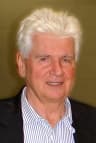
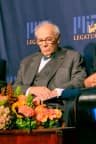
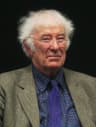
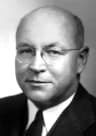
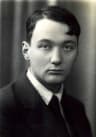
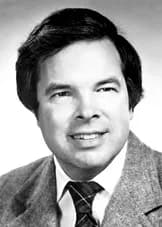
Kenneth G. Wilson (1936–2013) was United States best known for Nobel prize winning US physicist.
Kenneth G. Wilson (June 8, 1936 – June 15, 2013) was an American theoretical physicist. He received the 1982 Nobel Prize in Physics for his theory of critical phenomena in phase transitions. His work illuminated phenomena like melting ice and emerging magnetism, leaving a lasting influence on modern physics.
Κεφάλαιο
Κεφάλαια ζωής
Κεφάλαιο 1 · 1936· Κεφάλαιο 1 από 6
Early Life and Origins
Kenneth G. Wilson was born on June 8, 1936, in Waltham, United States. Details about his early upbringing are not explicitly provided in the available information. However, his foundational experiences in the United States likely fostered the intellectual curiosity that would define his professional journey, leading him towards a career in theoretical physics.
Κεφάλαιο 2· Κεφάλαιο 2 από 6
Career Beginnings
Wilson embarked on his career as a physicist, later specializing as a theoretical physicist and university teacher. His early work would have involved deep theoretical explorations into the principles governing physical systems. The pursuit of fundamental understanding characterized his approach to physics from the outset, setting him on a path of significant discovery. He dedicated himself to rigorous academic inquiry, becoming a respected pedagogue in his field.
Κεφάλαιο 3 · 1982· Κεφάλαιο 3 από 6
Major Achievements and Career Highlights
Kenneth G. Wilson's most celebrated achievement was the awarding of the 1982 Nobel Prize in Physics. This prestigious recognition honored his theory for critical phenomena in connection with phase transitions. His research offered clear explanations for subtle, yet widespread, physical occurrences such as the melting of ice or the emergence of magnetism. Wilson's fundamental work on the renormalization group was central to these illuminations, providing a powerful framework for understanding these complex transitions. He was also a pioneer in employing computers to study particle physics, an approach that has become standard in modern scientific research.
Κεφάλαιο 4 · 2002· Κεφάλαιο 4 από 6
Notable Works or Contributions
Throughout his career, Wilson was a prolific academic, with an h-index of 41 and 93 published papers. Among his highly cited works is "Limit cycles in quantum theories" (2002), which garnered 96 citations. Another significant contribution, "The Origins of Lattice Gauge Theory" (2004), received 86 citations, reflecting his influence on theoretical physics. His philosophical reflections and autobiographical interview were collected in "The Road Since Structure: Philosophical Essays, 1970–1993, with an Autobiographical Interview" (2001), cited 85 times. Further demonstrating his precision, "Precise numerical results for limit cycles in the quantum three-body problem" (2005) received 50 citations. He also co-authored "Scientometric analysis of synchronous references in the Physics Nobel lectures, 1981-1985: A pilot study" (2004), which received 17 citations.
Κεφάλαιο 5 · 2013· Κεφάλαιο 5 από 6
Later Years
Kenneth G. Wilson continued to contribute to the scientific community into his later years. He passed away on June 15, 2013, in Saco, United States, at the age of 77. His later work, including publications like "Limit cycles in quantum theories" (2002) and "The Origins of Lattice Gauge Theory" (2004), shows his sustained engagement with theoretical physics. Even in his final decade, Wilson was actively publishing and reflecting on his field's development.
Κεφάλαιο 6· Κεφάλαιο 6 από 6
Legacy and Impact
The legacy of Kenneth G. Wilson is deeply woven into the fabric of modern theoretical physics. His theory of critical phenomena and the renormalization group provided physicists with tools to analyze systems at different scales, revealing universal behaviors near phase transitions. This conceptual framework moved beyond specific materials to explain underlying physical principles across diverse phenomena. His pioneering use of computers in particle physics also set a precedent, influencing how future generations of scientists would approach complex simulations and calculations. Wilson’s insightful contributions continue to guide research in condensed matter physics, particle physics, and statistical mechanics, confirming his lasting influence on the field.
Μια ζωή σε στιγμές
Οι στιγμές που διαμόρφωσαν μια ζωή






Συχνές Ερωτήσεις
Συχνές ερωτήσεις
Πότε πέθανε ο/η Kenneth G. Wilson;
Ο/Η Kenneth G. Wilson πέθανε στις 15 Ιουνίου 2013 στο Saco, United States, σε ηλικία 77 ετών.
Πού γεννήθηκε ο/η Kenneth G. Wilson;
Ο/Η Kenneth G. Wilson γεννήθηκε στο Waltham, United States στις 8 Ιουνίου 1936.
Για τι είναι περισσότερο γνωστός/ή ο/η Kenneth G. Wilson;
Ο/Η Kenneth G. Wilson είναι περισσότερο γνωστός/ή για Nobel prize winning US physicist.
Πόσων ετών ήταν ο/η Kenneth G. Wilson όταν πέθανε;
Ο/Η Kenneth G. Wilson ήταν 77 ετών τη στιγμή του θανάτου του/της.
Ποια ήταν η εθνικότητα του/της Kenneth G. Wilson;
Ο/Η Kenneth G. Wilson καταγόταν από United States.
Χρονοδιάγραμμα
Η ζωή με μια ματιά
Συλλογή φωτογραφιών
Μια ζωή σε εικόνες
Κάντε κλικ σε οποιοδήποτε polaroid για μεγέθυνση · 15 φωτογραφίες
Κωδικός QR
Μοιραστείτε Αυτή τη Βιογραφία
Εκτύπωση & Κοινή Χρήση
Σκανάρετε για να επισκεφτείτε αυτή τη βιογραφική σελίδα. Εκτυπώστε για εκδηλώσεις, εκθέσεις ή εκπαιδευτικό υλικό.