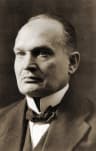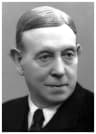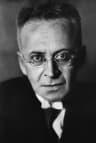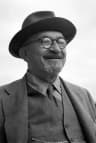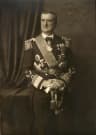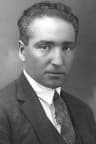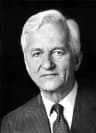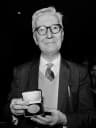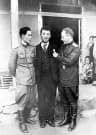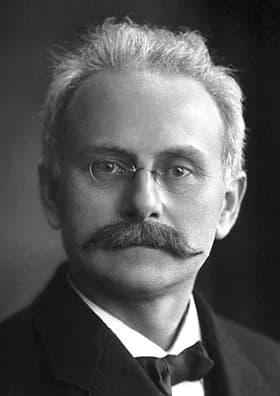
Født
April 15, 1874
Freihung, Germany
Død
June 21, 1957
Traunstein, Germany
Kendt for
German physicist
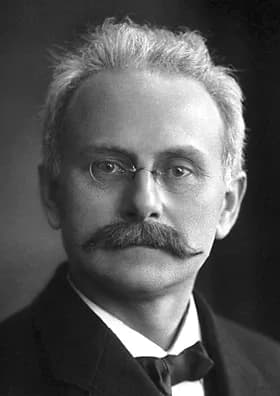
Johannes Stark (1874–1957) was Germany best known for German physicist.
Johannes Stark (April 15, 1874 – June 21, 1957) was a German physicist from Freihung, Germany. He was awarded the Nobel Prize in Physics in 1919 for his discovery of the Doppler effect in canal rays and the splitting of spectral lines in electric fields. His contributions provided fundamental insights into atomic structure.
Kapitel
Livskapitler
Kapitel 1 · 1874· Kapitel 1 af 8
Opening
Johannes Stark (April 15, 1874 – June 21, 1957) was a distinguished German physicist and university teacher whose groundbreaking contributions profoundly shaped the understanding of atomic structure and light. Born in Freihung, Germany, and passing away in Traunstein, Germany, Stark dedicated his life to scientific inquiry, earning the ultimate recognition with the Nobel Prize in Physics in 1919. His pioneering work, particularly the discovery of the Stark effect, provided crucial insights into the behavior of matter and energy at the quantum level, leaving an enduring mark on the scientific community.
Kapitel 2 · 1874· Kapitel 2 af 8
Early Life and Origins
Johannes Stark was born on April 15, 1874, in the town of Freihung, nestled within Germany. His early years were spent in this region, which served as the setting for his formative education and initial intellectual development. While specific details of his family background or childhood upbringing are not extensively documented in the provided information, it is understood that his early experiences in Germany laid the foundation for his scientific inclination. The vibrant academic environment prevalent in German universities during the late 19th century undoubtedly fostered a spirit of rigorous scientific inquiry, preparing him for a distinguished career in physics.
Kapitel 3· Kapitel 3 af 8
Career Beginnings
Stark embarked on a dedicated professional path in physics, eventually assuming the esteemed role of a university teacher. This profession offered him a dual opportunity: to meticulously pursue his own experimental and theoretical research, and to share his evolving knowledge with successive generations of students. His commitment to the fundamental principles of physics was evident from the very outset of his career. Early in his scientific journey, he meticulously conducted foundational studies, which were instrumental in establishing the robust scientific framework required for the profound discoveries that would eventually define his academic and professional life.
Kapitel 4 · 1919· Kapitel 4 af 8
Major Achievements and Career Highlights
The pinnacle of Johannes Stark's scientific career arrived in 1919 when he was honored with the Nobel Prize in Physics, a testament to his exceptional contributions to the field. This prestigious award from the Royal Swedish Academy of Sciences recognized his remarkable discovery of the Doppler effect in canal rays. This phenomenon involved observing the frequency shift in light emitted by moving charged particles, offering a deeper understanding of their dynamics. Furthermore, the Nobel citation specifically highlighted his equally significant discovery of the splitting of spectral lines in electric fields, a phenomenon now universally known as the Stark effect. This effect elucidated how the characteristic light emitted by atoms and molecules undergoes a distinct splitting or broadening when subjected to an external static electric field. These experimental findings were revolutionary, providing critical empirical evidence that bolstered the nascent quantum theory of the atom and significantly influenced the subsequent development of quantum mechanics.
Kapitel 5· Kapitel 5 af 8
Personal Life
While Johannes Stark's professional life was extensively documented through his scientific achievements and publications, specific details concerning his personal life, family, relationships, or recreational interests are not available in the provided information. His public record primarily emphasizes his profound contributions to physics and his academic career.
Kapitel 6 · 1934· Kapitel 6 af 8
Notable Works or Contributions
Johannes Stark was a highly prolific researcher throughout his extensive career, publishing an impressive total of 143 papers. His scholarly impact is further indicated by an h-index of 14, signifying the lasting influence and citation frequency of his published work within the global scientific community. Among his most referenced works is "Nationalsozialismus und Wissenschaft," published in 1934, which garnered 14 citations and offers a unique perspective on the complex interplay between political ideology and scientific pursuits during a tumultuous historical period. Another significant publication, "Die Elektrizität in Gasen," though published posthumously in 1972, has received 9 citations, underscoring the enduring relevance of his foundational research in electrodynamics and gas physics. He also authored "Weitere experimentelle Untersuchungen über die Natur des Lichtes" in 1952 and contributed to contemporary scientific and political discourse with "Zu den Kämpfen in der Physik während der Hitler‐Zeit/Bemerkung zu der vorstehenden Veröffentlichung" in 1947, both of which have been cited 3 times. His forward-looking work, "Fortschritte und Probleme der Atomforschung," published in 1931, also received 3 citations, consistently demonstrating his dedication to advancing the understanding of atomic research during a period of rapid scientific progress.
Kapitel 7 · 1957· Kapitel 7 af 8
Later Years
Johannes Stark maintained an active presence in the scientific world over many decades, continuing to engage with and contribute to the discourse of physics. His long and distinguished career ultimately concluded with his passing on June 21, 1957, in Traunstein, Germany. His death marked the end of a life profoundly dedicated to scientific inquiry, discovery, and the advancement of fundamental physical knowledge. His lifetime spanned several pivotal eras in the development of 20th-century physics, from the early revolutionary theories to the establishment of quantum mechanics.
Kapitel 8 · 1919· Kapitel 8 af 8
Legacy and Impact
The enduring legacy of Johannes Stark is indelibly etched into the foundations of modern physics, particularly in the realms of atomic and quantum mechanics. His seminal discovery of the Stark effect provided crucial experimental validation for the burgeoning quantum theory, significantly deepening the scientific community's understanding of atomic structure and the intricate ways in which matter interacts with electric fields. This fundamental effect remains a cornerstone concept in spectroscopy, quantum physics, and atomic theory, serving as a critical tool in various analytical applications and theoretical models. The Nobel Prize in Physics, bestowed upon him in 1919, definitively cemented his position among the most influential and pioneering scientists of his generation. Furthermore, his extensive body of published work, encompassing 143 papers, continues to serve as an invaluable historical and scientific reference point for researchers exploring fundamental physical phenomena. Stark's profound contributions did not merely solve existing problems; they courageously opened entirely new avenues for scientific investigation, thereby fundamentally shaping the trajectory of 20th-century physics and inspiring future generations of physicists.
Et liv i øjeblikke
De øjeblikke, der formede et liv
Ofte stillede spørgsmål
Ofte spurgt
Hvornår døde Johannes Stark?
Johannes Stark døde den 21. juni 1957 i Traunstein, Germany i en alder af 83 år.
Hvor blev Johannes Stark født?
Johannes Stark blev født i Freihung, Germany den 15. april 1874.
Hvad er Johannes Stark mest kendt for?
Johannes Stark er mest kendt for German physicist.
Hvor gammel var Johannes Stark ved dødsfaldet?
Johannes Stark var 83 år gammel ved dødsfaldet.
Hvilken nationalitet havde Johannes Stark?
Johannes Stark kom fra Germany.
Tidslinje
Et liv ved et hurtigt blik
Billedgalleri
Et liv i billeder
Klik på en polaroid for at forstørre · 16 billeder
QR-kode
Del denne biografi
Udskriv og del
Scan for at besøge denne biografiside. Udskriv til arrangementer, udstillinger eller undervisningsmateriale.