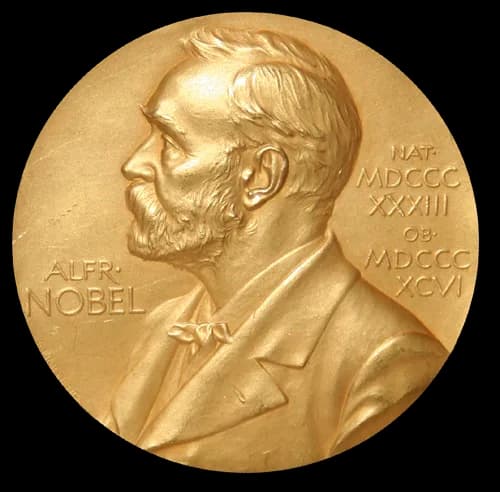
Nascut
May 12, 1895
Niagara Falls, Canada
Mort
March 28, 1982
Berkeley, United States
Conegut per
American chemist
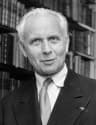
William Giauque (1895–1982) was Canada best known for American chemist.
William Francis Giauque (1895–1982) was a Canadian-born American chemist who won the 1949 Nobel Prize in Chemistry for his studies of matter at temperatures near absolute zero. His research revolutionized low-temperature physics and established fundamental principles of magnetothermodynamics.
Capítol
Capítols de la vida
Capítol 1 · 1895· Capítol 1 de 6
Early Life and Origins
Born on May 12, 1895, in Niagara Falls, Canada, William Francis Giauque entered the world during an era of rapid scientific advancement. Growing up near the famous waterfalls that straddled the Canadian-American border, young Giauque was exposed to the natural forces that would later inspire his fascination with energy and thermodynamics. His Canadian roots provided him with a strong educational foundation that would serve him well in his future scientific endeavors.
Giauque's early education laid the groundwork for what would become a lifelong passion for chemistry and engineering. The rigorous academic environment of his youth instilled in him the methodical approach and attention to detail that would characterize his later research. His formative years in Canada shaped his perspective on scientific inquiry and prepared him for the challenges that lay ahead in his academic journey.
Capítol 2· Capítol 2 de 6
Career Beginnings
Giauque's transition from Canada to the United States marked the beginning of his extraordinary academic and professional career at the University of California, Berkeley. He arrived at this prestigious institution with a strong background in both engineering and chemistry, disciplines that would prove complementary throughout his research career. Berkeley provided the perfect environment for his intellectual development, offering state-of-the-art laboratory facilities and a community of brilliant scientists.
During his early years at Berkeley, Giauque began to focus his attention on the fascinating world of low-temperature physics and chemistry. His initial research projects introduced him to the complex challenges of working with materials at temperatures approaching absolute zero. These early experiences taught him the technical skills and theoretical knowledge necessary to push the boundaries of what was scientifically possible in thermodynamic research.
Capítol 3 · 1949· Capítol 3 de 6
Major Achievements and Career Highlights
The pinnacle of Giauque's career came in 1949 when he was awarded the Nobel Prize in Chemistry for his studies in the properties of matter at temperatures close to absolute zero. This recognition validated decades of meticulous research and established him as one of the world's leading authorities on low-temperature thermodynamics. The Nobel Committee specifically acknowledged his contributions to understanding how materials behave under extreme cold conditions, work that had significant implications for both theoretical chemistry and practical applications.
Throughout his career, Giauque published 169 scientific papers, achieving an impressive h-index of 36 that reflected the significant impact of his research on the scientific community. His work consistently pushed the boundaries of experimental technique and theoretical understanding. He developed innovative methods for measuring heat capacity, entropy, and magnetic properties of materials at temperatures as low as 0.4 Kelvin, often working with magnetic fields exceeding 90 kilogauss.
Capítol 4 · 1973· Capítol 4 de 6
Notable Works and Contributions
Among Giauque's most significant contributions was his pioneering work on magnetothermodynamics, which explored how magnetic fields affected the thermal properties of materials at extremely low temperatures. His 1973 study on gadolinium gallium garnet became one of his most cited works, with 63 citations, demonstrating the lasting impact of his research on subsequent scientific investigations. This work established fundamental principles for understanding magnetic cooling and the behavior of rare earth compounds.
His research extended to a wide variety of materials, including ferroelectric and antiferromagnetic compounds such as terbium molybdate, copper sulfate hydrates, and cerium magnesium nitrate complexes. Each study contributed unique insights into the fundamental nature of matter under extreme conditions. His 1975 work on the initial temperature dependence of entropy and heat capacity for dipole-dipole magnetic interactions provided crucial data for theoretical physicists working to understand quantum mechanical effects in condensed matter systems.
Giauque also made significant contributions to understanding more practical chemical systems, including his detailed studies of sodium hydroxide hydrates. His research on these compounds provided valuable thermodynamic data that had applications in industrial chemistry and helped establish standard reference values used by chemists worldwide. Even seemingly mundane materials like Pyrex glass became subjects of his careful investigation, as he recognized that understanding the properties of laboratory equipment was essential for accurate measurements.
Capítol 5· Capítol 5 de 6
Later Years
Throughout his later career at UC Berkeley, Giauque continued to refine his experimental techniques and expand the scope of his research. His dedication to precision and accuracy never wavered, and he continued to produce high-quality scientific work well into his advanced years. The university provided him with the resources and support necessary to maintain his research program, recognizing the value of his contributions to the institution's reputation.
As he approached the end of his career, Giauque focused on training the next generation of scientists and ensuring that his research methods and insights would be preserved for future investigators. His laboratory became a training ground for graduate students and postdoctoral researchers who would go on to establish their own successful careers in low-temperature physics and chemistry.
Capítol 6 · 1982· Capítol 6 de 6
Legacy and Impact
William Francis Giauque passed away on March 28, 1982, in Berkeley, United States, leaving behind a scientific legacy that continues to influence research in physical chemistry and condensed matter physics. His meticulous experimental work provided the foundation for modern understanding of quantum effects in magnetic systems and established many of the techniques still used today in low-temperature research. The precision instruments and measurement methods he developed enabled countless subsequent discoveries in fields ranging from superconductivity to quantum computing.
His career at the University of California, Berkeley, spanning virtually his entire professional life, demonstrated the value of institutional continuity in scientific research. The long-term commitment between Giauque and Berkeley allowed for the development of sophisticated experimental programs that required years of careful development and refinement. Today, his influence can be seen in the continued excellence of Berkeley's chemistry and physics programs, and in the work of researchers worldwide who build upon the foundations he established in low-temperature science.
Una vida en moments
Els moments que van marcar una vida


FAQ
Preguntes freqüents
Quan va morir William Giauque?
William Giauque va morir el 28 de març del 1982 a Berkeley, United States, als 86 anys.
On va néixer William Giauque?
William Giauque va néixer a Niagara Falls, Canada el 12 de maig del 1895.
Per què és més conegut/da William Giauque?
William Giauque és conegut/da sobretot per American chemist.
Quants anys tenia William Giauque quan va morir?
William Giauque tenia 86 anys en el moment de la seva mort.
Quina nacionalitat tenia William Giauque?
William Giauque era de Canada.
Cronologia
La vida en un cop d'ull
Galeria de fotos
Una vida en imatges
Feu clic a qualsevol polaroid per ampliar · 15 fotos
Codi QR
Comparteix aquesta biografia
Imprimeix i comparteix
Escaneja per visitar aquesta pàgina de biografia. Imprimeix per a esdeveniments, exposicions o materials educatius.