Nascut
August 21, 1917
Moscow, Duchy of Moscow
Mort
June 24, 2008
Minneapolis, United States
Conegut per
Polish-American economist and mathematician
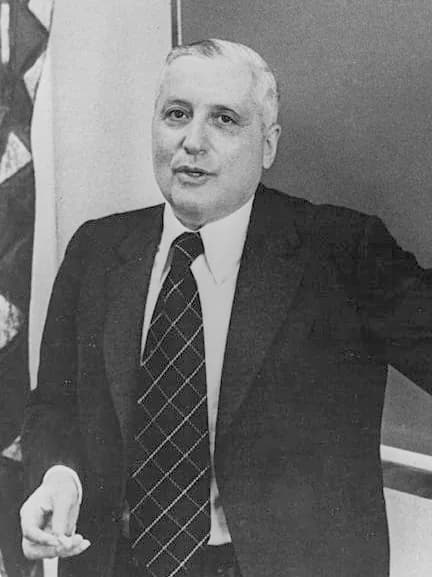
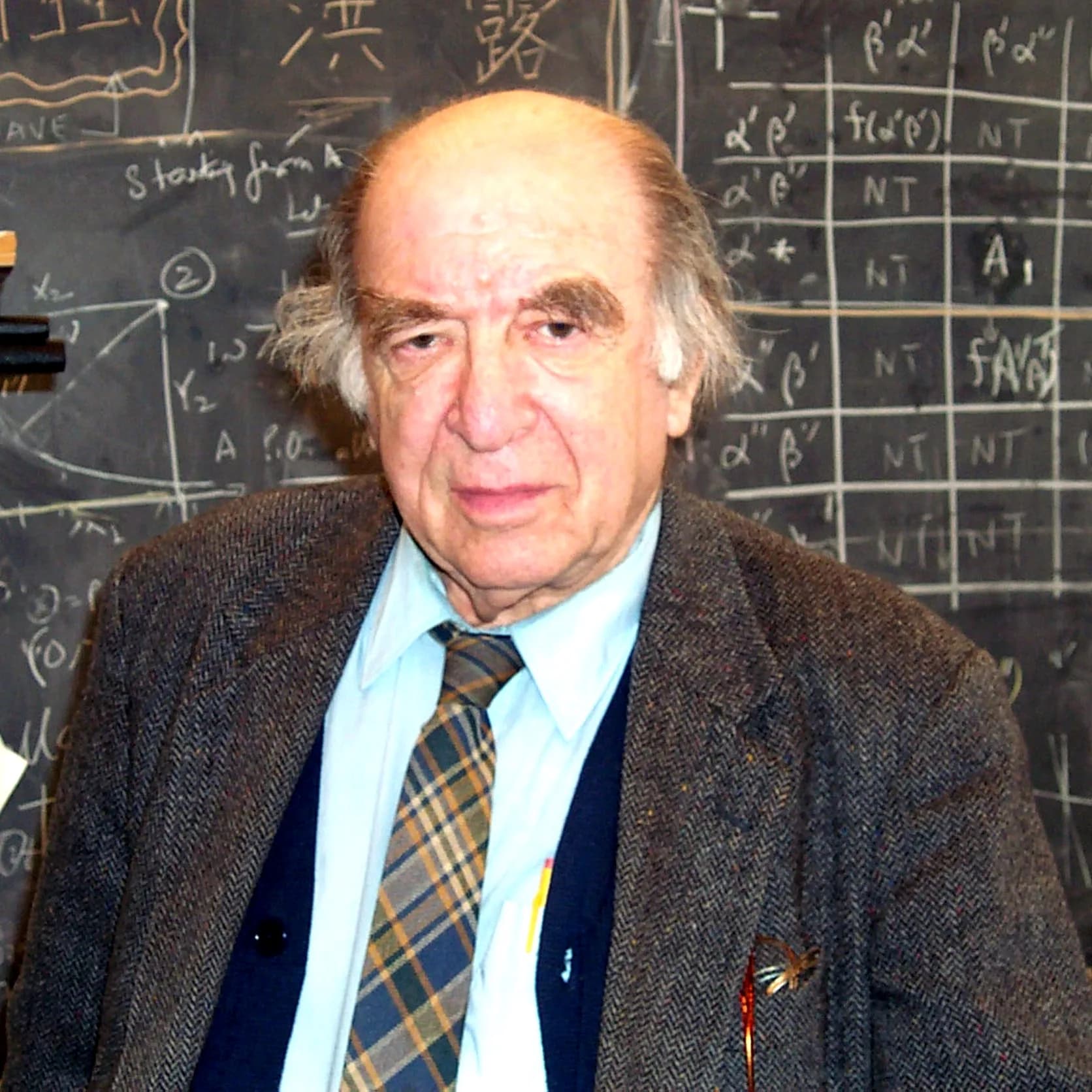
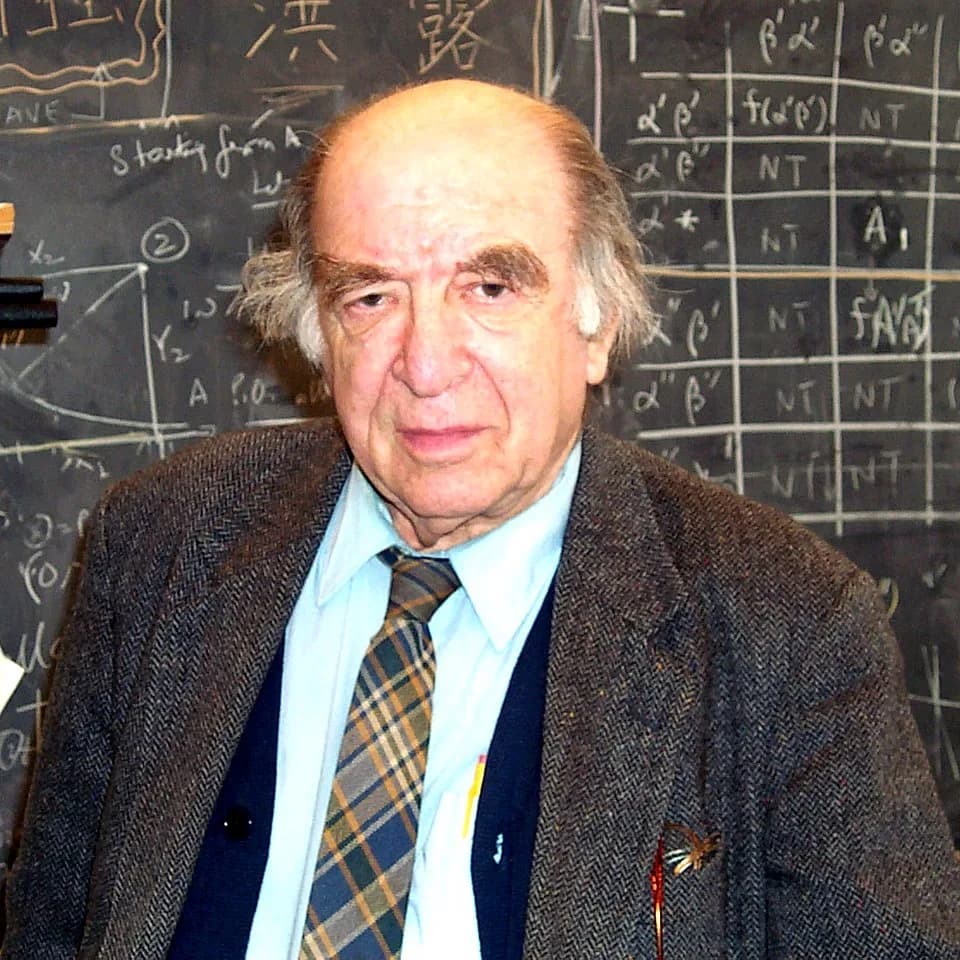
Leonid Hurwicz (1917–2008) was a Polish-American economist and mathematician who originated mechanism design theory. His concept of incentive compatibility revolutionized economic thinking and earned him the 2007 Nobel Prize in Economic Sciences. His theoretical frameworks continue to influence modern economics and policy design worldwide.
Una vida en moments
Els moments que van marcar una vida

Capítol
Capítols de la vida
Capítol 1 · 1917· Capítol 1 de 7
Early Life and Origins
Born on August 21, 1917, in Moscow, then part of the Duchy of Moscow, Leonid Hurwicz entered the world during a period of dramatic political change. His early years were shaped by the turbulent events surrounding the Russian Revolution and its aftermath. Like many families during this era, the Hurwicz family likely experienced the uncertainties that came with massive political and social transformation. The details of his childhood and family background remain largely private, but his later intellectual achievements suggest an early exposure to rigorous academic thinking and mathematical concepts that would define his career.
Capítol 2· Capítol 2 de 7
Career Beginnings
Hurwicz's academic journey led him to pursue both mathematics and economics, a combination that would prove instrumental in his later theoretical breakthroughs. His early career was marked by a deep interest in understanding how economic systems could be designed to achieve desired outcomes. Moving from his birthplace to eventually settle in the United States, Hurwicz began developing the theoretical frameworks that would revolutionize economic thinking. His work as a university teacher allowed him to refine his ideas while mentoring the next generation of economists and mathematicians.
Capítol 3 · 2007· Capítol 3 de 7
Major Achievements and Career Highlights
Hurwicz's most significant contribution to economic science was originating the concept of incentive compatibility, a fundamental principle in mechanism design theory. His work demonstrated how desired economic outcomes could be achieved by using carefully designed incentive-compatible mechanisms. This theoretical framework provided economists with powerful tools for understanding and designing institutions, markets, and policy mechanisms. The significance of his contributions was formally recognized in 2007 when he shared the Nobel Memorial Prize in Economic Sciences for having laid the foundations of mechanism design theory. At age 90, he became one of the oldest recipients in Nobel Prize history, a testament to both his longevity and the enduring relevance of his work.
Capítol 4 · 2007· Capítol 4 de 7
Notable Works and Contributions
Throughout his prolific academic career, Hurwicz published 112 papers with an h-index of 34, demonstrating both the quantity and impact of his scholarly output. His most cited work, "But Who Will Guard the Guardians," published in 2007, received 133 citations and represents a culmination of his thinking on institutional design and oversight mechanisms. Other significant contributions include "Programming in Linear Spaces" and "Reduction of Constrained Maxima to Saddle-point Problems," both published in 2014, which garnered 48 and 32 citations respectively. His mathematical approach to economic problems is further evidenced in works like "A Gradient Method for Approximating Saddle Points and Constrained Maxima." Even later in his career, Hurwicz continued to engage with contemporary issues, as seen in his 2011 paper on "The negative externalities of the electricity industry and sustainability."
Capítol 5· Capítol 5 de 7
Academic Legacy and Teaching
As a university teacher, Hurwicz played a crucial role in shaping economic education and training future economists. His dual expertise in mathematics and economics allowed him to bridge these disciplines in ways that few others could. His teaching style and theoretical approaches influenced countless students who went on to make their own contributions to economic science. The mathematical rigor he brought to economic problems helped establish new standards for theoretical work in the field. His academic legacy extends beyond his published works to include the many economists and mathematicians he mentored throughout his long career.
Capítol 6 · 2011· Capítol 6 de 7
Later Years and Final Contributions
Hurwicz remained intellectually active well into his later years, continuing to publish and contribute to economic theory even after receiving the Nobel Prize. His work on sustainability and environmental economics, published in 2011, showed his continued engagement with contemporary global challenges. Living in Minneapolis during his final years, he maintained his connection to the academic community and continued to be recognized as one of the foremost authorities on mechanism design. His longevity allowed him to witness the practical applications of his theoretical work in various economic and policy contexts around the world.
Capítol 7 · 2008· Capítol 7 de 7
Legacy and Impact
The impact of Hurwicz's work on mechanism design theory cannot be overstated in its influence on modern economics. His concept of incentive compatibility became a cornerstone of economic theory, influencing everything from auction design to policy mechanism creation. The theoretical frameworks he developed continue to be used by economists, policymakers, and institutions worldwide to design better systems for achieving desired economic and social outcomes. His death on June 24, 2008, in Minneapolis marked the end of an era, but his intellectual contributions continue to shape economic thinking and policy design. The field of mechanism design, which he essentially founded, remains one of the most active and influential areas of economic research today.
FAQ
Preguntes freqüents
Quan va morir Leonid Hurwicz?
Leonid Hurwicz va morir el 24 de juny del 2008 a Minneapolis, United States, als 90 anys.
On va néixer Leonid Hurwicz?
Leonid Hurwicz va néixer a Moscow, Duchy of Moscow el 21 d’agost del 1917.
Per què és més conegut/da Leonid Hurwicz?
Leonid Hurwicz és conegut/da sobretot per Polish-American economist and mathematician.
Quants anys tenia Leonid Hurwicz quan va morir?
Leonid Hurwicz tenia 90 anys en el moment de la seva mort.
Quina nacionalitat tenia Leonid Hurwicz?
Leonid Hurwicz era de Duchy of Moscow.
Cronologia
La vida en un cop d'ull
Galeria de fotos
Una vida en imatges
Feu clic a qualsevol polaroid per ampliar · 8 fotos
Codi QR
Comparteix aquesta biografia
Imprimeix i comparteix
Escaneja per visitar aquesta pàgina de biografia. Imprimeix per a esdeveniments, exposicions o materials educatius.