Nascut
March 31, 1732
Rohrau, Austria
Mort
May 31, 1809
Vienna, Austria
Conegut per
Austrian composer
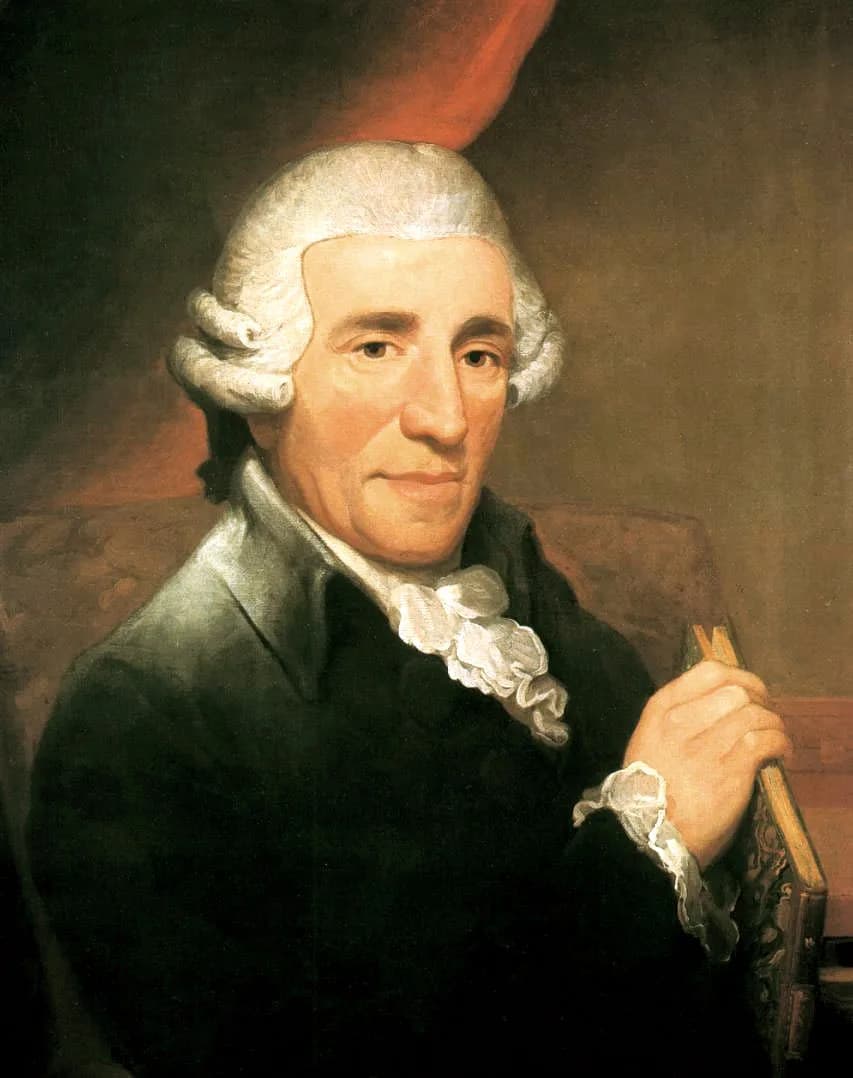
Joseph Haydn (1732–1809) was Austria best known for Austrian composer.
Franz Joseph Haydn (March 31, 1732 – May 31, 1809) was an Austrian composer, conductor, and musicologist. He was called the "Father of the Symphony" and "Father of the String Quartet" for his pivotal contributions to classical music forms. His work shaped the Classical period, influencing generations of composers.
Capítol
Capítols de la vida
Capítol 1 · 1732· Capítol 1 de 5
Early Life and Origins
Franz Joseph Haydn began his life in Rohrau, Austria, on the last day of March in 1732. This rural Austrian village was his birthplace, where he spent his formative years. While specific details of his early family life are not provided, his origins in Rohrau marked the beginning of a life that would eventually redefine classical music.
Capítol 2· Capítol 2 de 5
Career and Innovations
Haydn emerged as a central figure in the Classical period, demonstrating exceptional talent as a composer. He meticulously evolved and refined critical chamber music forms. These included the string quartet and the piano trio, which flourished significantly under his inventive hand.
His deep understanding of musical structure allowed him to expand the scope and complexity of these forms, influencing generations of composers. He held various professional roles throughout his career, including composer, conductor, pianist, independent publisher, and musicologist. These diverse experiences informed his comprehensive approach to music.
Capítol 3· Capítol 3 de 5
Major Works and Discography
Haydn's extensive output encompasses a vast array of works, many of which are celebrated today for their beauty and structural ingenuity. His discography reflects a rich catalog that includes numerous symphonies, concertos, and sacred music. Notable symphony recordings feature Symphony No. 88, Symphony No. 100, known as the "Military," and the charming "Clock" Symphony.
Other esteemed symphonies include the "Surprise" Symphony, Symphony no. 90 in C major, Symphony no. 91 in E-flat major, and Symphony no. 92 in G major, also called 'Oxford'. His contributions to chamber music are exemplified by recordings like String Quartets - Volume 1 Op.20 No.2, Op.50 No.1, Op.76 No.2. Additionally, he composed significant sacred works, such as the Paukenmesse, Mass in B‐flat major Hob. XXII:12 “Theresienmesse,” and Mass in G major Hob XXII:6 “Sancti Nicolai.”
Haydn also crafted instrumental concertos, with the Harpsichord Concerto in D Major and the Violin–Harpsichord Concerto standing out. His versatility allowed him to explore diverse genres, including classical, classical period works, symphony, concerto, mass, and opera, establishing a broad and influential repertoire.
Capítol 4· Capítol 4 de 5
Later Career and Recognition
Throughout his later years, Joseph Haydn continued to compose and conduct, solidifying his status as a master of the classical style. His extensive work garnered him widespread acclaim, ensuring his position as a leading musical figure of his time.
Haydn passed away on May 31, 1809, in Vienna, Austria, leaving behind a legacy that was already deeply embedded in the European musical landscape. His final years were spent in the vibrant cultural hub of Vienna, where his influence had long been established.
Capítol 5· Capítol 5 de 5
Lasting Legacy and Influence
Joseph Haydn's enduring legacy is evident in the fundamental changes he brought to classical music. His innovative development of chamber music forms, particularly the string quartet and piano trio, provided models for future composers. He essentially formalized the structures that define these genres.
His profound contributions to musical form led to him being universally acknowledged as the "Father of the Symphony," the "Father of the String Quartet," and the "Father of Sonata form." Haydn's work established a clear path for the evolution of classical music, influencing later giants of the era and ensuring his music continues to be performed and cherished globally. His music remains a cornerstone of the classical repertoire.
Una vida en moments
Els moments que van marcar una vida
FAQ
Preguntes freqüents
Quan va morir Joseph Haydn?
Joseph Haydn va morir el 31 de maig del 1809 a Vienna, Austria, als 77 anys.
On va néixer Joseph Haydn?
Joseph Haydn va néixer a Rohrau, Austria el 31 de març del 1732.
Per què és més conegut/da Joseph Haydn?
Joseph Haydn és conegut/da sobretot per Austrian composer.
Quants anys tenia Joseph Haydn quan va morir?
Joseph Haydn tenia 77 anys en el moment de la seva mort.
Quina nacionalitat tenia Joseph Haydn?
Joseph Haydn era de Austria.
Cronologia
La vida en un cop d'ull
Galeria de fotos
Una vida en imatges
Feu clic a qualsevol polaroid per ampliar · 25 fotos
Codi QR
Comparteix aquesta biografia
Imprimeix i comparteix
Escaneja per visitar aquesta pàgina de biografia. Imprimeix per a esdeveniments, exposicions o materials educatius.