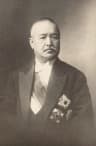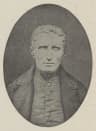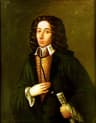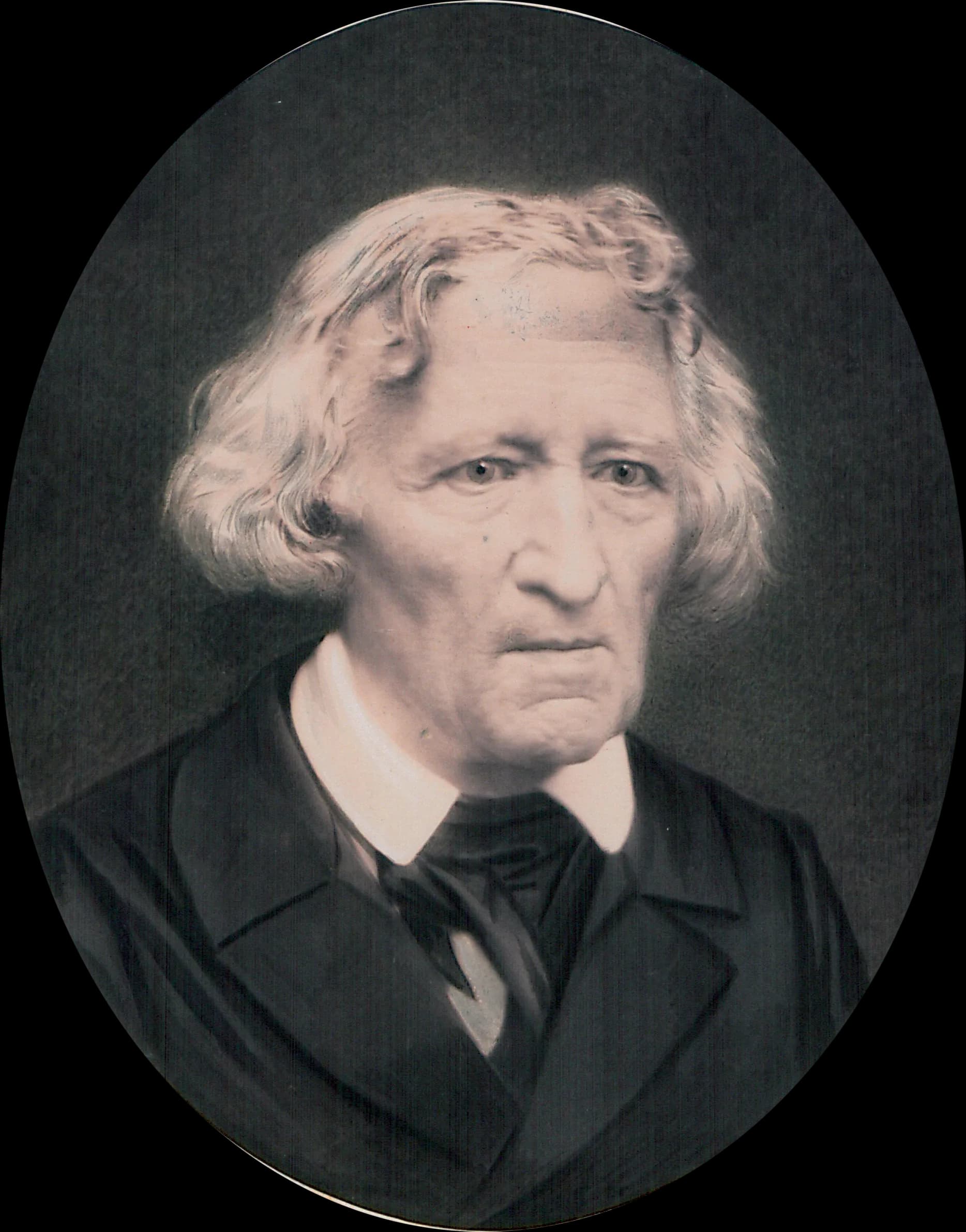
Nascut
January 4, 1785
Hanau, Germany
Mort
September 20, 1863
Berlin, Margraviate of Brandenburg
Conegut per
German philologist, linguist, jurist and mythologist
Jacob Grimm (1785–1863) was Germany best known for German philologist, linguist, jurist and mythologist.
Jacob Grimm (January 4, 1785 – September 20, 1863) was a German philologist, linguist, jurist, and mythologist from Hanau, Germany. He is renowned for formulating Grimm's law of linguistics and for co-authoring the Deutsches Wörterbuch. His work as an editor of Grimms' Fairy Tales, alongside his brother Wilhelm, cemented his legacy in literature.
Capítol
Capítols de la vida
Capítol 1· Capítol 1 de 7
Early Life and Origins
Born in Hanau, Germany, Jacob Ludwig Karl Grimm grew up as the older brother of Wilhelm Grimm. This sibling relationship would form the foundation for one of history's most renowned literary partnerships. Their shared intellectual curiosity developed early, laying the groundwork for their future collaborative endeavors.
Capítol 2· Capítol 2 de 7
Career Beginnings
Grimm commenced his professional life through diverse roles, including serving as a lawyer, a secretary of legation, and a librarian. These early experiences provided him with a comprehensive understanding of legal frameworks, historical documentation, and the systematic organization of knowledge. His initial career steps showcased a budding scholar with broad interests.
Capítol 3· Capítol 3 de 7
Major Achievements and Career Highlights
A towering figure in linguistics, Jacob Grimm famously formulated Grimm's law, a crucial principle describing sound shifts across Germanic languages. He dedicated himself to education as a university teacher and a law librarian, influencing countless students. Grimm also applied his intellectual rigor to politics and historical research, expanding his reach beyond pure academia.
Capítol 4· Capítol 4 de 7
Personal Life
The biographical information highlights Jacob Grimm's close and productive partnership with his younger brother, Wilhelm Grimm. Together, they became known as the Brothers Grimm, a literary duo whose collaboration extended across decades. Their shared scholarly passion for linguistics and folklore formed a unique bond, enriching their collective output.
Capítol 5 · 1853· Capítol 5 de 7
Notable Works or Contributions
Jacob Grimm co-authored the Deutsches Wörterbuch, a monumental German dictionary that remains a cornerstone of German lexicography. He wrote Deutsche Mythologie, a significant work exploring German mythology and folklore. His most widely known contribution, alongside Wilhelm, was the editorship of Grimms' Fairy Tales, which introduced stories like "Kinder Märchen" to global audiences. Further academic contributions include "Uber die Namen des Donners," presented in 1853, and authoritative legal history texts such as "Deutsche Rechtsalterthümer" and "Luxemburger Weisthümer."
Capítol 6 · 1859· Capítol 6 de 7
Later Years
Grimm maintained his prolific scholarly output throughout his later life. He continued to engage in intellectual pursuits, notably delivering "Rede auf Schiller" in 1859, reflecting his ongoing commitment to cultural discourse. Jacob Grimm died in Berlin, Margraviate of Brandenburg, on September 20, 1863, after a lifetime of scholarly dedication.
Capítol 7· Capítol 7 de 7
Legacy and Impact
Jacob Grimm's scholarship undeniably shaped the fields of philology, linguistics, and folklore studies forever. His formulation of Grimm's law continues to be a fundamental concept in historical linguistics. The Deutsches Wörterbuch and Grimms' Fairy Tales, in particular, left an enduring mark on German language and global literature. His meticulous work preserved ancient narratives and provided foundational analysis for understanding linguistic evolution for generations to come.
Una vida en moments
Els moments que van marcar una vida
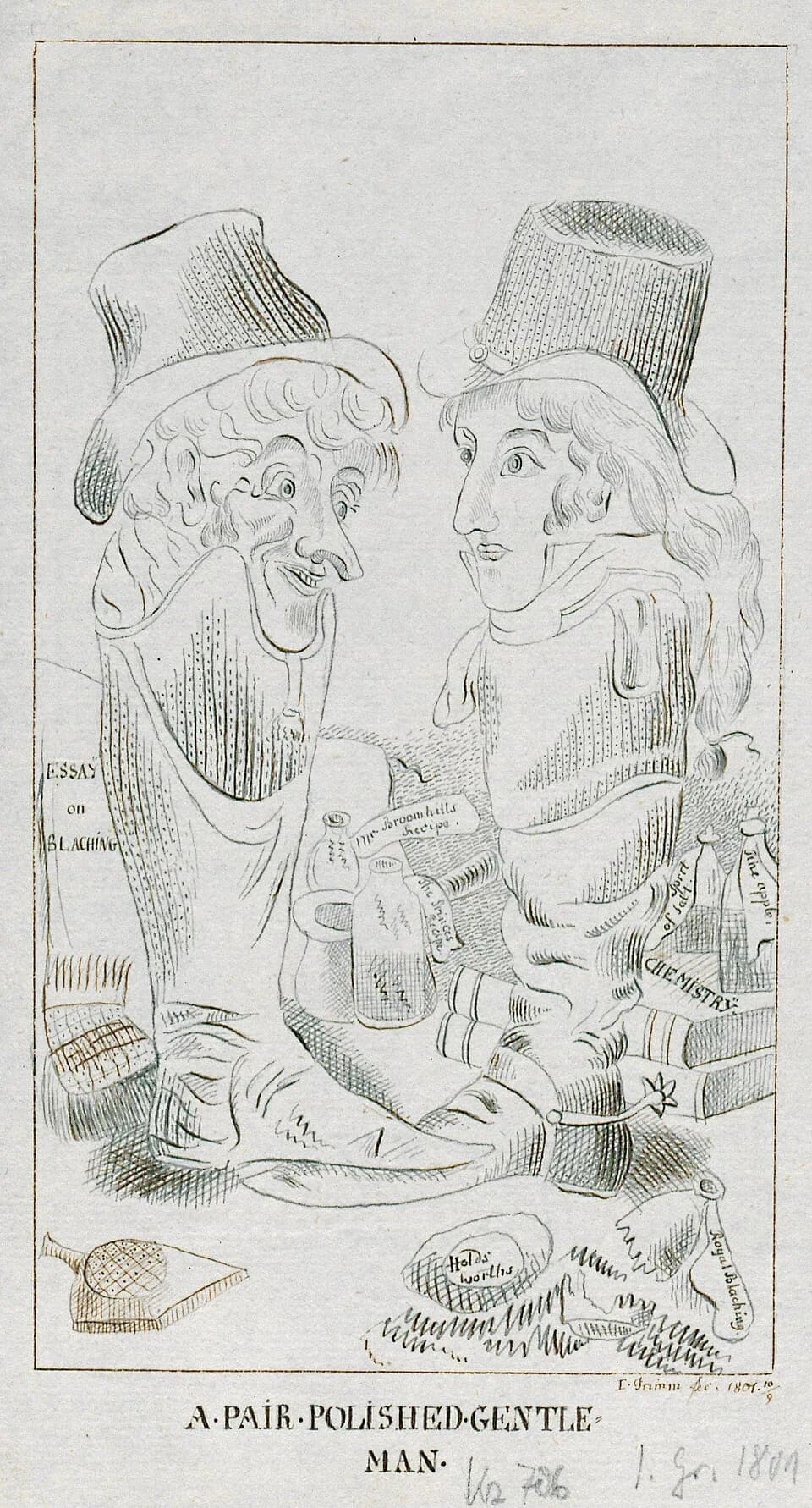
![Jacob Grimm - Title[correspondence] Brieven van Jacob Grimm aan Jan Frans Willems.Description14 brieven.Publisher1834-1851.ContentsBrieven: Göttingen, 14 dec. 1834. -- Göttingen, 15 apr. 1835. -- Gött](/_next/image?url=https%3A%2F%2Fcdn.whowasthisguy.com%2Fgallery_wikimedia_commons_1781699139761_1_9249a2c698.webp&w=1920&q=75)
![Jacob Grimm - Title[correspondence] Brieven van Jacob Grimm aan Jan Frans Willems.Description14 brieven.Publisher1834-1851.ContentsBrieven: Göttingen, 14 dec. 1834. -- Göttingen, 15 apr. 1835. -- Gött](/_next/image?url=https%3A%2F%2Fcdn.whowasthisguy.com%2Fgallery_wikimedia_commons_1781699142140_2_23c621a542.webp&w=1920&q=75)
![Jacob Grimm - Title[correspondence] Brieven van Jacob Grimm aan Jan Frans Willems.Description14 brieven.Publisher1834-1851.ContentsBrieven: Göttingen, 14 dec. 1834. -- Göttingen, 15 apr. 1835. -- Gött](/_next/image?url=https%3A%2F%2Fcdn.whowasthisguy.com%2Fgallery_wikimedia_commons_1781699143294_3_fc227cd637.webp&w=1920&q=75)
![Jacob Grimm - Title[correspondence] Brieven van Jacob Grimm aan Jan Frans Willems.Description14 brieven.Publisher1834-1851.ContentsBrieven: Göttingen, 14 dec. 1834. -- Göttingen, 15 apr. 1835. -- Gött](/_next/image?url=https%3A%2F%2Fcdn.whowasthisguy.com%2Fgallery_wikimedia_commons_1781699145218_4_58962a4323.webp&w=1920&q=75)
![Jacob Grimm - Title[correspondence] Brieven van Jacob Grimm aan Jan Frans Willems.Description14 brieven.Publisher1834-1851.ContentsBrieven: Göttingen, 14 dec. 1834. -- Göttingen, 15 apr. 1835. -- Gött](/_next/image?url=https%3A%2F%2Fcdn.whowasthisguy.com%2Fgallery_wikimedia_commons_1781699146289_5_fb13b12e0f.webp&w=1920&q=75)
FAQ
Preguntes freqüents
Quan va morir Jacob Grimm?
Jacob Grimm va morir el 20 de setembre del 1863 a Berlin, Margraviate of Brandenburg, als 78 anys.
On va néixer Jacob Grimm?
Jacob Grimm va néixer a Hanau, Germany el 4 de gener del 1785.
Per què és més conegut/da Jacob Grimm?
Jacob Grimm és conegut/da sobretot per German philologist, linguist, jurist and mythologist.
Quants anys tenia Jacob Grimm quan va morir?
Jacob Grimm tenia 78 anys en el moment de la seva mort.
Quina nacionalitat tenia Jacob Grimm?
Jacob Grimm era de Germany.
Cronologia
La vida en un cop d'ull
Galeria de fotos
Una vida en imatges
Feu clic a qualsevol polaroid per ampliar · 23 fotos
Codi QR
Comparteix aquesta biografia
Imprimeix i comparteix
Escaneja per visitar aquesta pàgina de biografia. Imprimeix per a esdeveniments, exposicions o materials educatius.