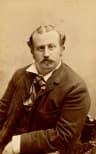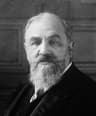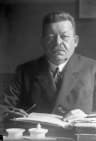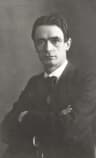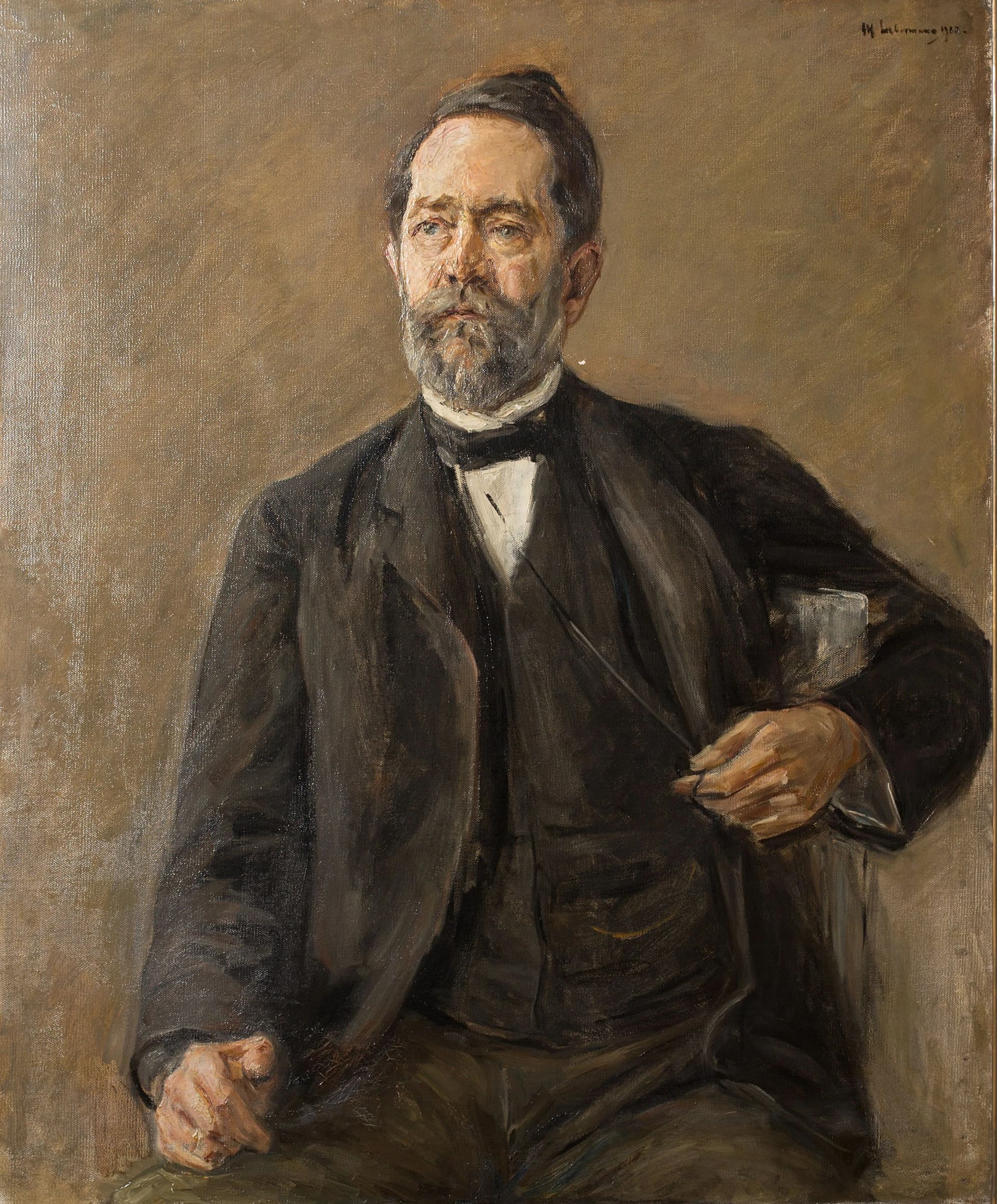
Nascut
April 25, 1849
Düsseldorf, Germany
Mort
June 22, 1925
Göttingen, Germany
Conegut per
German mathematician, author of the Erlangen Program
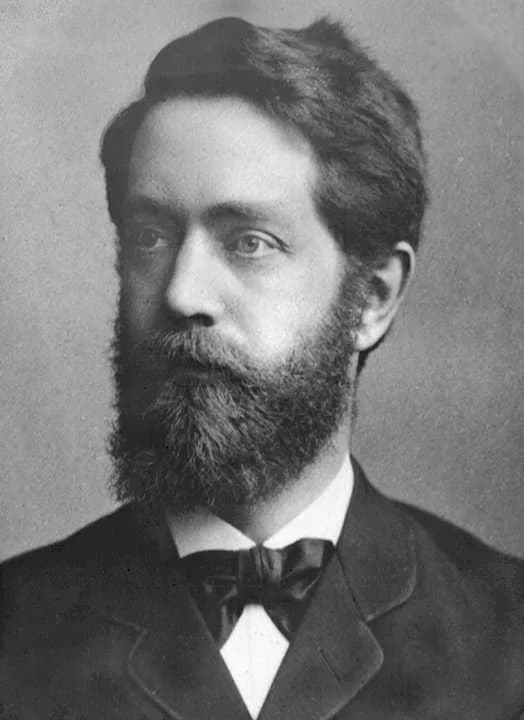
Felix Klein (1849–1925) was Germany best known for German mathematician, author of the Erlangen Program.
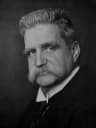
Felix Klein (April 25, 1849 – June 22, 1925) was a German mathematician from Düsseldorf. He authored the Erlangen Program, classifying geometries by their symmetry groups, which greatly influenced the field. His work integrated group theory, complex analysis, and non-Euclidean geometry, leaving a lasting impact.
Capítol
Capítols de la vida
Capítol 1 · 1849· Capítol 1 de 8
Opening
Felix Klein (April 25, 1849 – June 22, 1925) was a distinguished German mathematician, physicist, politician, publisher, university teacher, and historian of mathematics. Born in Düsseldorf and passing in Göttingen, his extensive career had a lasting influence on mathematical thought and education. He is primarily known for his conceptual work in group theory, complex analysis, and non-Euclidean geometry, unifying these areas with his influential Erlangen Program.
Klein’s influence extended beyond pure research, encompassing roles as a prominent mathematics educator and a significant historian of mathematics. His capacity to synthesize complex ideas and his dedication to teaching helped shape the mathematical world of the late 19th and early 20th centuries. His work provided a crucial framework for understanding the fundamental connections between geometry and group theory, which profoundly impacted subsequent generations of mathematicians.
Capítol 2 · 1849· Capítol 2 de 8
Early Life and Origins
Felix Christian Klein was born on April 25, 1849, in Düsseldorf, Germany. His formative years in this city laid the groundwork for his eventual academic pursuits. While specific details of his family life are not extensively documented, his early education must have been robust to prepare him for a path in advanced mathematics.
Klein's intellectual curiosity was evident from a young age, guiding him towards the rigorous study of mathematics. He pursued higher education, immersing himself in the scientific theories of his time. This dedicated study provided him with the necessary tools and perspective to later develop his unique contributions to geometry and group theory.
Capítol 3· Capítol 3 de 8
Career Beginnings
Klein commenced his professional life as a mathematician, quickly establishing a reputation for his analytical prowess. He began exploring the associations between geometry and group theory, a line of inquiry that would become central to his life's work. His early research focused on areas that would soon coalesce into his unified theories.
During this initial phase, Klein's ideas began to challenge conventional mathematical thinking, paving the way for his innovative contributions. He developed preliminary concepts that would mature into the highly influential Erlangen Program. His early academic appointments allowed him to refine these ideas and begin sharing them with the wider mathematical community, setting the stage for his future successes.
Capítol 4 · 1872· Capítol 4 de 8
Major Achievements and Career Highlights
Klein's defining achievement was the introduction of the Erlangen Program in 1872, a revolutionary framework presented at the University of Erlangen. This program classified geometries by their basic symmetry groups, providing a powerful method for understanding and relating different geometric systems. It was an influential synthesis of much of the mathematics of its era, bringing order to a diverse and rapidly expanding field.
His work in complex analysis and non-Euclidean geometry was also foundational, building on the insights derived from the Erlangen Program. Klein's ability to see deep structural connections between seemingly disparate branches of mathematics earned him international acclaim. He became a leading figure in the mathematical community, known for his ability to integrate complex concepts into coherent theories.
As a university teacher, Klein inspired countless students with his comprehensive understanding of mathematics. His dedication to education was a key aspect of his career, alongside his research and academic leadership. He held positions that allowed him to not only advance his own research but also to significantly influence the direction of mathematical education in Germany and beyond.
Capítol 5· Capítol 5 de 8
Personal Life
The surviving historical records primarily document Felix Klein's professional and intellectual life. Information regarding his personal family relationships or non-academic interests is not readily available in the provided summary. However, his diverse professional roles, including politician and publisher, suggest a broad engagement with society beyond his pure mathematical pursuits, indicating a full and active existence.
Capítol 6· Capítol 6 de 8
Notable Works or Contributions
Felix Klein's bibliography is extensive, reflecting his lifelong commitment to mathematics and its communication. His "Gesammelte mathematische" stands as a collection of his significant mathematical writings. He further contributed to the field with "Vorlesungen über projektive Geometrie" and "Die mathematischen Wissenschaften," showcasing his command over various geometric disciplines.
Beyond research, Klein was a dedicated educator and historian, reflected in works like "Neue Beiträge zur Frage des mathematischen und physikalischen Unterrichts an den höheren Schulen" and "Vorlesungen über die Entwicklung der Mathematik im 19. Jahrhundert." He also published "Lectures on mathematics" and several pamphlets, ensuring his ideas reached a wide audience. His "Odczyty o matematyce miane w Evanston od 28 sierpnis do 9 września 1893 r.dla członków Kongresu matematycznego" highlights his international lectures.
Capítol 7 · 1925· Capítol 7 de 8
Later Years
In his later years, Felix Klein continued his influential work from Göttingen, Germany, where he ultimately passed away on June 22, 1925. He maintained his roles as a university teacher and academic leader, guiding the next generation of mathematicians. His continued scholarly activity ensured his ideas remained current and influential.
Klein's later career saw him further solidify his standing as a historian of mathematics, documenting the evolution of his field. He used his position as a publisher and politician to advocate for mathematical education and research. His final years were a culmination of a lifetime dedicated to the advancement and dissemination of mathematical knowledge.
Capítol 8· Capítol 8 de 8
Legacy and Impact
Felix Klein's most enduring legacy is the Erlangen Program, which transformed the understanding of geometry by emphasizing symmetry groups. This unifying principle significantly shaped mathematical research for decades, integrating various geometric systems under one coherent theory. His work continues to be a cornerstone of modern geometry and mathematical physics.
As a mathematics educator and historian, Klein ensured that his ideas, and the history of mathematics itself, were accessible and understood. His contributions to group theory, complex analysis, and non-Euclidean geometry remain fundamental concepts in contemporary mathematics. Generations of students and researchers continue to study and build upon the intellectual frameworks he established during his illustrious career.
Una vida en moments
Els moments que van marcar una vida
FAQ
Preguntes freqüents
Quan va morir Felix Klein?
Felix Klein va morir el 22 de juny del 1925 a Göttingen, Germany, als 76 anys.
On va néixer Felix Klein?
Felix Klein va néixer a Düsseldorf, Germany el 25 d’abril del 1849.
Per què és més conegut/da Felix Klein?
Felix Klein és conegut/da sobretot per German mathematician, author of the Erlangen Program.
Quants anys tenia Felix Klein quan va morir?
Felix Klein tenia 76 anys en el moment de la seva mort.
Quina nacionalitat tenia Felix Klein?
Felix Klein era de Germany.
Cronologia
La vida en un cop d'ull
Galeria de fotos
Una vida en imatges
Feu clic a qualsevol polaroid per ampliar · 24 fotos
Codi QR
Comparteix aquesta biografia
Imprimeix i comparteix
Escaneja per visitar aquesta pàgina de biografia. Imprimeix per a esdeveniments, exposicions o materials educatius.