Nascut
September 13, 1874
Vienna, Austria
Mort
July 13, 1951
Los Angeles, United States
Conegut per
Austrian-Jewish American composer
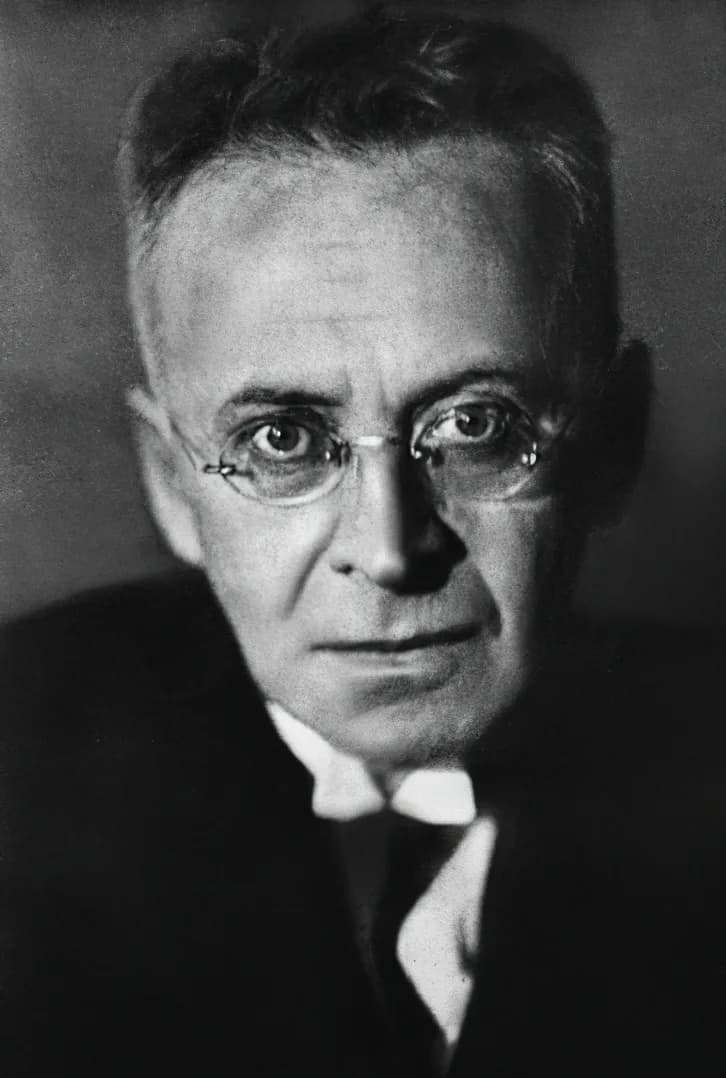
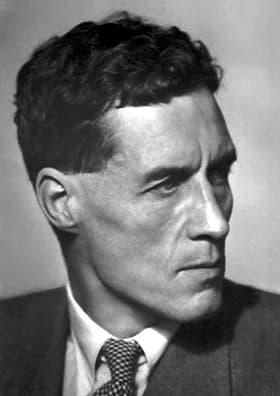
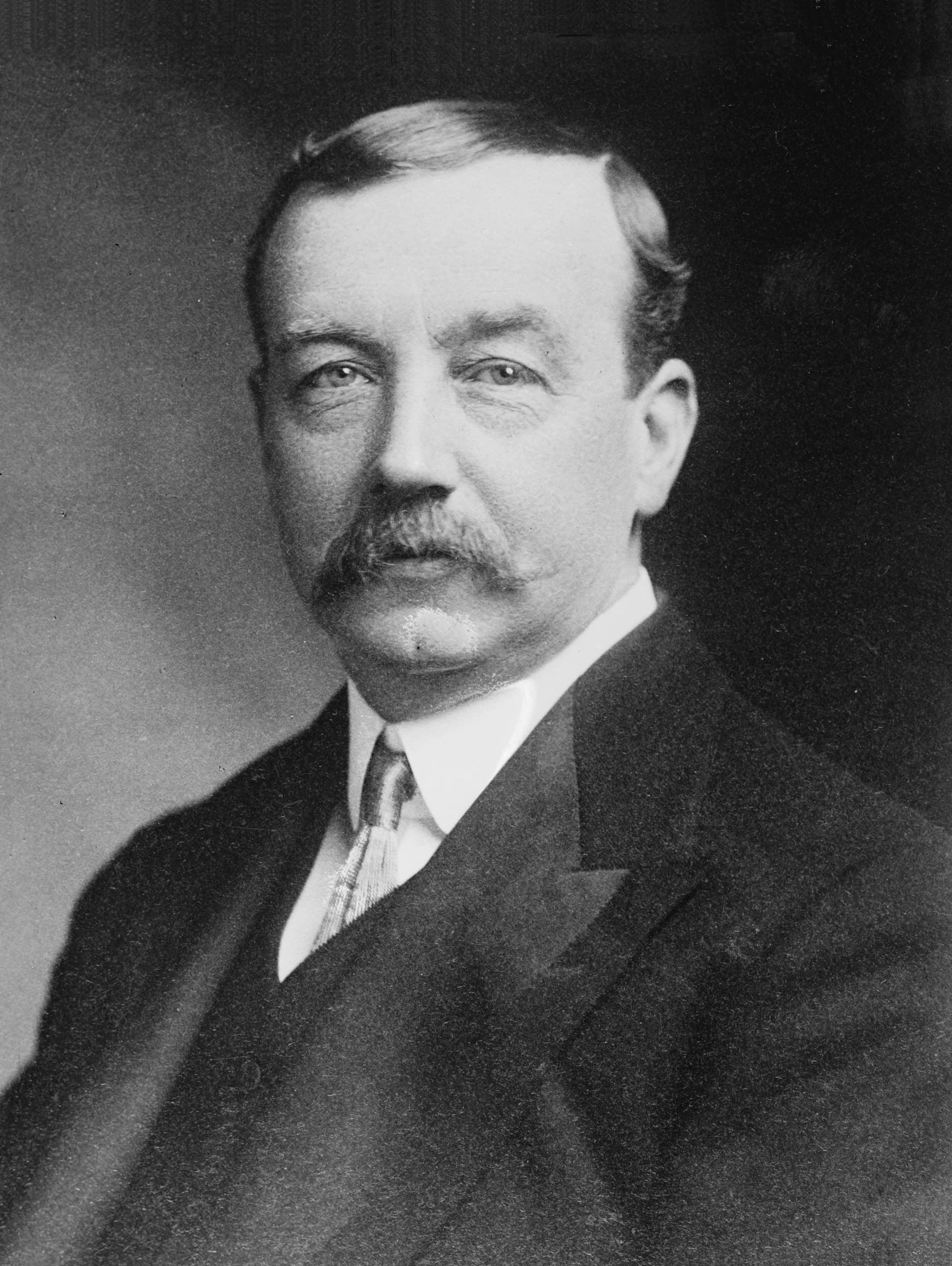
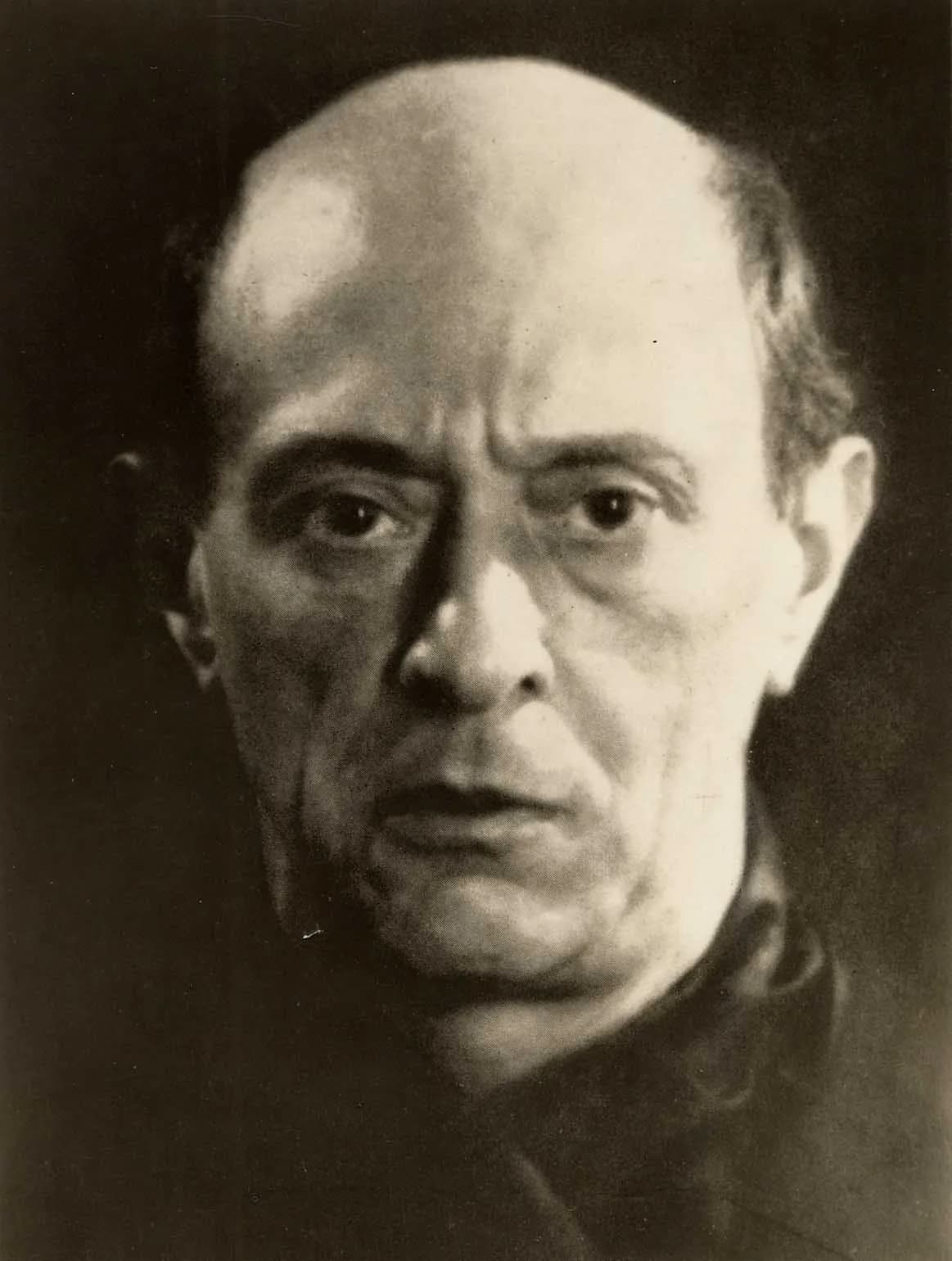
Arnold Schoenberg (1874–1951) was Austria best known for Austrian-Jewish American composer.
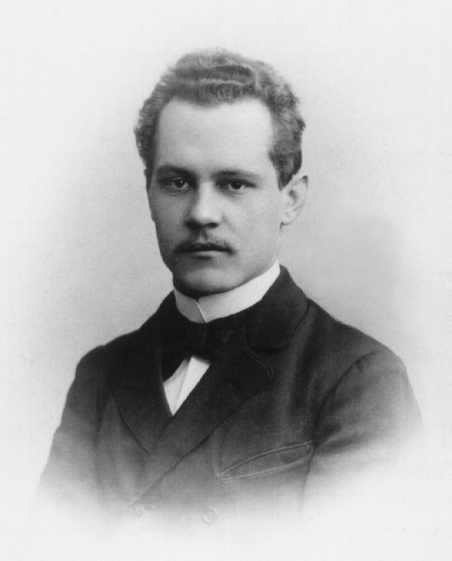
Arnold Schoenberg (September 13, 1874 – July 13, 1951) was an Austrian-Jewish American composer, music theorist, and teacher. He was known for propounding developing variation and the emancipation of the dissonance, fundamentally reshaping 20th-century classical music. His legacy includes influential compositions and teaching at UCLA.
Una vida en moments
Els moments que van marcar una vida
Capítol
Capítols de la vida
Capítol 1 · 1874· Capítol 1 de 9
Early Life and Origins
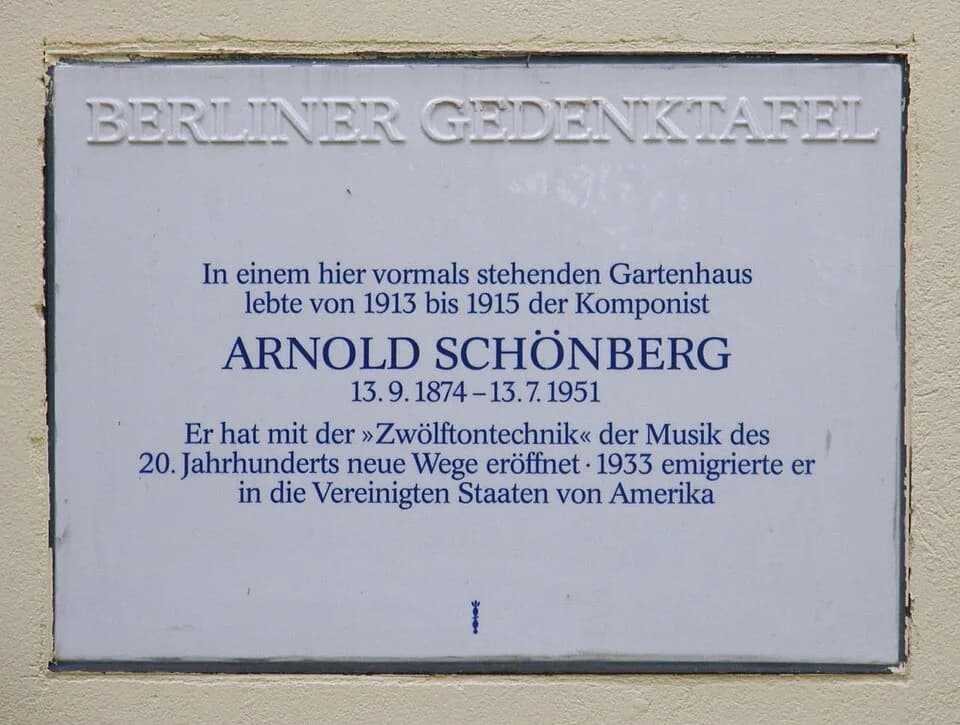
Born on September 13, 1874, Arnold Schoenberg began his life in Vienna, Austria, a city steeped in rich musical tradition. This vibrant cultural environment provided the backdrop for his formative years and early artistic development. His eventual journey would take him far beyond his birthplace, yet the Viennese legacy remained a part of his musical identity and artistic temperament.
Capítol 2· Capítol 2 de 9
Career Beginnings
Schoenberg started his professional journey with a diverse array of roles, demonstrating his wide-ranging talents across the musical and artistic spectrum. He worked as a writer, composer, conductor, and artist, even exploring painting as another avenue for his creative expression. His early career saw him establish himself as a respected music teacher, musicologist, and music theorist, laying the groundwork for his later, more revolutionary contributions to classical composition.
Capítol 3 · 1925· Capítol 3 de 9
Major Achievements and Career Highlights
His artistic and theoretical innovations led him to propound the concept of "developing variation," a method where musical ideas evolve continuously through subtle alterations. Furthermore, Schoenberg advocated for the "emancipation of the dissonance," urging for the liberation of dissonant harmonies from the traditional need to resolve to consonance. These radical ideas challenged centuries of musical convention, opening new pathways for sonic exploration in the classical genre. From 1925 to 1933, he held a prestigious teaching position at the Prussian Academy of Arts, located in Berlin, a testament to his growing influence in European musical circles.
Capítol 4 · 1933· Capítol 4 de 9
Personal Life
Schoenberg's life took a dramatic turn in the face of rising political tensions in Europe. Confronting Nazi Germany's increasingly oppressive civil–service restrictions, he made the courageous decision to resign from his post at the Prussian Academy of Arts in 1933. In a powerful act of defiance, he publicly reaffirmed his Judaism during this period, choosing to embrace his heritage in the face of persecution. This profound personal and political stand led him to immigrate to the United States, seeking refuge and the freedom to continue his artistic and academic pursuits.
Capítol 5 · 1936· Capítol 5 de 9
Later Career and Transition to America
Upon arriving in the United States, Arnold Schoenberg quickly re-established his career as an influential educator and composer. He began teaching at the University of California, Los Angeles (UCLA) in 1936, where he continued to shape the minds of future musicians until 1944. His impactful tenure at UCLA is permanently recognized, with facilities on the campus bearing his distinguished name, honoring his enduring legacy in American academia and music.
Capítol 6 · 1955· Capítol 6 de 9
Notable Works or Contributions
Schoenberg's compositional output is firmly rooted in the classical genre, yet it consistently pushed boundaries. His discography includes seminal recordings such as the "Second Viennese School: Complete String Quartets," a collection that highlights his contributions to chamber music and his role in a significant movement. The innovative Pierrot lunaire, op. 21, released in recordings from 1955 and 1962, exemplifies his inventive use of *Sprechstimme* and atonal techniques, establishing a new paradigm for vocal and instrumental music. Another important work, *Transfigured Night*, appeared in recordings from 1958 and 1967, showcasing his earlier, richly Romantic style and its continued appeal.
His five Pieces for Orchestra, op. 16, recorded in 1953, marked another significant step in his exploration of orchestral color and form, expanding the possibilities of large-scale composition. Schoenberg also contributed important solo piano works, including Three Piano Pieces, op. 11, which were recorded alongside works by Berg and Křenek in 1959, demonstrating his continued exploration of instrumental texture. The comprehensive collection, The Music of Arnold Schoenberg, Vol. 4: The Complete Music for Solo Piano / Songs for Voice & Piano, released in 1966, further highlights the breadth and depth of his solo and vocal compositions. His influence extended through various collaborations and shared recordings, such as his works appearing with compositions by Eloy and Pousseur in 1967, indicating his impact on contemporary music.
Capítol 7 · 2004· Capítol 7 de 9
Literary and Theoretical Impact
Beyond his compositions, Schoenberg was a prolific writer and theorist, articulating his radical musical philosophies with clarity and conviction. His notable writings include Eine neue Zwölfton-Schrift (A New Twelve-Tone Notation), which detailed his revolutionary compositional system for others to study. Opinions musicales offered insights into his critical perspectives on music, while Moderne Psalmen explored his spiritual and philosophical reflections through poetic text. Additionally, works like Models for beginners in composition served as practical guides for aspiring musicians, showcasing his dedication to teaching and the dissemination of his musical principles. His collected correspondence, exemplified by the "[Schoenberg-Engel correspondence]," provides valuable insights into his thoughts and relationships with contemporaries. Other notable bibliographic entries include Zar hinkha, הנצול מורשה, Die Jakobsleiter, and Europakonzert 2004, each contributing to the vast body of his theoretical and literary output and showcasing his diverse intellectual interests.
Capítol 8 · 1944· Capítol 8 de 9
Later Years
Arnold Schoenberg continued to reside and work in the United States after his academic tenure at UCLA concluded in 1944. He remained an active and influential figure in the music world, even in his later years, solidifying his reputation as an American composer. Schoenberg passed away on July 13, 1951, in Los Angeles, United States, concluding a life rich with artistic innovation and personal courage.
Capítol 9· Capítol 9 de 9
Legacy and Impact
Arnold Schoenberg's impact on 20th-century classical music is undeniable, solidifying his position as a true modernist composer. His theoretical frameworks, especially developing variation and the emancipation of the dissonance, fundamentally altered the course of composition for future generations. The facilities at the University of California, Los Angeles, bearing his name serve as a permanent tribute to his influential teaching and artistic presence. His unwavering commitment to artistic innovation and his defiant stance against oppression cemented his place not only as a musical giant but also as a figure of integrity and courage. He forever changed the way composers approached harmony, melody, and form, ensuring his place among the most influential figures in the history of music.
FAQ
Preguntes freqüents
Quan va morir Arnold Schoenberg?
Arnold Schoenberg va morir el 13 de juliol del 1951 a Los Angeles, United States, als 76 anys.
On va néixer Arnold Schoenberg?
Arnold Schoenberg va néixer a Vienna, Austria el 13 de setembre del 1874.
Per què és més conegut/da Arnold Schoenberg?
Arnold Schoenberg és conegut/da sobretot per Austrian-Jewish American composer.
Quants anys tenia Arnold Schoenberg quan va morir?
Arnold Schoenberg tenia 76 anys en el moment de la seva mort.
Quina nacionalitat tenia Arnold Schoenberg?
Arnold Schoenberg era de Austria.
Cronologia
La vida en un cop d'ull
Galeria de fotos
Una vida en imatges
Feu clic a qualsevol polaroid per ampliar · 46 fotos
Codi QR
Comparteix aquesta biografia
Imprimeix i comparteix
Escaneja per visitar aquesta pàgina de biografia. Imprimeix per a esdeveniments, exposicions o materials educatius.