Rođen/a
August 15, 1892
Dieppe, France
Umro/la
March 19, 1987
Louveciennes, France
Poznat/a po
Nobel laureate credited to pioneer the discovery of wave character of matter
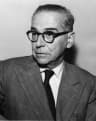
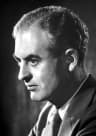
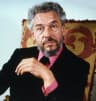
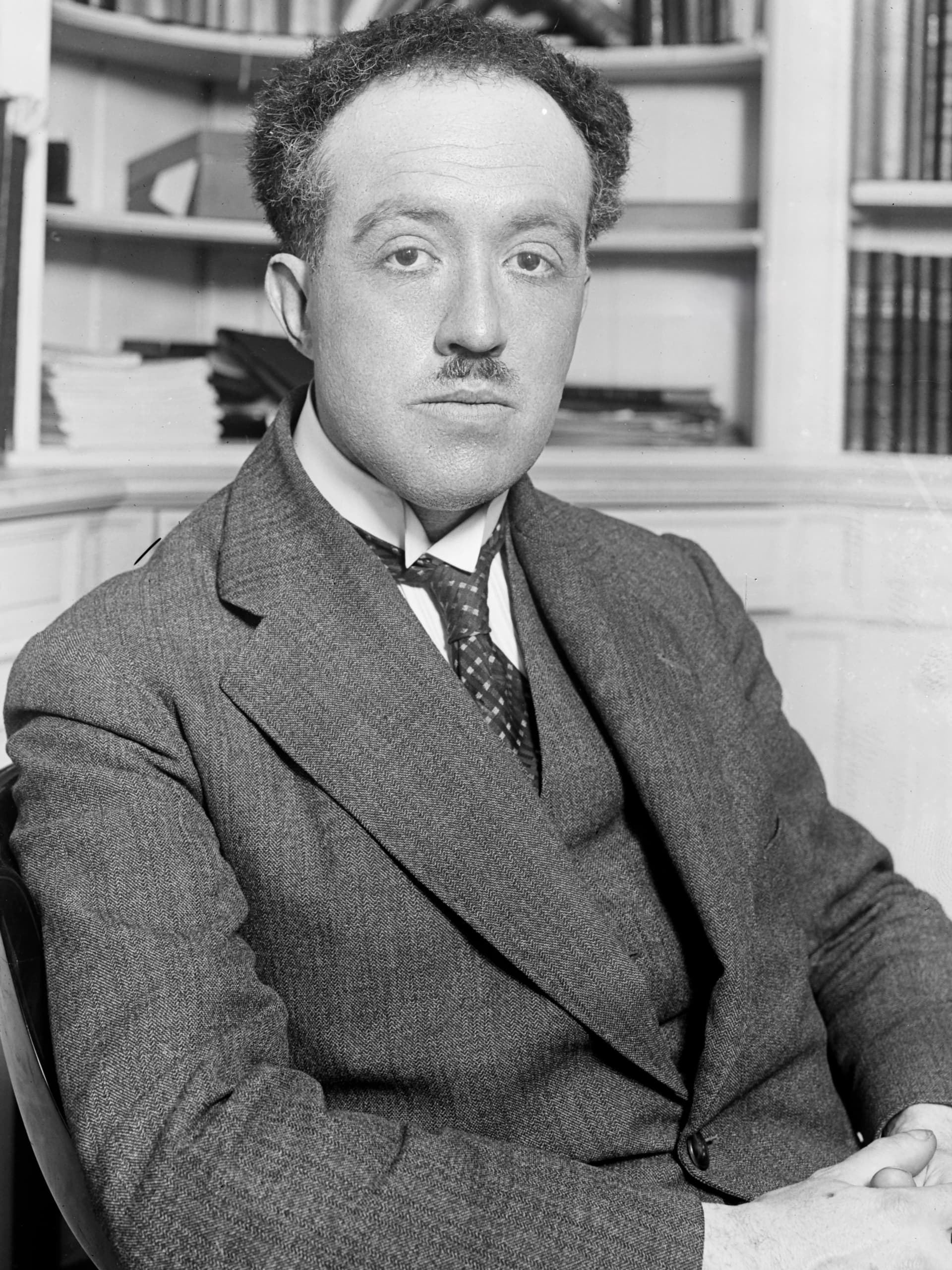
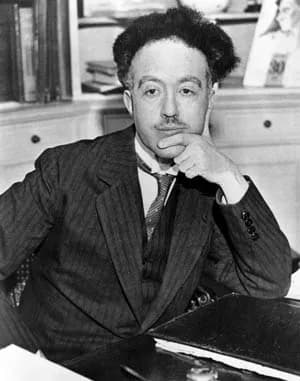
Louis de Broglie (1892–1987) was France best known for Nobel laureate credited to pioneer the discovery of wave character of matter.
Louis de Broglie (August 15, 1892 – March 19, 1987) was a French theoretical physicist. He pioneered the discovery of the wave character of matter, known as the de Broglie hypothesis, which is central to quantum mechanics. His work earned him the Nobel Prize in Physics in 1929.
Poglavlje
Životna poglavlja
Poglavlje 1 · 1892· Poglavlje 1 od 7
Early Life and Origins
Louis de Broglie entered the world in Dieppe, France, on August 15, 1892. Hailing from an aristocratic French family, he carried the title of the 7th Duc de Broglie, reflecting his distinguished lineage. His early life unfolded against the rich cultural and intellectual backdrop of France at the turn of the 20th century.
While specific details of his upbringing beyond his aristocratic status are not provided, it is clear that his education prepared him for a path of rigorous scientific inquiry. His family name itself carried a historical weight, adding to the persona of this remarkable physicist.
Poglavlje 2· Poglavlje 2 od 7
Career Beginnings
De Broglie's journey into the world of theoretical physics began earnestly with his doctoral studies. It was in this formative period that he began to challenge conventional scientific thought. His foundational work would soon lay the groundwork for a revolution in quantum mechanics.
Poglavlje 3 · 1924· Poglavlje 3 od 7
Major Achievements and Career Highlights
The crowning achievement of de Broglie's career came with his groundbreaking Ph.D. thesis in 1924. In this pivotal work, he postulated the revolutionary concept of the wave nature of electrons. He further suggested that all matter exhibits wave properties, a hypothesis that would become famously known as the de Broglie hypothesis and a cornerstone of wave-particle duality.
This innovative idea quickly became a central part of the burgeoning theory of quantum mechanics. His theoretical predictions were experimentally confirmed in 1927, solidifying his place in scientific history. In recognition of this profound discovery, Louis de Broglie was awarded the Nobel Prize in Physics in 1929, specifically for his discovery of the wave nature of electrons. This confirmation also paved the way for George Paget Thomson and Clinton Davisson to receive their Nobel Prize in 1937 for the experimental verification of de Broglie's theory.
Poglavlje 4· Poglavlje 4 od 7
Personal Life
While Louis de Broglie's public life was primarily dedicated to his scientific pursuits and academic endeavors, details regarding his personal life, family, relationships, or specific interests beyond physics are not extensively documented in the available information. His legacy is predominantly celebrated through his intellectual achievements and scientific insights.
Poglavlje 5· Poglavlje 5 od 7
Notable Works or Contributions
Louis de Broglie's scientific output was substantial, marked by his profound theoretical contributions. His extensive academic career included an impressive 99 papers, demonstrating an h-index of 21. These works consistently explored the intricacies of quantum theory and the nature of matter.
Among the significant publications associated with his enduring legacy are those that delve into his core theories, such as "The Interpretation of Wave Mechanics with the help of Waves with Singular Regions," "A new conception for light," "The Diffraction of Electrons," and "ELECTRON DIFFRACTION." These titles reflect the ongoing academic engagement with his foundational ideas.
Poglavlje 6· Poglavlje 6 od 7
Later Years
De Broglie continued to contribute to theoretical physics throughout his later years, solidifying his reputation as a leading figure in the field. His initial hypothesis became a foundational element taught in physics classrooms worldwide. He remained a respected voice in the scientific community long after his Nobel win.
Louis de Broglie passed away on March 19, 1987, in Louveciennes, France, leaving behind a monumental body of work. His influence endured decades after his initial discoveries, shaping generations of physicists.
Poglavlje 7· Poglavlje 7 od 7
Legacy and Impact
The legacy of Louis de Broglie is immense and far-reaching, fundamentally altering the scientific understanding of the universe. His de Broglie hypothesis, demonstrating the wave nature of matter, provided a crucial stepping stone in the development of quantum mechanics. This concept remains indispensable for understanding the behavior of particles at the atomic and subatomic levels.
His work established wave-particle duality as a central principle, influencing fields from electron microscopy to fundamental particle physics. De Broglie's insightful theories continue to inspire research and education, marking him as one of the most influential physicists of the 20th century whose ideas continue to resonate profoundly in scientific inquiry.
Život u trenucima
Trenuci koji su oblikovali život
Česta pitanja
Često postavljana pitanja
Kada je umro/la Louis de Broglie?
Louis de Broglie je umro/la 19. mart 1987. u Louveciennes, France u 94. godini života.
Gdje je rođen(a) Louis de Broglie?
Louis de Broglie je rođen(a) u Dieppe, France 15. august 1892..
Po čemu je Louis de Broglie najpoznatiji(a)?
Louis de Broglie je najpoznatiji(a) po Nobel laureate credited to pioneer the discovery of wave character of matter.
Koliko je Louis de Broglie imao/la godina u trenutku smrti?
Louis de Broglie je imao/la 94 godina u trenutku smrti.
Kojeg porijekla je bio/la Louis de Broglie?
Louis de Broglie je bio/la iz France.
Vremenska linija
Život u kratkom pregledu
Galerija fotografija
Život u slikama
Kliknite bilo koji polaroid za uvećanje · 46 fotografija
QR kod
Podijelite ovu biografiju
Štampaj i podijeli
Skenirajte za posjetu ovoj biografskoj stranici. Štampajte za događaje, izložbe ili obrazovne materijale.