Rođen/a
May 11, 973
Bad Abbach, Germany
Umro/la
July 19, 1024
Grone, Germany
Poznat/a po
Holy Roman Emperor from 1014 to 1024
Henry II, Holy Roman Emperor (973–1024) was Germany best known for Holy Roman Emperor from 1014 to 1024.
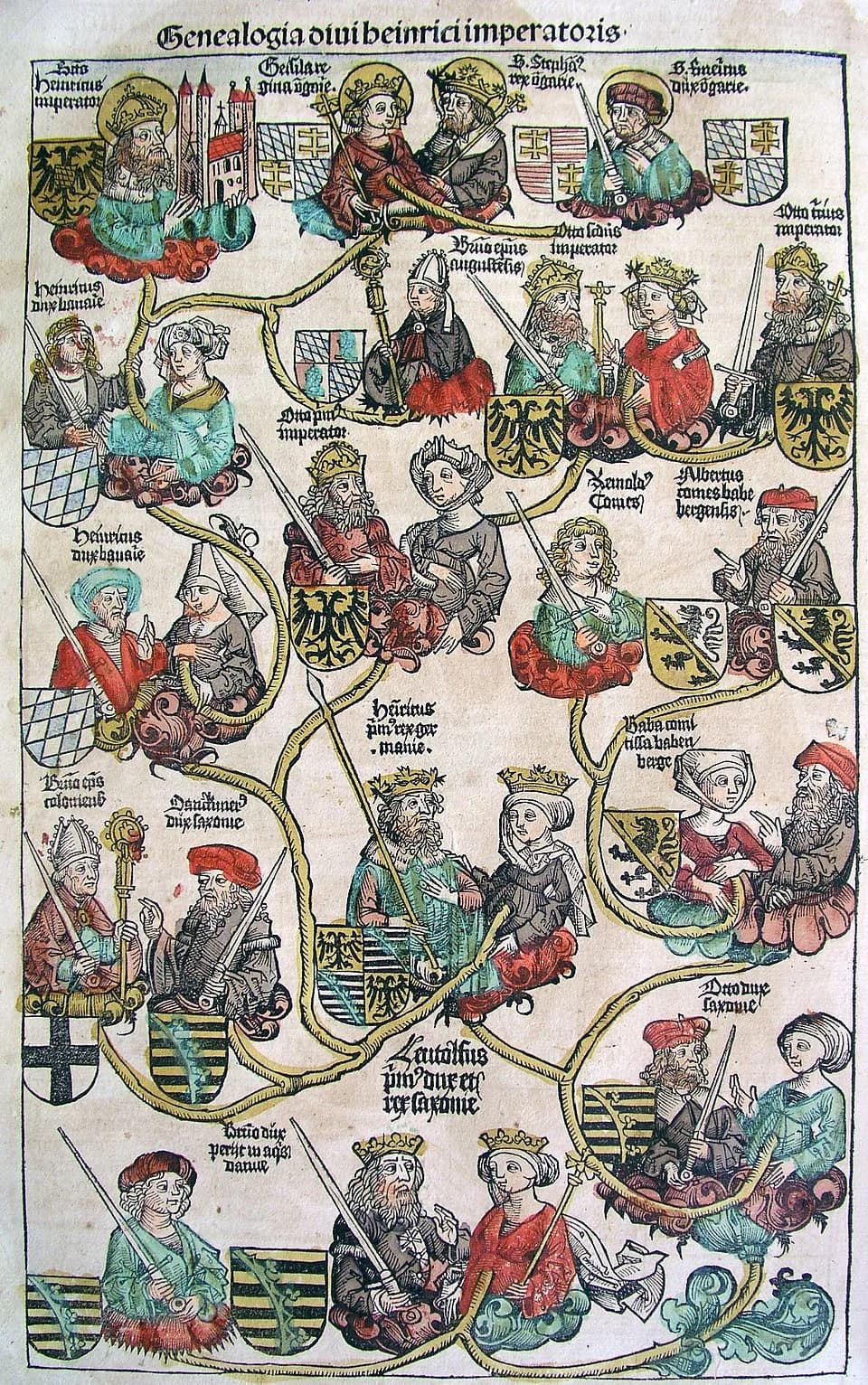
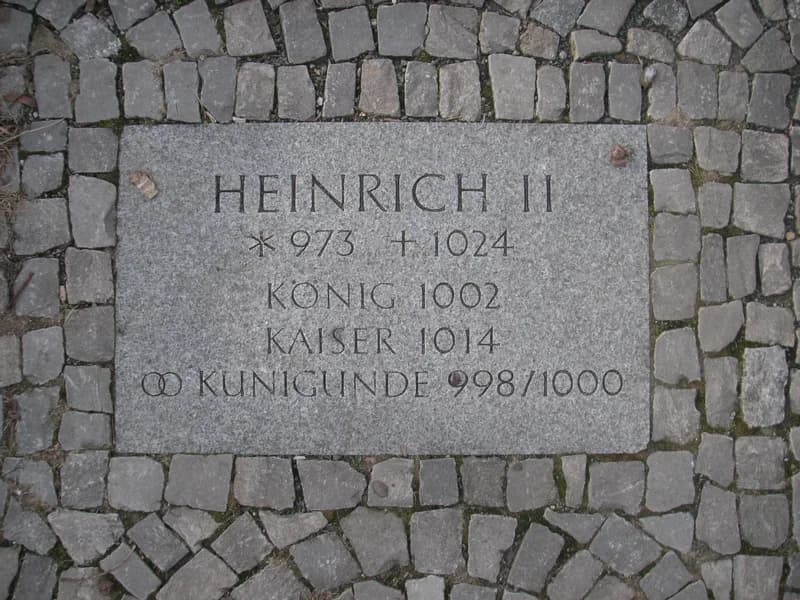
Henry II (973–1024) was Holy Roman Emperor who ruled from 1014 until his death. Known as Saint Henry, he was the last ruler of the Ottonian dynasty and died without an heir in 1024. His reign marked the end of an important era in medieval European history.
Život u trenucima
Trenuci koji su oblikovali život
Poglavlje
Životna poglavlja
Poglavlje 1· Poglavlje 1 od 6
Early Life and Origins
Henry was born into the powerful Ottonian family in Bad Abbach, a town in what is now Bavaria, Germany. As a member of this influential dynasty, he was positioned from birth to play a major role in the complex political structure of medieval Europe. His upbringing prepared him for the responsibilities of rulership in an age when the Holy Roman Empire stretched across vast territories and required skilled diplomatic and military leadership.
Poglavlje 2 · 1002· Poglavlje 2 od 6
Rise to Power
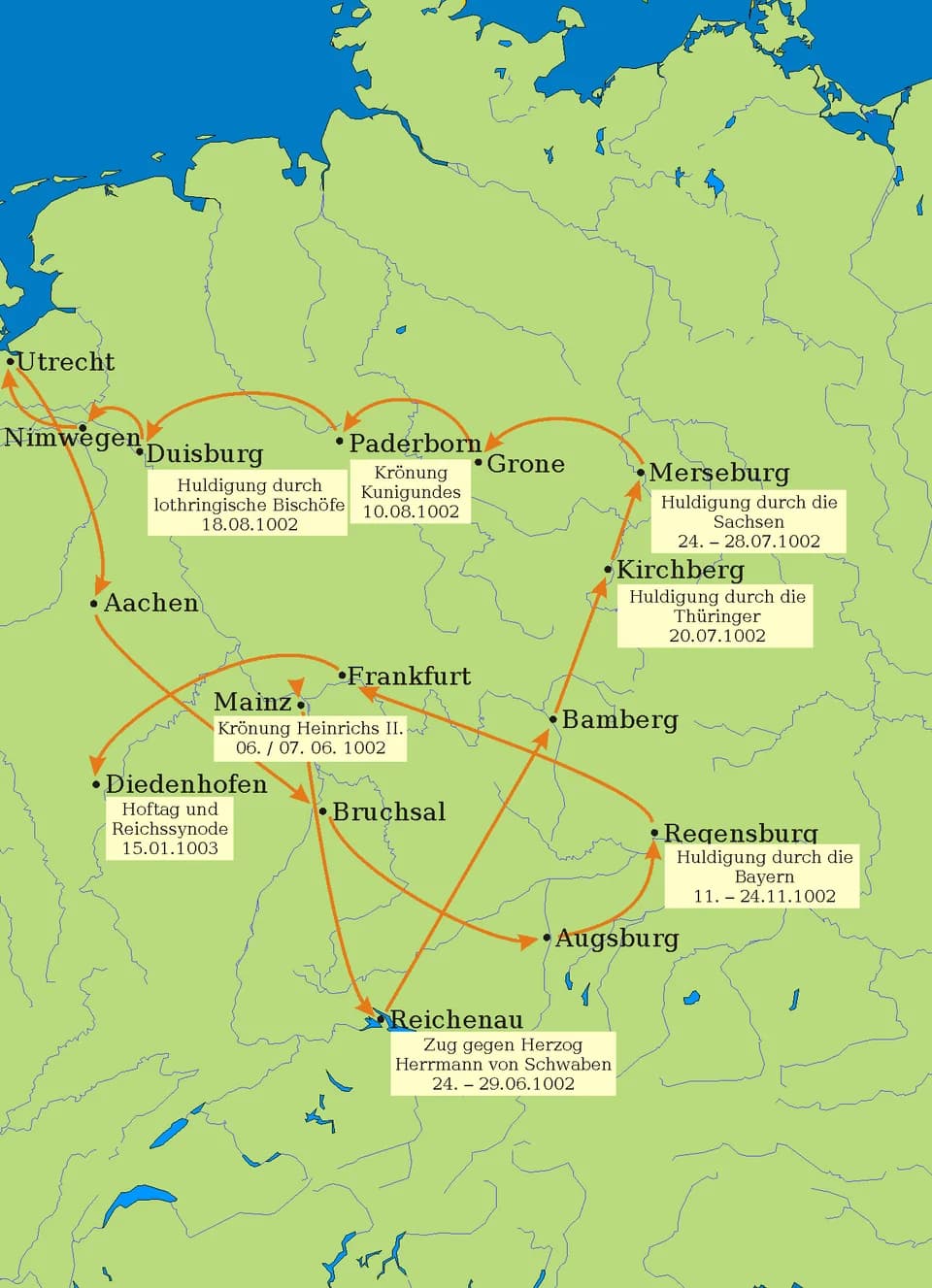
Henry's path to supreme power began in 995 when he was appointed Duke of Bavaria, establishing his credentials as a regional leader. His ascension accelerated dramatically in 1002 following the sudden death of his second cousin, Emperor Otto III. This unexpected turn of events positioned Henry to claim the throne as King of the Romans, marking the beginning of his imperial journey.
Two years later, in 1004, Henry expanded his authority by becoming King of Italy, consolidating his control over the Italian territories that formed a crucial part of the Holy Roman Empire. This strategic move demonstrated his political acumen and ability to manage the complex relationships between German and Italian nobility.
Poglavlje 3 · 1014· Poglavlje 3 od 6
Imperial Crown and Major Achievements
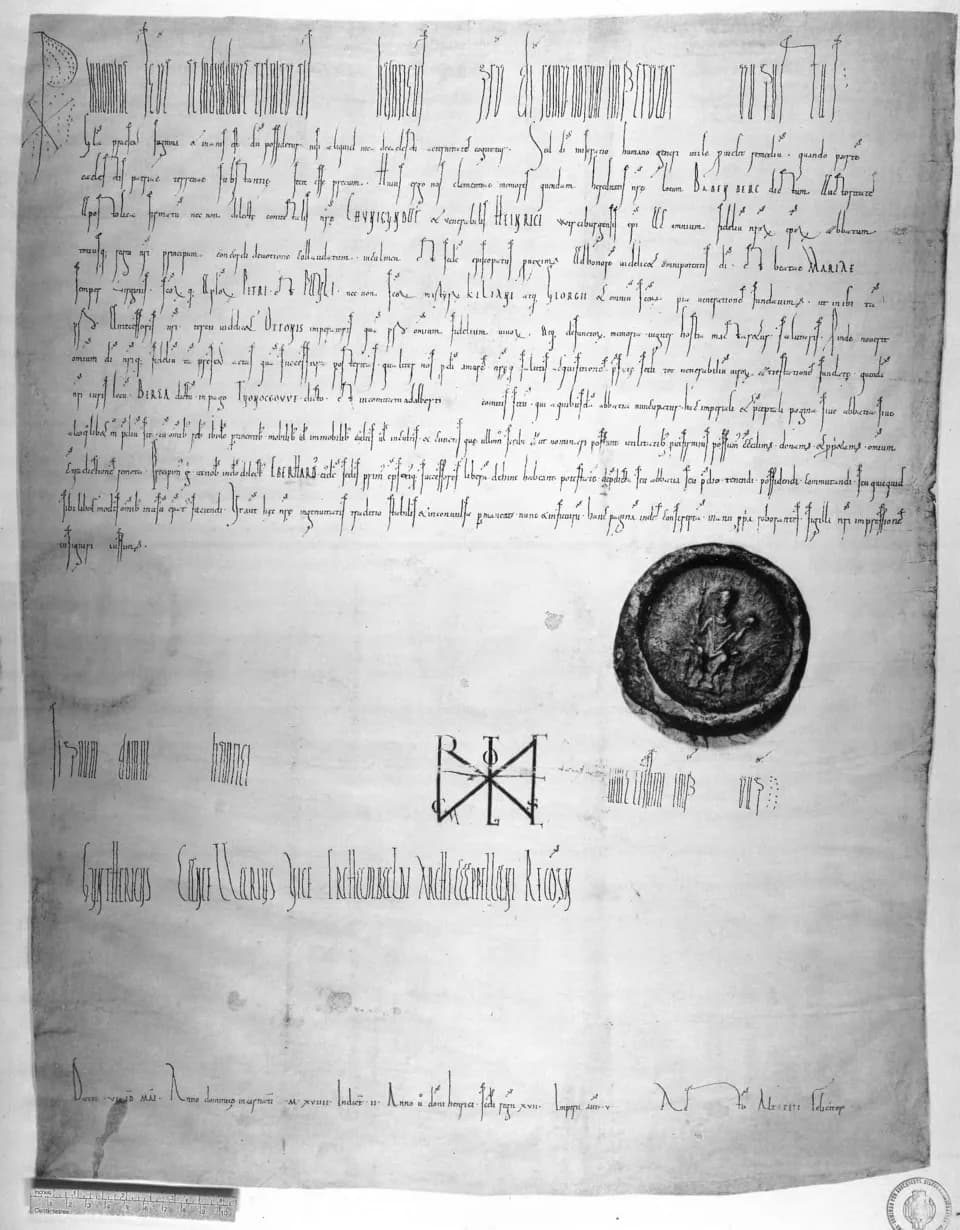
The pinnacle of Henry's career came in 1014 when Pope Benedict VIII crowned him Holy Roman Emperor, formalizing his position as the most powerful ruler in medieval Europe. This coronation represented not just personal triumph but also the continuation of the Ottonian tradition of imperial leadership that had defined European politics for decades.
As emperor, Henry II navigated the challenging political dynamics of his time with remarkable skill. He managed to maintain stability across his vast territories while dealing with the constant pressures of noble rivalries, ecclesiastical politics, and external threats that characterized medieval European governance.
Poglavlje 4· Poglavlje 4 od 6
Religious Devotion and Sainthood
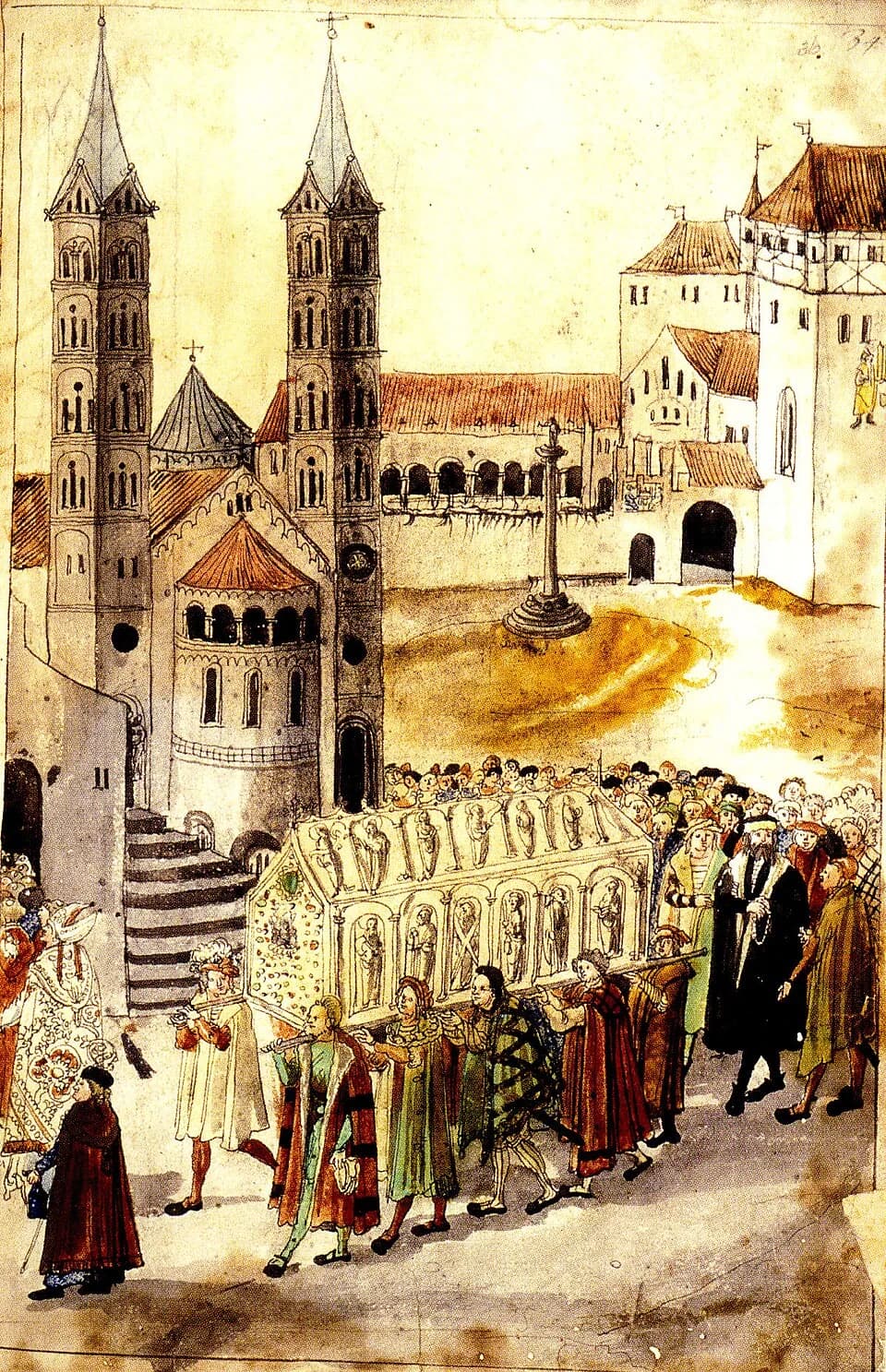
Beyond his political achievements, Henry II became known for his deep religious devotion, earning him the title Saint Henry. His commitment to the Church and Christian principles influenced his governance style and diplomatic approach. This spiritual dimension of his leadership set him apart from many of his contemporaries and contributed to his lasting legacy.
His religious dedication was so profound that it became one of his defining characteristics, influencing both his domestic policies and his relationships with Church leaders throughout his reign.
Poglavlje 5· Poglavlje 5 od 6
Final Years and the End of a Dynasty
Henry's later years were marked by the growing realization that he would leave no heir to continue the Ottonian line. This situation created significant uncertainty about the future of the Holy Roman Empire and required careful planning for succession. Despite this challenge, he continued to govern effectively until his death.
On July 19, 1024, Henry II died in Grone, Germany, marking not just the end of his personal reign but the conclusion of the entire Ottonian dynasty. His death without an heir created a power vacuum that would reshape European politics and lead to new imperial dynasties.
Poglavlje 6· Poglavlje 6 od 6
Legacy and Historical Impact
Henry II's death represented a turning point in European history, as the end of the Ottonian line forced a reorganization of imperial power structures. His ten-year reign as Holy Roman Emperor had provided stability and continuity, but his lack of an heir meant that future emperors would come from different noble houses.
The combination of his political leadership and religious devotion created a unique legacy that influenced both secular and spiritual aspects of medieval European culture. His canonization as Saint Henry ensured that his memory would be preserved not only in historical records but also in religious tradition, making him one of the few Holy Roman Emperors to achieve sainthood.
Česta pitanja
Često postavljana pitanja
Kada je umro/la Henry II, Holy Roman Emperor?
Henry II, Holy Roman Emperor je umro/la 19. juli 1024. u Grone, Germany u 51. godini života.
Gdje je rođen(a) Henry II, Holy Roman Emperor?
Henry II, Holy Roman Emperor je rođen(a) u Bad Abbach, Germany 11. maj 973..
Po čemu je Henry II, Holy Roman Emperor najpoznatiji(a)?
Henry II, Holy Roman Emperor je najpoznatiji(a) po Holy Roman Emperor from 1014 to 1024.
Koliko je Henry II, Holy Roman Emperor imao/la godina u trenutku smrti?
Henry II, Holy Roman Emperor je imao/la 51 godina u trenutku smrti.
Kojeg porijekla je bio/la Henry II, Holy Roman Emperor?
Henry II, Holy Roman Emperor je bio/la iz Germany.
Vremenska linija
Život u kratkom pregledu
Galerija fotografija
Život u slikama
Kliknite bilo koji polaroid za uvećanje · 44 fotografija
QR kod
Podijelite ovu biografiju
Štampaj i podijeli
Skenirajte za posjetu ovoj biografskoj stranici. Štampajte za događaje, izložbe ili obrazovne materijale.