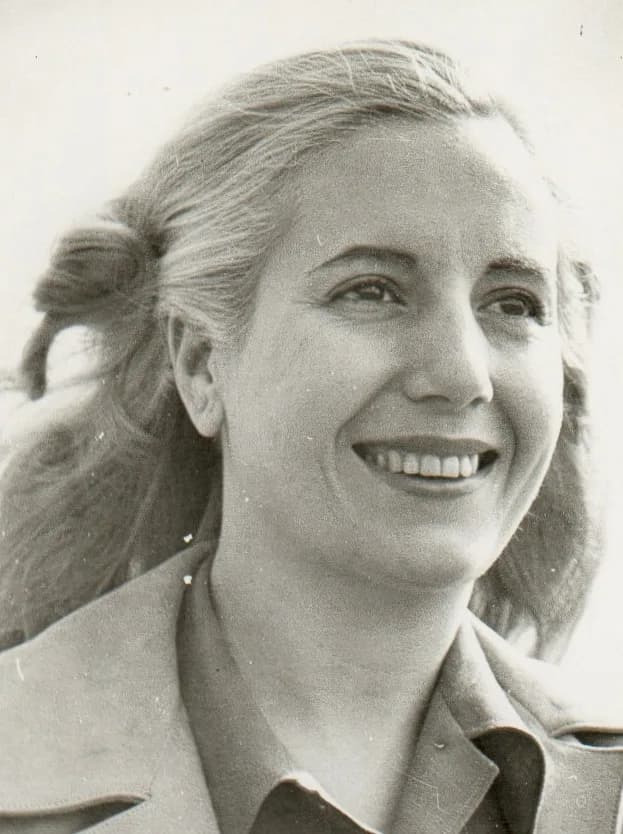
Rođen/a
May 7, 1919
Junín, Argentina
Umro/la
July 26, 1952
Buenos Aires, Argentina
Poznat/a po
Argentine actress and politician
Eva Perón (1919–1952) was Argentina best known for Argentine actress and politician.
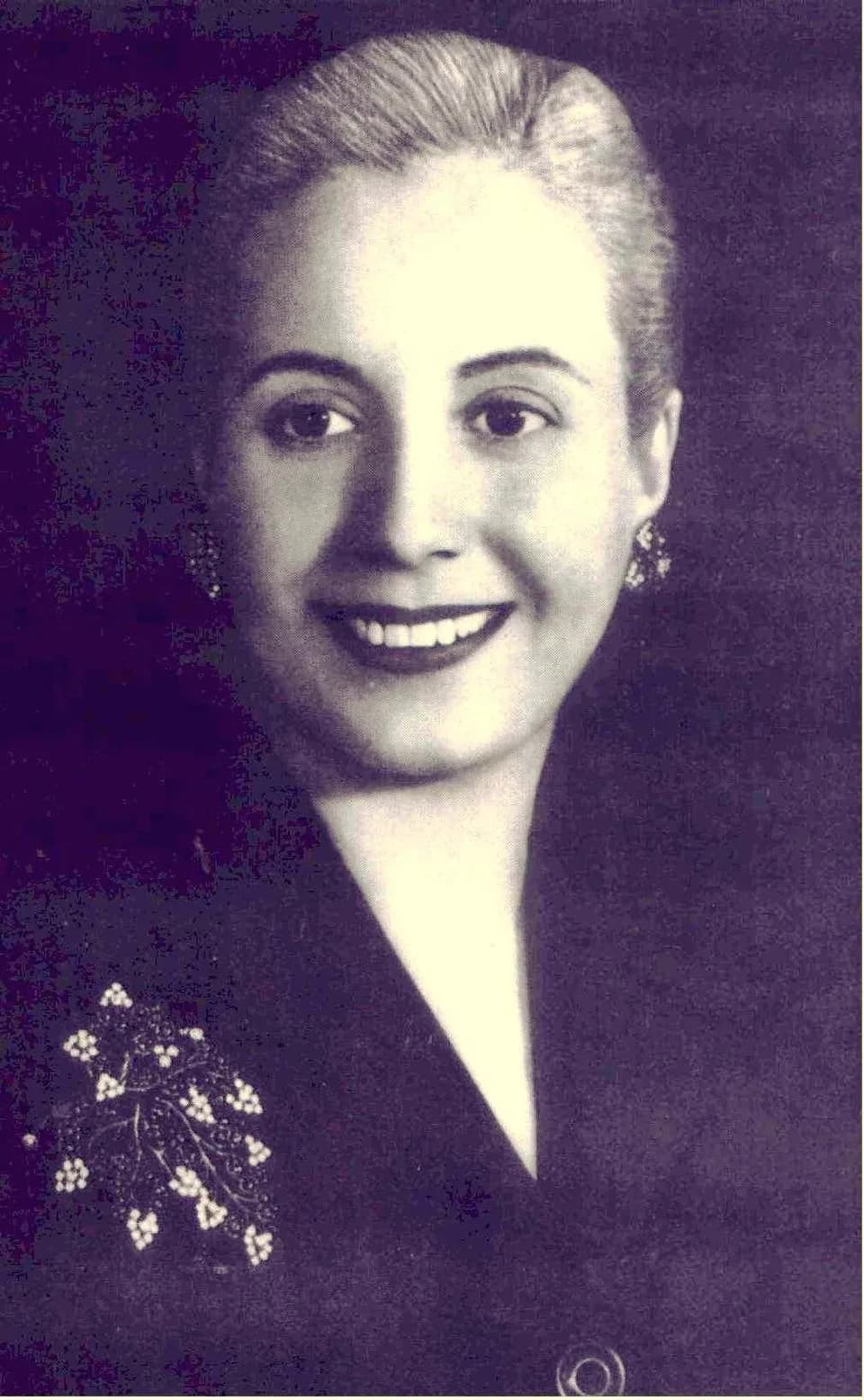
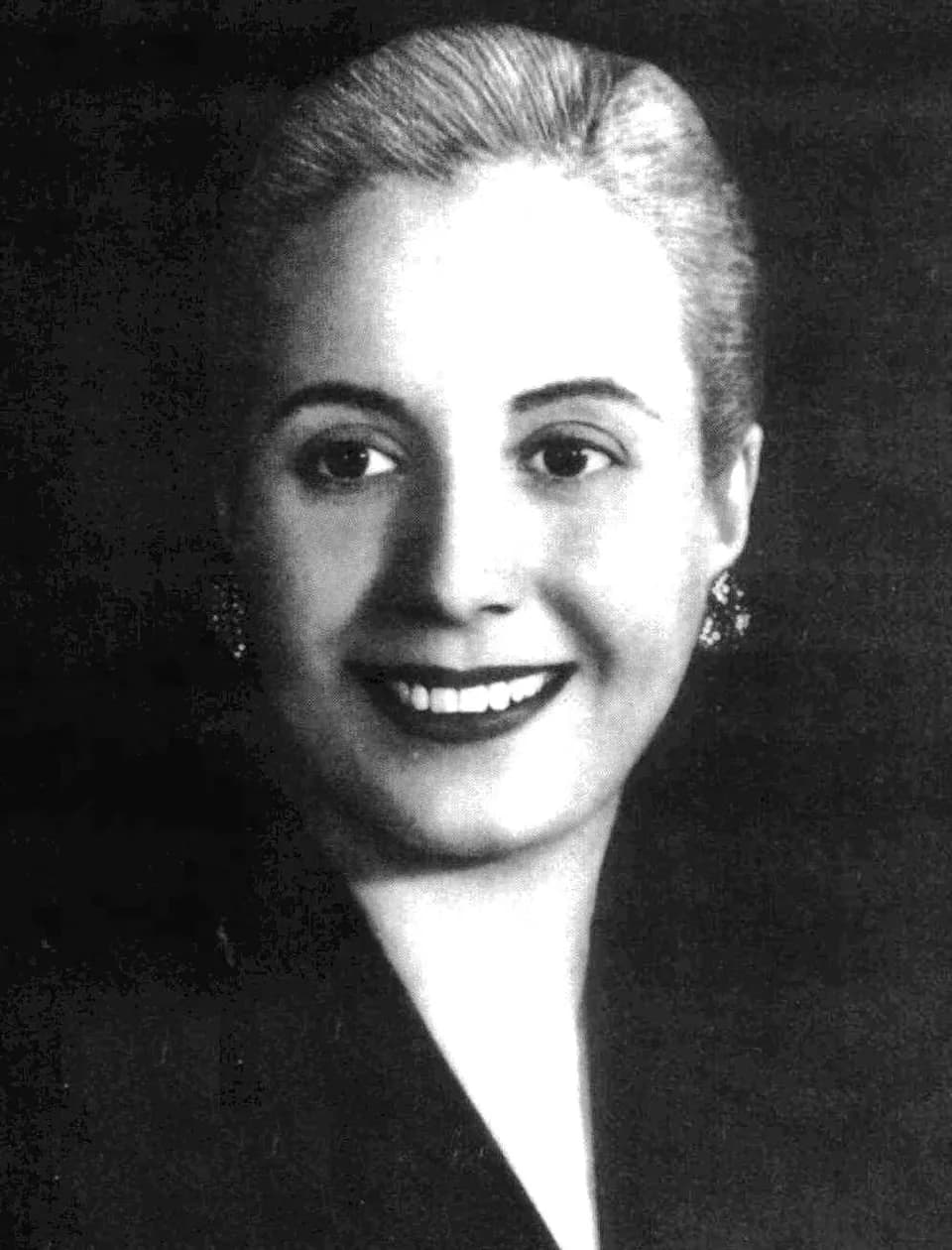
Eva Perón (May 7, 1919 – July 26, 1952) was an Argentine actress and politician. She served as First Lady of Argentina from 1946 to 1952 and became a central figure in Peronism. Through the Eva Perón Foundation, she championed women's rights and social welfare, leaving a lasting impact on her nation.
Život u trenucima
Trenuci koji su oblikovali život
Poglavlje
Životna poglavlja
Poglavlje 1 · 1919· Poglavlje 1 od 7
Early Life and Origins
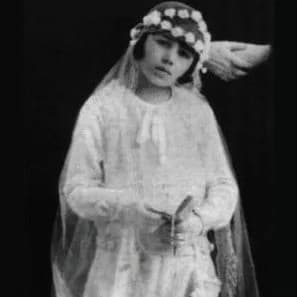
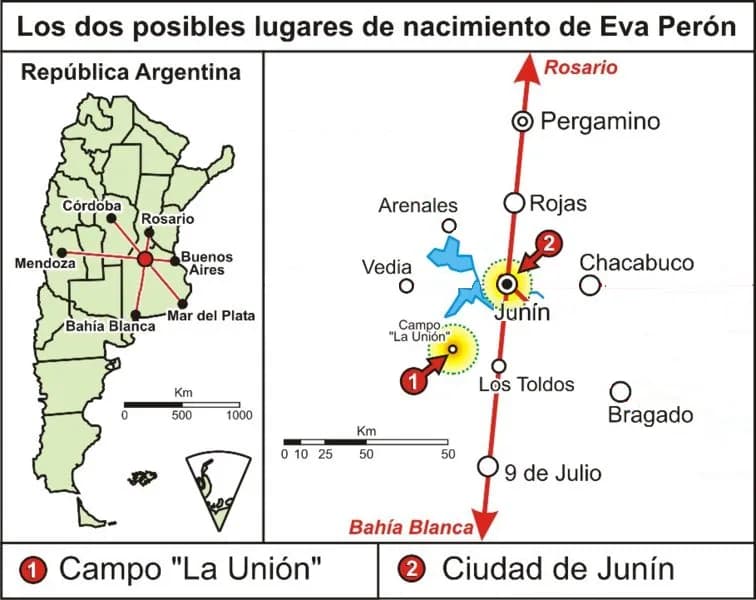
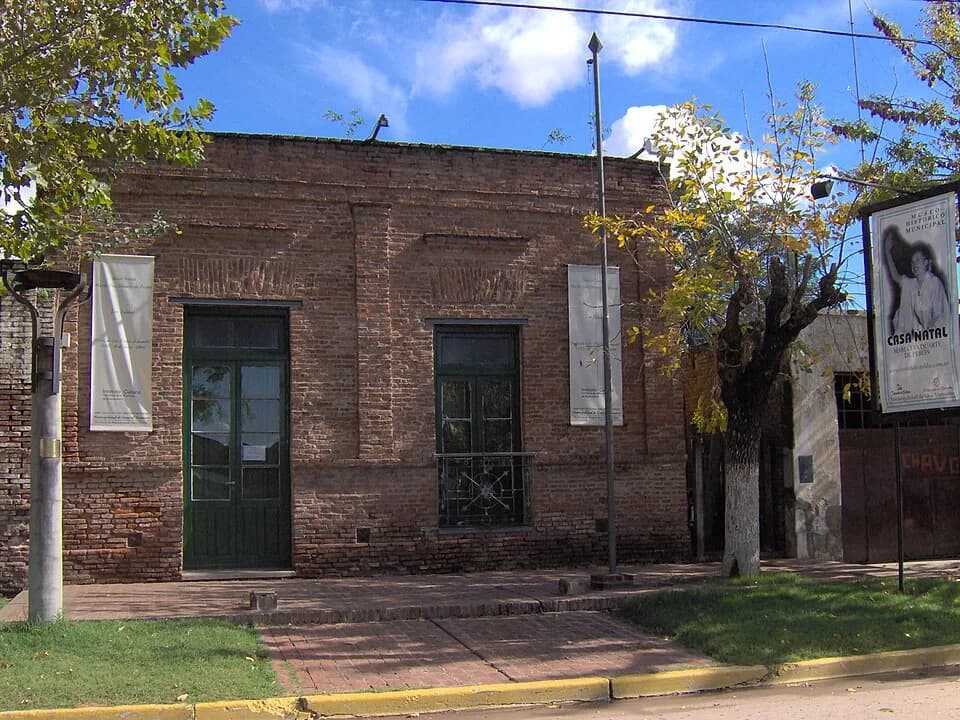
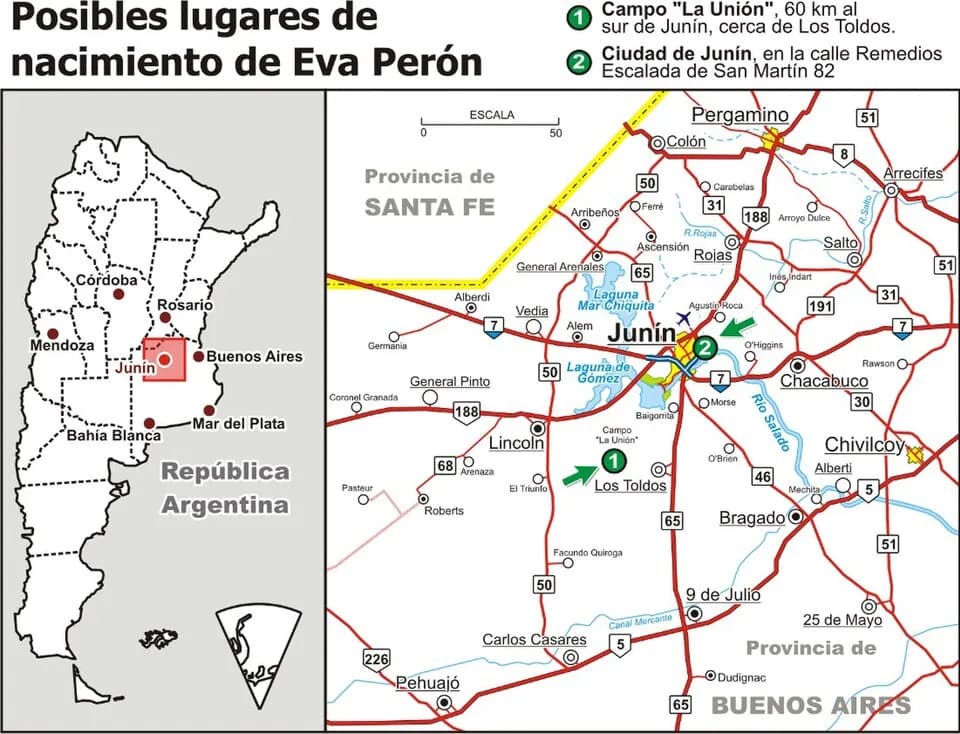
Eva Perón was born into modest circumstances in the rural village of Los Toldos, located in the Pampas region of Argentina, on May 7, 1919. She was the youngest of five children in her family. Her birth place is also identified as Junín, Argentina, reflecting the broader district or administrative area.
Growing up in poverty, her early experiences shaped her later dedication to social causes. She made a significant decision at the age of 15, moving to Buenos Aires in 1934 to pursue her aspirations in the entertainment industry.
Poglavlje 2· Poglavlje 2 od 7
Career Beginnings
Upon arriving in the nation's capital, Buenos Aires, Eva Perón began to build a career as a performer. She worked diligently in various capacities, engaging in stage, radio, and film acting. Her ambition led her to achieve recognition in these fields, establishing her presence in the Argentine entertainment scene.
This period of her life involved persistent efforts to carve out a professional path in acting. Her work in these early years provided a platform for her public visibility and developed her communication skills. She married Juan Perón in 1945, when he was serving as an army colonel, a union that would soon alter her professional trajectory significantly.
Poglavlje 3 · 1946· Poglavlje 3 od 7
Major Achievements and Career Highlights
Eva Perón was propelled onto the political stage following her marriage to Juan Perón, who became President of Argentina in 1946. She assumed the role of First Lady of Argentina in June 1946, a position she held until her death in July 1952. During this time, she became a central and highly influential figure in Peronism and Argentine culture.
A key achievement was the establishment of the Eva Perón Foundation, a charitable organization that many Argentinians perceived as highly impactful. Her work extended to advocating for women's suffrage, leading to significant advances in women's rights in Argentina. She also played an active role as a trade unionist, championing the rights of workers.
Poglavlje 4 · 1945· Poglavlje 4 od 7
Personal Life
Eva Perón's personal life became intertwined with her public duties, particularly after her marriage to Juan Perón in 1945. This union dramatically elevated her public profile and influence. Their relationship formed a powerful partnership at the heart of Argentine politics and society.
She lived her life in the public eye, dedicating herself to her political and social work. Her personal journey from humble beginnings to a position of national power captivated many across Argentina. She died in Buenos Aires, Argentina, on July 26, 1952, at the age of 33.
Poglavlje 5 · 1945· Poglavlje 5 od 7
Notable Works or Contributions
Beyond her political and social work, Eva Perón maintained a presence in the acting world, with a notable filmography. Her film appearances included "La Cabalgata del Circo" and "The Prodigal Woman," both released in 1945. These roles showcased her talents as a film actor before she fully dedicated herself to her duties as First Lady.
Earlier in her career, she also appeared in films such as "Only the Valiant" in 1940, Q5825882 in 1941, and Q6155860 in 1942. Another early work was Q6172246 in 1937, demonstrating her consistent work in the industry over several years. Her acting background undeniably contributed to her ability to connect with the public.
Poglavlje 6· Poglavlje 6 od 7
Later Years
Eva Perón continued her dedicated service as First Lady of Argentina until her untimely passing. Her final years were characterized by intensive political activity and social reform efforts through the Eva Perón Foundation. She remained a powerful force in the Peronist movement, advocating for the working class and women.
Her work continued tirelessly despite her declining health. She passed away in Buenos Aires, Argentina, on July 26, 1952, bringing to an end a brief but intensely influential public life. Her death marked a significant moment for Argentina, leaving a void in its political and cultural landscape.
Poglavlje 7· Poglavlje 7 od 7
Legacy and Impact
Eva Perón's legacy continues to resonate strongly in Argentina and beyond. Her efforts as a suffragist and women's rights activist significantly changed the political landscape for women in her country. The Eva Perón Foundation left a lasting mark on social welfare programs, addressing poverty and inequality.
She remains an enduring and iconic figure in Argentine culture, celebrated for her devotion to the "descamisados" (shirtless ones) – the working-class people she championed. Her life, from humble beginnings in Junín to becoming a powerful political leader in Buenos Aires, cemented her status as a symbol of hope and empowerment for many, even decades after her death.
Česta pitanja
Često postavljana pitanja
Kada je umro/la Eva Perón?
Eva Perón je umro/la 26. juli 1952. u Buenos Aires, Argentina u 33. godini života.
Gdje je rođen(a) Eva Perón?
Eva Perón je rođen(a) u Junín, Argentina 7. maj 1919..
Po čemu je Eva Perón najpoznatiji(a)?
Eva Perón je najpoznatiji(a) po Argentine actress and politician.
Koliko je Eva Perón imao/la godina u trenutku smrti?
Eva Perón je imao/la 33 godina u trenutku smrti.
Kojeg porijekla je bio/la Eva Perón?
Eva Perón je bio/la iz Argentina.
Vremenska linija
Život u kratkom pregledu
Galerija fotografija
Život u slikama
Kliknite bilo koji polaroid za uvećanje · 49 fotografija
QR kod
Podijelite ovu biografiju
Štampaj i podijeli
Skenirajte za posjetu ovoj biografskoj stranici. Štampajte za događaje, izložbe ili obrazovne materijale.