Rođen/a
August 31, 1879
Akasaka Estate, Japan
Umro/la
December 25, 1926
Hayama Imperial Villa, Japan
Poznat/a po
Emperor of Japan from 1912 until 1926
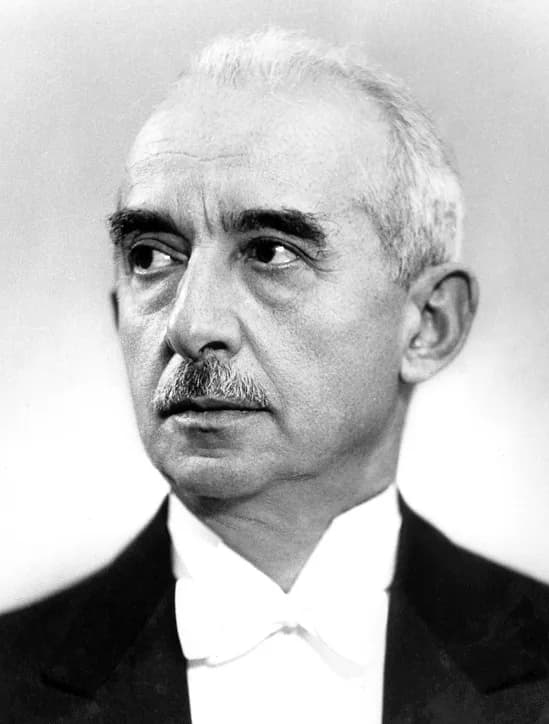
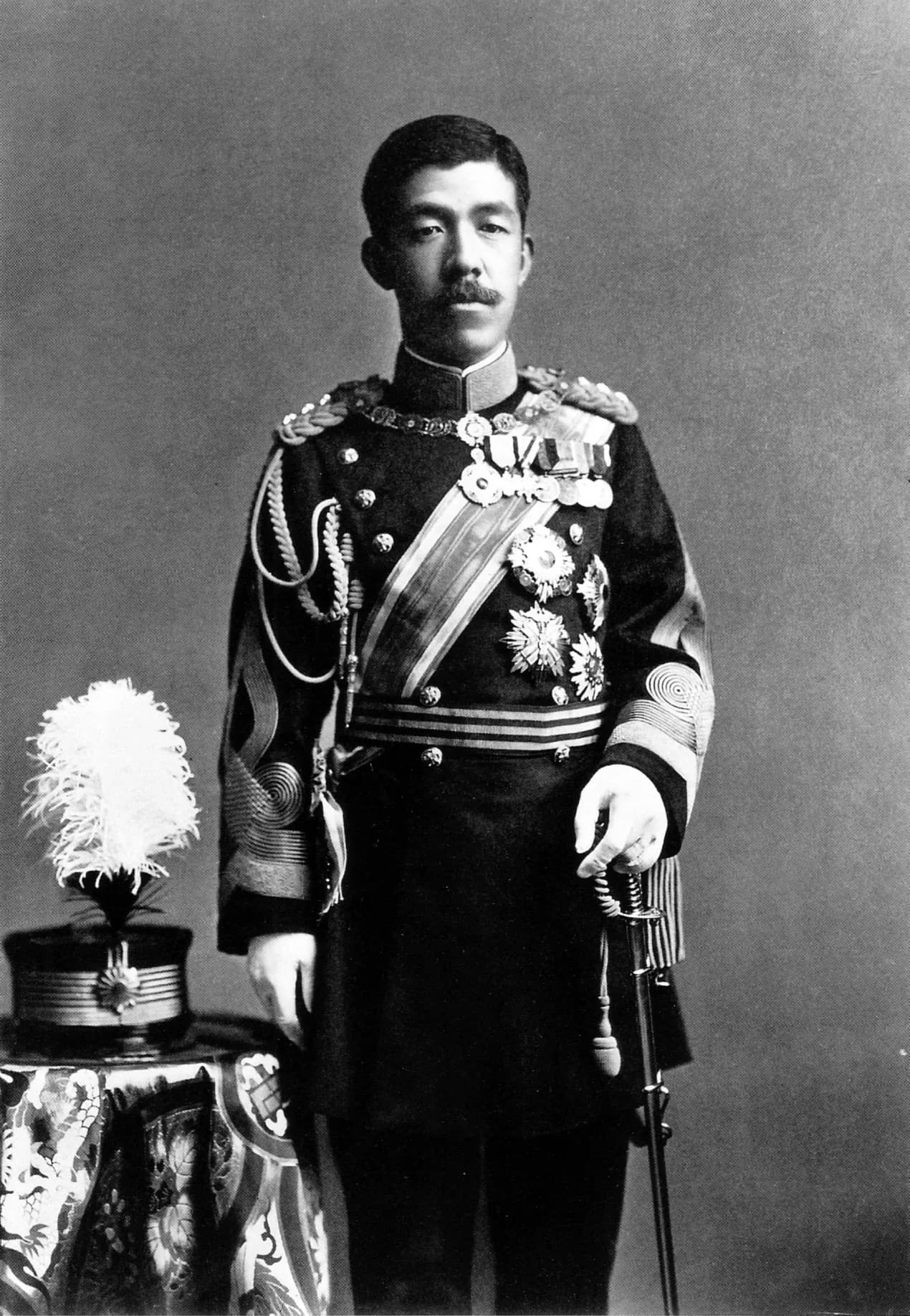
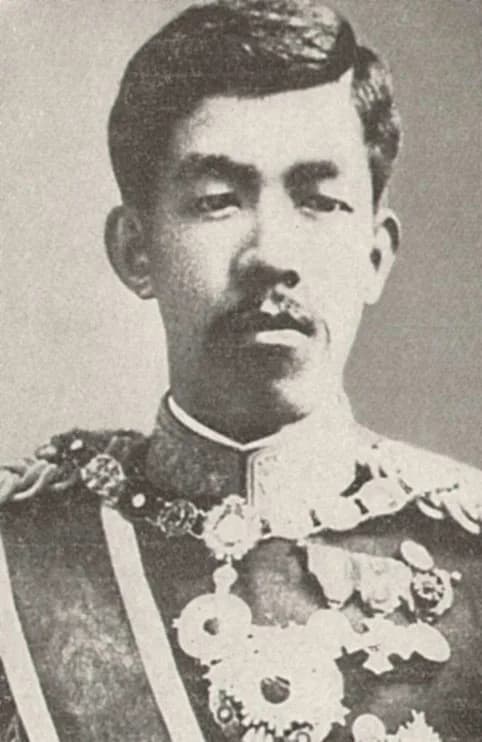
Emperor Taishō (1879-1926) was Emperor of Japan who reigned from 1912 until his death in 1926. His era witnessed Japan's shift toward liberal democracy, known as Taishō democracy, and the nation's participation in World War I. His reign ended Japan's most democratic period before 1945.
Život u trenucima
Trenuci koji su oblikovali život
Poglavlje
Životna poglavlja
Poglavlje 1· Poglavlje 1 od 7
Early Life and Origins
Prince Yoshihito was born at the Akasaka Estate in Tokyo to Emperor Meiji and Yanagiwara Naruko, though he was raised according to imperial tradition by court ladies rather than his biological parents. His childhood was marked by frequent illness, including what modern historians believe may have been meningitis, which affected his physical and mental development throughout his life. The young prince received his education within the imperial household system, studying classical Chinese literature, Japanese history, and Western subjects as Japan modernized during the Meiji period.
As the heir apparent, Yoshihito was prepared for his future role through military training and exposure to government affairs, though his health issues often limited his participation in public ceremonies. His upbringing reflected the tension between Japan's traditional imperial customs and the rapid Westernization occurring throughout the country during the late 19th century.
Poglavlje 2 · 1912· Poglavlje 2 od 7
Ascension to the Throne
Prince Yoshihito became Emperor Taishō following his father Emperor Meiji's death on July 30, 1912, inheriting a Japan that had already established itself as a regional power through victories in the Sino-Japanese War and Russo-Japanese War. His coronation ceremony took place in Kyoto, following centuries of imperial tradition, yet his reign would oversee unprecedented changes in Japanese society and politics. The new emperor's poor health became apparent early in his reign, leading to increased reliance on his advisors and eventually his son, the future Emperor Showa.
Poglavlje 3 · 1912· Poglavlje 3 od 7
Major Achievements and the Democratic Era
Emperor Taishō's reign coincided with Japan's most significant experiment with democratic governance, earning the period 1912-1926 the name "Taishō democracy." During this time, Japan saw the rise of political parties, expanded suffrage, and greater civil liberties, though the emperor's personal role in these developments was limited by his declining health. His government navigated Japan's entry into World War I on the side of the Allies in 1914, which brought economic prosperity and enhanced international prestige to the nation.
The emperor's reign also encompassed Japan's response to the devastating Spanish flu pandemic, which struck the country between 1918 and 1920, killing hundreds of thousands of Japanese citizens. His administration's handling of this crisis, along with growing labor unrest and rice riots, tested the limits of Japan's emerging democratic institutions.
The Great Kantō Earthquake of September 1, 1923, stands as one of the most significant events of Emperor Taishō's reign, destroying much of Tokyo and Yokohama and killing over 100,000 people. The emperor's government coordinated massive relief efforts while dealing with the social and political upheaval that followed the disaster, including tragic violence against Korean residents and political dissidents.
Poglavlje 4 · 1900· Poglavlje 4 od 7
Personal Life and Health Challenges
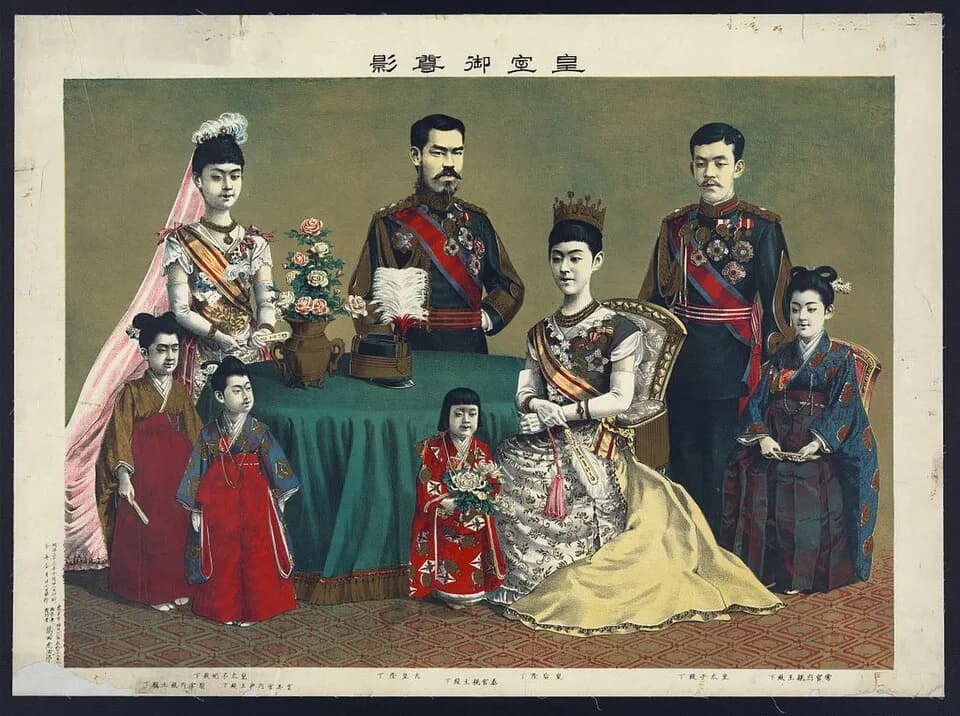
Emperor Taishō married Princess Sadako (later Empress Teimei) in 1900, and together they had four sons, including the future Emperor Showa (Hirohito). His marriage was considered happy by imperial standards, and Empress Teimei often accompanied him to public functions when his health permitted. The emperor's personal interests included poetry and music, reflecting the cultural refinement expected of Japanese royalty.
His deteriorating health became increasingly problematic throughout his reign, with episodes of erratic behavior and physical weakness that limited his ability to perform ceremonial duties. By 1919, his condition had worsened to the point where Crown Prince Hirohito began serving as regent, effectively governing in his father's name while Emperor Taishō retreated from public life.
Poglavlje 5 · 1921· Poglavlje 5 od 7
Later Years and Decline
The final years of Emperor Taishō's life were spent largely in seclusion at various imperial residences, as his mental and physical condition continued to deteriorate. Crown Prince Hirohito formally became regent in 1921, taking over most imperial duties while his father remained the symbolic head of state. During this period, Japan continued its democratic experiments while also seeing the rise of nationalist movements that would later dominate Japanese politics.
Despite his absence from public life, Emperor Taishō remained a respected figure among the Japanese people, who understood his health struggles and appreciated the relative peace and prosperity Japan had experienced during much of his reign. His withdrawal from active rule allowed the democratic institutions of the Taishō era to develop with less direct imperial interference than had been common during his father's reign.
Poglavlje 6 · 1926· Poglavlje 6 od 7
Death and Immediate Legacy
Emperor Taishō died at the Hayama Imperial Villa on December 25, 1926, at the age of 47, officially from pneumonia, though his long-standing health issues were clearly contributing factors. His death marked the end of Japan's most democratic period until after World War II, as his son Emperor Showa's reign would see the rise of militarism and ultranationalism. The emperor's funeral was conducted with full imperial honors, and his death was genuinely mourned by many Japanese who remembered the relative liberalism of his era.
Poglavlje 7 · 1945· Poglavlje 7 od 7
Historical Impact and Assessment
Emperor Taishō's reign represents a unique period in Japanese history when democratic ideals flourished under imperial rule, even as the emperor himself played a diminished role due to his health. The Taishō democracy period saw Japan's integration into the international community as a major power, participation in the League of Nations, and the development of a more pluralistic political system. Historians note that while Emperor Taishō personally had limited influence on these developments, his reign provided the chronological framework for Japan's most successful experiment with democratic governance before 1945.
The contrast between the democratic achievements of the Taishō era and the militaristic period that followed has led modern historians to view Emperor Taishō's reign as a missed opportunity for Japan's political development. His legacy is thus intertwined with questions about Japan's path to modernity and the role of the emperor in Japanese political evolution.
Česta pitanja
Često postavljana pitanja
Kada je umro/la Emperor Taishō?
Emperor Taishō je umro/la 25. decembar 1926. u Hayama Imperial Villa, Japan u 47. godini života.
Gdje je rođen(a) Emperor Taishō?
Emperor Taishō je rođen(a) u Akasaka Estate, Japan 31. august 1879..
Po čemu je Emperor Taishō najpoznatiji(a)?
Emperor Taishō je najpoznatiji(a) po Emperor of Japan from 1912 until 1926.
Koliko je Emperor Taishō imao/la godina u trenutku smrti?
Emperor Taishō je imao/la 47 godina u trenutku smrti.
Kojeg porijekla je bio/la Emperor Taishō?
Emperor Taishō je bio/la iz Japan.
Vremenska linija
Život u kratkom pregledu
Galerija fotografija
Život u slikama
Kliknite bilo koji polaroid za uvećanje · 48 fotografija
QR kod
Podijelite ovu biografiju
Štampaj i podijeli
Skenirajte za posjetu ovoj biografskoj stranici. Štampajte za događaje, izložbe ili obrazovne materijale.