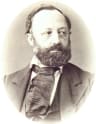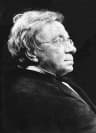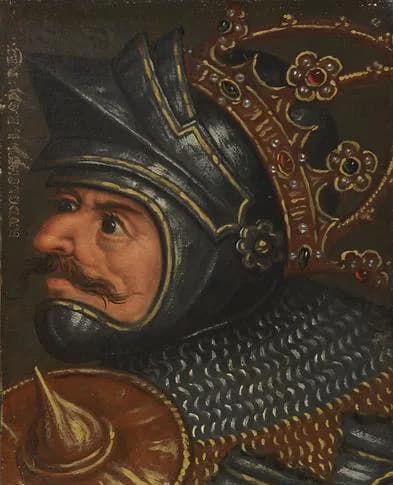
Роден
May 1, 1218
Limburg Castle, Germany
Починал
July 15, 1291
Speyer, Germany
Известен с
count of Habsburg, king of Germany
Rudolph I of Germany (1218–1291) was Germany best known for count of Habsburg, king of Germany.
Rudolph I of Germany (May 1, 1218 – July 15, 1291) was a sovereign and count of Habsburg. He became King of the Romans in 1273, ending the Great Interregnum and establishing the Habsburg dynasty's influence. His reign brought stability and reasserted imperial authority across Germany.
Глава
Глави от живота
Глава 1 · 1218· Глава 1 от 6
Early Life and Origins
Rudolph's journey began in Limburg Castle, Germany, where he was born into a noble yet relatively minor family on May 1, 1218. While details of his earliest years are limited, his lineage set the stage for a future deeply intertwined with medieval European politics and power struggles. He inherited the title of Count of Habsburg in 1240, following in his father's footsteps and taking on the responsibilities of his family's territorial holdings.
Глава 2 · 1254· Глава 2 от 6
Career Beginnings
Upon assuming the countship, Rudolph immediately set forth on a path of strategic expansion and consolidation of power within his domain. He skillfully employed a blend of military campaigns, astute political alliances, and the construction of vital fortresses, such as the impressive Neuhabsburg Castle, to strengthen his position among the Swabian nobility. His marriage to Gertrude of Hohenberg further bolstered his standing, enhancing his network of influence and resources. During the turbulent period of the Great Interregnum, Rudolph distinguished himself as a formidable military leader, actively participating in regional conflicts and even joining the Prussian Crusade in 1254. He earned a reputation as a restorer of order, frequently intervening against disruptive robber barons and feuding nobles, thereby bringing much-needed stability to various regions.
Глава 3· Глава 3 от 6
Major Achievements and Career Highlights
Rudolph's reputation for pragmatism and his consistent efforts to quell disorder did not go unnoticed by the powerful Electors of the Holy Roman Empire. Despite facing a temporary excommunication due to disputes with the Church, he ultimately reconciled with ecclesiastical authorities, solidifying his image as a ruler capable of navigating complex political and religious landscapes. This demonstrated capacity for leadership paved the way for a momentous election, signifying his ability to command respect and achieve reconciliation.
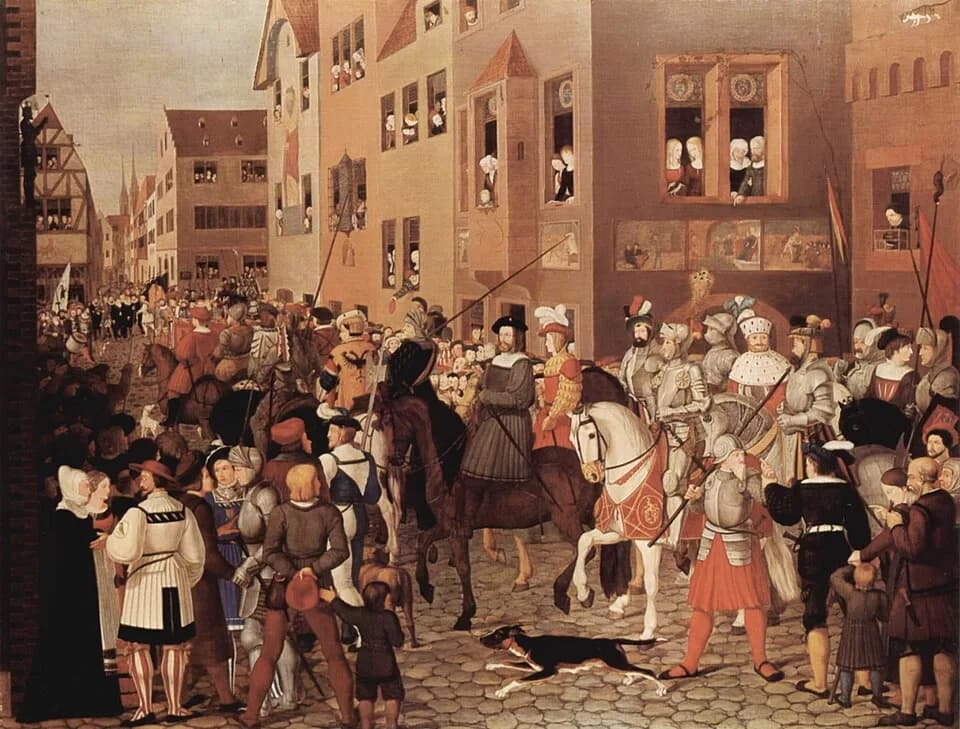
In 1273, the Electors chose Rudolph as King of the Romans, a significant decision that brought an end to decades of imperial vacancy and fragmentation across Germany. As king, Rudolph swiftly and decisively reasserted imperial authority, a critical task after the prolonged interregnum had weakened central control. His most notable military triumph came with the decisive defeat of King Ottokar II of Bohemia, a victory that significantly expanded his domain and showcased his strategic prowess. This crucial success allowed Rudolph to secure control over the strategically vital territories of Austria, Styria, and Carinthia, acquisitions that formed the territorial bedrock upon which the future power and influence of the House of Habsburg would be built. This shift marked a significant reorientation for the dynasty, focusing its expansion eastward and laying the groundwork for a vast territorial state.
Глава 4· Глава 4 от 6
Notable Works or Contributions
Rudolph's most enduring contribution was the laying of robust foundations for what would become one of the most influential royal houses in European history: the House of Habsburg. Through shrewd governance, decisive military action, and strategic dynastic policies, he transformed his family from relatively minor counts into a dominant force within the Holy Roman Empire. His actions established a clear precedent for dynastic ambition and territorial expansion, characteristics that would define the Habsburgs for centuries to come and set them on a path toward imperial preeminence.
Глава 5 · 1291· Глава 5 от 6
Later Years
Rudolph of Habsburg continued to reign until his death on July 15, 1291, in Speyer, Germany, having overseen a period of crucial transformation for the Empire. His final years were dedicated to further solidifying the gains made during his time as king, focusing on administrative stability and ensuring a smoother succession for his heirs. He had successfully transitioned Germany from a state of imperial chaos to one of renewed, though still developing, central authority, a significant achievement for his era.
Глава 6· Глава 6 от 6
Legacy and Impact
The legacy of Rudolph I of Germany is firmly rooted in his twin achievements of restored stability and dynastic ambition. He is remembered not only for bringing an end to the turbulent Great Interregnum but also for his instrumental role in elevating the House of Habsburg to preeminence within European politics. His strategic genius, political acumen, and military successes ensured that his family's name would forever be synonymous with European power and influence, an enduring reflection of his vision and leadership. His reign irrevocably altered the course of German and European history, establishing a powerful dynastic model that would persist for generations.
Живот в моменти
Моментите, които оформиха един живот
Често задавани въпроси
Често задавани
Кога почина Rudolph I of Germany?
Rudolph I of Germany почина на 15 юли 1291 г. в Speyer, Germany на 73-годишна възраст.
Къде е роден(а) Rudolph I of Germany?
Rudolph I of Germany е роден(а) в Limburg Castle, Germany на 1 май 1218 г..
С какво е най-известен(а) Rudolph I of Germany?
Rudolph I of Germany е най-известен(а) с count of Habsburg, king of Germany.
На колко години беше Rudolph I of Germany в момента на смъртта?
Rudolph I of Germany беше на 73 години в момента на смъртта.
Каква националност имаше Rudolph I of Germany?
Rudolph I of Germany беше от Germany.
Хронология
Животът накратко
Фотогалерия
Живот в снимки
Кликнете върху всеки полароид, за да го разширите · 25 снимки
QR код
Споделете тази биография
Принтирайте и споделете
Сканирайте, за да посетите тази биография. Принтирайте за събития, изложби или образователни материали.