Doğulub
November 11, 1869
Naples, Italy
Vəfat edib
December 28, 1947
Alexandria, Egypt
Tanındığı sahə
King of Italy from 1900 to 1946
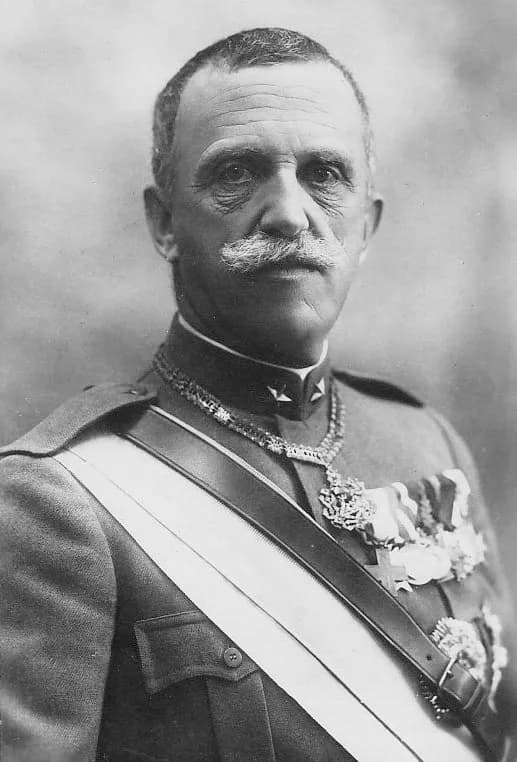
Victor Emmanuel III of Italy (1869–1947) was Italy best known for King of Italy from 1900 to 1946.
Victor Emmanuel III (November 11, 1869 – December 28, 1947) was a sovereign from Italy. He served as King of Italy for nearly 46 years, guiding the nation through two World Wars. His reign also saw the dramatic rise and fall of the Fascist regime.
Fəsil
Həyat fəsilləri
Fəsil 1 · 1869· Fəsil 1 / 7
Early Life and Origins
Born in Naples, Italy, on November 11, 1869, Victor Emmanuel III entered the world as a member of the venerable House of Savoy. This ancient dynasty had a long and storied history, deeply interwoven with the fabric of Italian statehood. He was the son of Umberto I, who reigned as King of Italy before him, establishing his clear line of succession within the royal family.
His upbringing would have been steeped in royal tradition and the expectations of future leadership inherent to his position. As the heir apparent, his early years would have been dedicated to preparing for the immense responsibilities of the Italian throne. This foundation was crucial for the long and challenging period he would eventually govern, shaping his understanding of statecraft and duty.
Fəsil 2 · 1900· Fəsil 2 / 7
Career Beginnings
Victor Emmanuel III ascended to the throne on July 29, 1900, following the tragic assassination of his father, King Umberto I. This sudden and solemn event immediately thrust him into the role of monarch at a significant moment in European history. He inherited a kingdom grappling with evolving political situations and the dawn of a new century, requiring immediate leadership and stability.
Fəsil 3 · 1946· Fəsil 3 / 7
Major Achievements and Career Highlights
His reign, lasting for nearly 46 years until his abdication on May 9, 1946, was one of the longest in Italian history. During this extensive period, the Kingdom of Italy experienced unprecedented societal and political shifts. He was the constitutional head of state as Italy entered and fought in World War I, a conflict that profoundly reshaped the global order and had lasting effects on the nation.
Later, his reign also encompassed the period of the birth, the significant rise, and the eventual dramatic fall of the Fascist regime in Italy. This era marked a major departure from traditional liberal governance, deeply impacting Italian society and politics. His role during these years remains a subject of considerable historical discussion and reflection, underscoring the complexities of his time.
Furthermore, Victor Emmanuel III also briefly held additional royal titles during times of Italian imperial expansion. He reigned as Emperor of Ethiopia from 1936 to 1941, a title acquired following the Italian invasion of Ethiopia. He also served as King of the Albanians from 1939 to 1943, following the Italian invasion of Albania, further extending his nominal dominion over these territories.
Fəsil 4· Fəsil 4 / 7
Personal Life
While specific details about Victor Emmanuel III's private life beyond his official duties are not extensively provided in this context, his public role as head of the House of Savoy naturally placed him at the center of his nation's life. His personal decisions, such as his marriage and family, would have been intrinsically linked to the continuity and stability of the Italian monarchy. The burden of leadership undoubtedly shaped much of his personal existence.
Fəsil 5· Fəsil 5 / 7
Notable Works or Contributions
As sovereign, Victor Emmanuel III's primary contributions were manifest through his constitutional role during significant national and international events. He formally approved governmental decisions and exercised royal prerogatives throughout his reign. His actions and inactions during the rise of Fascism and the two World Wars represent his most defining contributions to Italian history, setting the course for future developments.
The very length of his time on the throne, nearly five decades, meant he presided over an extraordinary stretch of historical development. His presence as king offered a constant point of reference as Italy evolved from a relatively young nation-state into a major European power, albeit through challenging circumstances. His signature was affixed to countless legislative acts and decrees, reflecting his direct involvement in the machinery of state.
Fəsil 6 · 1946· Fəsil 6 / 7
Later Years
Victor Emmanuel III's reign concluded with his abdication on May 9, 1946, a decision made during the complex aftermath of World War II and ahead of a national referendum on the monarchy. After stepping down from the throne, he spent his final years in exile. He passed away on December 28, 1947, in Alexandria, Egypt, bringing an end to a life inextricably linked with the fate of Italy.
Fəsil 7· Fəsil 7 / 7
Legacy and Impact
The legacy of Victor Emmanuel III is deeply intertwined with the dramatic shifts of 20th-century Italy. His nearly 46-year rule saw the nation transformed by global conflicts and significant political ideologies. He remains a figure whose reign invites ongoing historical scrutiny regarding his role during the Fascist era and the ultimate end of the Italian monarchy.
His impact is measured by the sheer scope of events he witnessed and nominally oversaw, from the aftermath of the unification era to the dawn of the Italian Republic. The historical memory of his time on the throne continues to shape discussions about leadership, responsibility, and national identity in Italy. He left behind a complex and enduring mark on the nation he served as king.
Anlarda bir həyat
Bir həyatı formalaşdıran anlar
FAQ
Tez-tez verilən
Victor Emmanuel III of Italy nə vaxt vəfat edib?
Victor Emmanuel III of Italy 28 dekabr 1947 tarixində Alexandria, Egypt-də, 78 yaşında vəfat edib.
Victor Emmanuel III of Italy harada anadan olub?
Victor Emmanuel III of Italy Naples, Italy-də 11 noyabr 1869 tarixində anadan olub.
Victor Emmanuel III of Italy ən çox nə ilə tanınır?
Victor Emmanuel III of Italy ən çox King of Italy from 1900 to 1946 ilə tanınır.
Victor Emmanuel III of Italy öldüyü zaman neçə yaşında idi?
Victor Emmanuel III of Italy öldüyü zaman 78 yaşında idi.
Victor Emmanuel III of Italy-in milliyyəti nə idi?
Victor Emmanuel III of Italy Italy-dan idi.
Xronologiya
Bir baxışda həyat
Foto qalereyası
Şəkillərdə bir həyat
Genişləndirmək üçün polaroidə klikləyin · 40 foto
QR kod
Bu bioqrafiyanı paylaş
Çap et və paylaş
Bu bioqrafiya səhifəsini ziyarət etmək üçün skan edin. Tədbirlər, sərgilər və ya təhsil materialları üçün çap edin.