Doğulub
October 19, 1910
Lahore, Pakistan
Vəfat edib
August 21, 1995
Chicago, United States
Tanındığı sahə
Indian-American astrophysicist
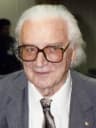
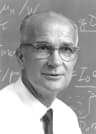
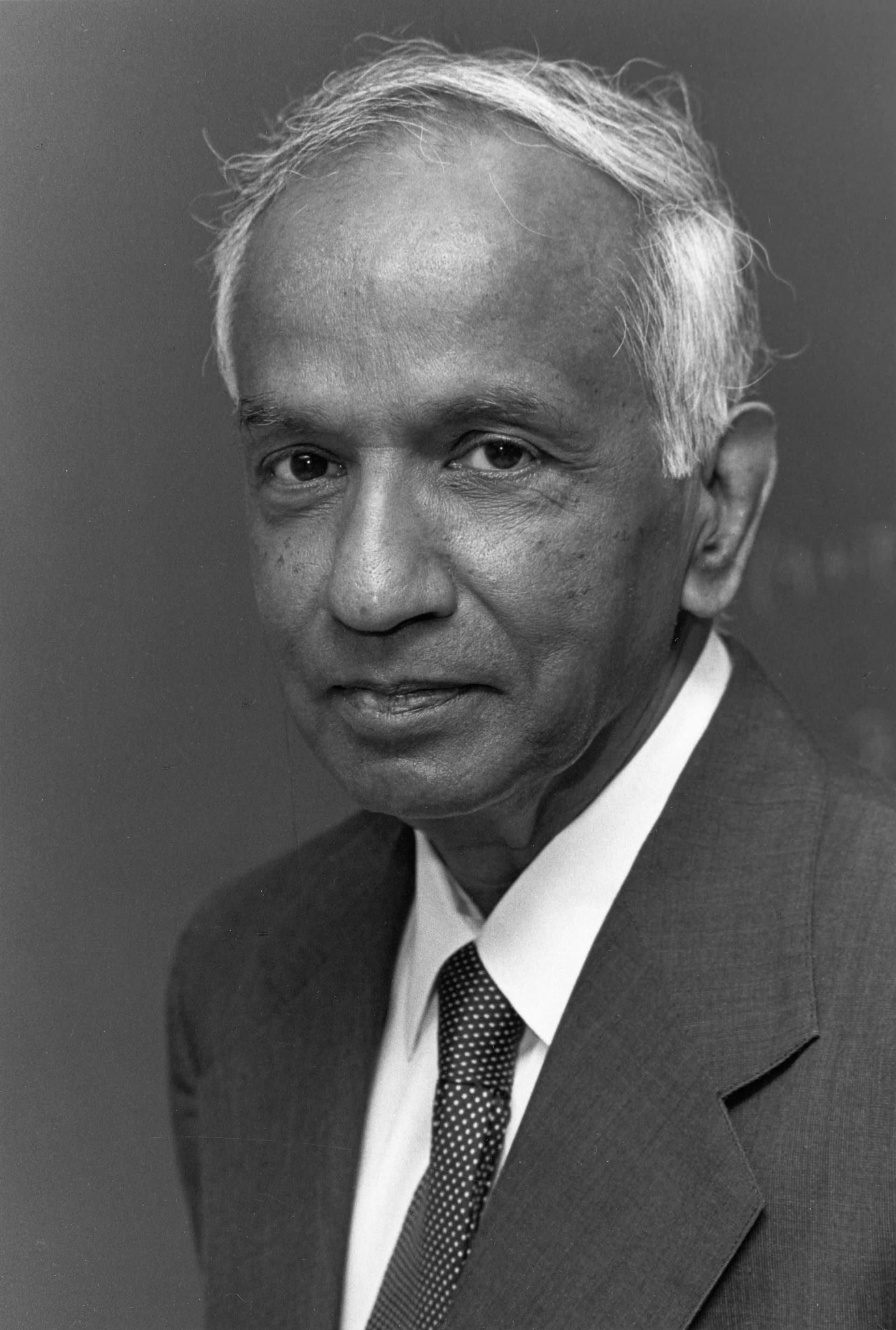
Subrahmanyan Chandrasekhar (1910-1995) was an Indian-American theoretical physicist who revolutionized our understanding of stellar evolution. He won the 1983 Nobel Prize in Physics for his mathematical studies of star formation and death. The Chandrasekhar limit describing white dwarf star masses bears his name and remains fundamental to modern astrophysics.
Fəsil
Həyat fəsilləri
Fəsil 1 · 1910· Fəsil 1 / 6
Early Life and Origins
Born on October 19, 1910, in Lahore, Pakistan, Chandrasekhar grew up in a family that valued education and intellectual pursuits. His early exposure to mathematics and physics would prove crucial to his later scientific achievements. The young Chandrasekhar showed exceptional talent in theoretical work, setting the stage for his future contributions to astrophysics.
Fəsil 2· Fəsil 2 / 6
Career Beginnings
Chandrasekhar's professional journey began with his focus on theoretical physics and astronomy. His early work concentrated on the mathematical foundations of stellar structure and behavior. He approached complex astrophysical problems with rigorous mathematical analysis, a method that would define his entire career. This analytical approach helped him develop new theoretical models for understanding how massive stars evolve over time.
Fəsil 3· Fəsil 3 / 6
Major Achievements and Career Highlights
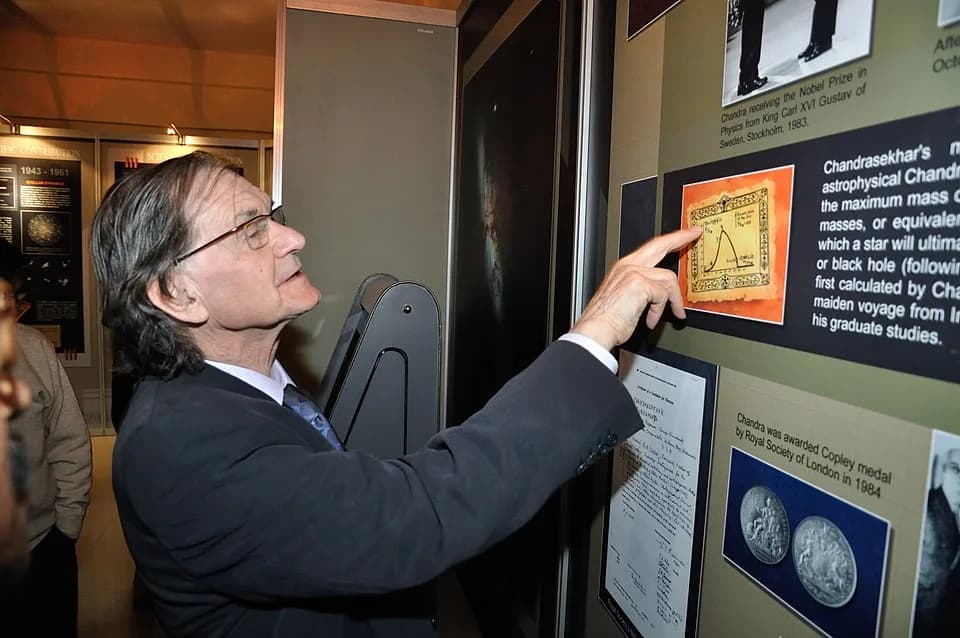
The defining moment of Chandrasekhar's career came with his discovery of what became known as the Chandrasekhar limit. This mathematical boundary describes the maximum mass a white dwarf star can maintain before collapsing into a neutron star or black hole. His theoretical studies of stellar evolution provided the scientific community with essential tools for understanding star formation and death.
In 1983, Chandrasekhar received the Nobel Prize in Physics "for his theoretical studies of the physical processes of importance to the structure and evolution of the stars." This recognition validated decades of careful mathematical work that had transformed astrophysics. Many of the current theoretical models used to study massive stars trace their origins back to his calculations and insights.
Fəsil 4 · 1990· Fəsil 4 / 6
Notable Works and Contributions
Chandrasekhar's academic output included several important papers throughout his career. His 1990 work "On Riemann's paper: Ein Beitrag zu den Untersuchungen über die Bewegung eines flüssigen gleichartigen Ellipsoides" received significant attention from the scientific community. He also contributed his Nobel lecture "Über Sterne, ihre Entwicklung und ihre Stabilität" in 1984, explaining his stellar evolution theories to a broader audience.
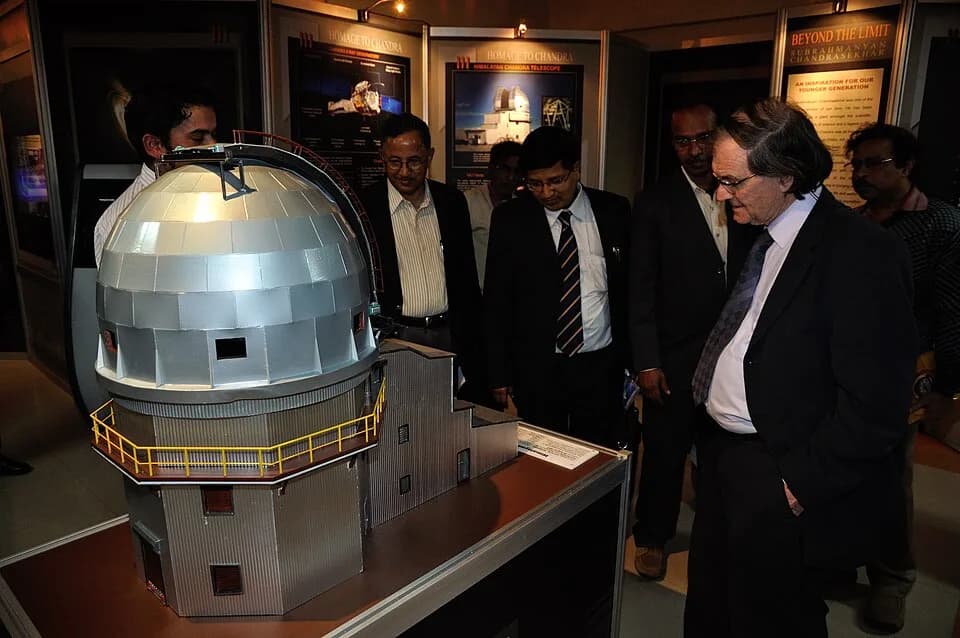
His influence extended beyond his own research papers. The Chandra X-Ray Observatory, one of NASA's most important space telescopes, bears his name in recognition of his contributions to stellar physics. This naming reflects how deeply his work influenced the field of high-energy astrophysics.
Fəsil 5 · 1994· Fəsil 5 / 6
Later Years
Chandrasekhar spent his final years continuing his research and teaching at the University of Chicago. He remained active in theoretical physics well into the 1990s, publishing papers on various aspects of stellar behavior and mathematical physics. His 1994 paper "Boltzmann on Maxwell's style" showed his continued engagement with fundamental questions in theoretical physics. He died on August 21, 1995, in Chicago, having devoted his entire career to understanding the cosmos through mathematical analysis.
Fəsil 6· Fəsil 6 / 6
Legacy and Impact
Chandrasekhar's work created the theoretical foundation for modern stellar astrophysics. His mathematical models help scientists predict how stars will behave throughout their lifetimes, from formation through their final collapse. The Chandrasekhar limit remains essential for understanding when stellar remnants will become neutron stars or black holes rather than stable white dwarf stars.
Today, astrophysicists around the world use concepts and equations that Chandrasekhar developed decades ago. His approach of applying rigorous mathematics to cosmic phenomena established a standard that continues to guide theoretical astrophysics. The numerous institutions, concepts, and scientific instruments named after him demonstrate the lasting impact of his contributions to our understanding of the universe.
Anlarda bir həyat
Bir həyatı formalaşdıran anlar

FAQ
Tez-tez verilən
Subrahmanyan Chandrasekhar nə vaxt vəfat edib?
Subrahmanyan Chandrasekhar 21 avqust 1995 tarixində Chicago, United States-də, 84 yaşında vəfat edib.
Subrahmanyan Chandrasekhar harada anadan olub?
Subrahmanyan Chandrasekhar Lahore, Pakistan-də 19 oktyabr 1910 tarixində anadan olub.
Subrahmanyan Chandrasekhar ən çox nə ilə tanınır?
Subrahmanyan Chandrasekhar ən çox Indian-American astrophysicist ilə tanınır.
Subrahmanyan Chandrasekhar öldüyü zaman neçə yaşında idi?
Subrahmanyan Chandrasekhar öldüyü zaman 84 yaşında idi.
Subrahmanyan Chandrasekhar-in milliyyəti nə idi?
Subrahmanyan Chandrasekhar Pakistan-dan idi.
Xronologiya
Bir baxışda həyat
Foto qalereyası
Şəkillərdə bir həyat
Genişləndirmək üçün polaroidə klikləyin · 49 foto
QR kod
Bu bioqrafiyanı paylaş
Çap et və paylaş
Bu bioqrafiya səhifəsini ziyarət etmək üçün skan edin. Tədbirlər, sərgilər və ya təhsil materialları üçün çap edin.