Doğulub
October 31, 1875
Nadiad, India
Vəfat edib
December 15, 1950
Mumbai, India
Tanındığı sahə
Indian barrister, leader of the Indian National Congress and founding father of the Republic of India
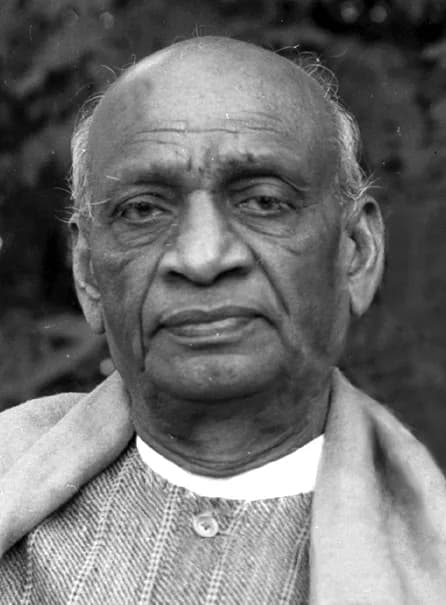
Sardar Vallabhbhai Patel (October 31, 1875 – December 15, 1950) was an Indian barrister, politician, and statesman. He served as India's first Deputy Prime Minister and Home Minister, playing a crucial role in the nation's independence and political integration. His leadership earned him the title 'Sardar' and cemented his legacy as a founding father of the Republic of India.
Anlarda bir həyat
Bir həyatı formalaşdıran anlar
Fəsil
Həyat fəsilləri
Fəsil 1· Fəsil 1 / 6
Early Life and Origins
Vallabhbhai Jhaverbhai Patel was born in Nadiad, India, at a time when the subcontinent was under British colonial rule. His early years were spent in an environment that would later fuel his determination for national independence. The pursuit of education was a serious endeavor, and his decision to train as a barrister reflected a strong intellectual drive and a commitment to justice, preparing him for a life of legal and political service.
Becoming a barrister during that era was not an easy path, often requiring significant personal sacrifice and rigorous study. This legal training provided him with an incisive mind, a methodical approach to problems, and a powerful command of argument, skills that proved invaluable in his subsequent career as a political leader. These formative experiences laid the groundwork for his disciplined approach to public life and his unwavering dedication to his country's cause.
Fəsil 2· Fəsil 2 / 6
Career Beginnings
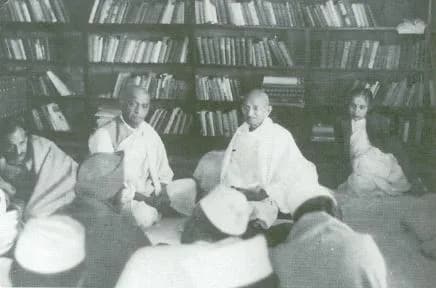
Patel initially established a successful legal practice, but the growing fervor of the Indian independence movement soon drew him into public service. He became a follower of Mahatma Gandhi, aligning himself with the Gandhian philosophy of non-violent resistance and self-rule. This commitment transformed him from a successful lawyer into a dedicated activist, firmly embedding him in the struggle for India's freedom.
His entry into the Indian National Congress marked the beginning of his formal political career, where his organizational skills and strong will quickly made him a prominent figure. He rose through the ranks as a senior leader, actively participating in campaigns against British rule and mobilizing public support across the country. His unwavering commitment to the independence movement solidified his reputation as a formidable freedom fighter.
Fəsil 3· Fəsil 3 / 6
Major Achievements and Career Highlights
One of Sardar Vallabhbhai Patel's most significant contributions was his instrumental role in the Indian independence movement, where he stood as a senior leader of the Indian National Congress. His strategic thinking and ability to galvanize popular sentiment were crucial in the years leading up to India's freedom from colonial rule. He was a trusted confidant of Mahatma Gandhi, embodying the spirit of peaceful yet resolute resistance that defined the movement.
Upon India's independence in 1947, Patel was appointed as the nation's first Deputy Prime Minister and Home Minister, roles he held until his passing in 1950. These positions placed him at the forefront of the daunting task of state-building in a newly sovereign nation. His leadership during this critical phase was characterized by an unparalleled resolve and a clear vision for a united and strong India, facing complex internal and external challenges immediately after partition.
Among his most celebrated achievements is the political integration of India, a monumental undertaking that earned him the honorific title of 'Sardar', meaning 'chief' or 'leader'. This epithet was a testament to his exceptional leadership and his ability to consolidate hundreds of princely states into the Indian Union. His diplomatic prowess, combined with a firm hand, ensured that these diverse territories became an integral part of the newly formed Republic of India, preventing potential fragmentation and preserving national unity.
Fəsil 4· Fəsil 4 / 6
Notable Works or Contributions
The political integration of India stands as Sardar Patel's defining work, a feat of statesmanship that laid the geographical and political foundation of the modern Indian nation. After the departure of the British, approximately 565 princely states, each with its own ruler, needed to be convinced to accede to the Indian Union. Patel took on this challenge with extraordinary skill, demonstrating a blend of persuasion, negotiation, and decisive action.
His efforts ensured a smooth and largely peaceful transition, preventing widespread instability and further divisions in an already partitioned land. This consolidation was not merely a territorial amalgamation but a strategic move that preserved the sovereignty and integrity of India, creating a cohesive national entity. As a jurist and economist, his understanding of legal frameworks and practical governance also informed his approach, leading to the establishment of robust administrative structures for the nascent republic.
Beyond integration, his tenure as Home Minister during the Indo-Pakistani War of 1947 showcased his administrative acumen during a period of immense crisis. He was responsible for internal security, refugee resettlement, and maintaining law and order amidst the widespread communal violence and displacement following Partition. His steady leadership provided a much-needed anchor, preventing further chaos and ensuring the functionality of the government during intense conflict and internal upheaval.
Fəsil 5 · 1947· Fəsil 5 / 6
Later Years
Sardar Vallabhbhai Patel continued to serve as India's first Deputy Prime Minister and Home Minister with unwavering dedication until his final days. The period from 1947 to 1950 was one of intense activity and immense pressure, as he navigated the complexities of post-partition India. His commitment to public service remained absolute, tirelessly working to cement the foundations of the new nation.
He passed away in Mumbai, India, on December 15, 1950, leaving behind a young nation profoundly shaped by his vision and actions. His demise marked the end of an era of pivotal nation-building, concluding a life dedicated to the cause of Indian independence and the arduous task of establishing a unified and strong republic. He served his country until his very last breath, exemplifying the highest ideals of statesmanship.
Fəsil 6· Fəsil 6 / 6
Legacy and Impact
Sardar Vallabhbhai Patel is rightly remembered as a founding father of the Republic of India, a title that speaks volumes about his enduring influence. His tireless work in integrating the princely states established the territorial boundaries of modern India, a contribution that continues to define the nation's geographical and political identity. Without his resolute leadership, the map of India might look very different today, underscoring the vital nature of his legacy.
His unwavering commitment to national unity and his practical approach to governance provided stability during a period of extreme vulnerability. The administrative framework he helped establish continues to serve as a backbone for India's democratic institutions. The moniker 'Sardar' remains a powerful symbol of his strength of character, his ability to unite disparate elements, and his profound devotion to the collective welfare of the Indian people.
Generations of Indians continue to draw inspiration from Sardar Patel's life and work, recognizing his crucial role in forging a cohesive national consciousness from a diverse mosaic of regions and cultures. His principles of firm governance, national interest, and unwavering patriotism stand as timeless lessons for leadership. His legacy is etched into the very fabric of India, a lasting testament to his vision and unparalleled contributions as a statesman and nation-builder.
Xronologiya
Bir baxışda həyat
- 1947
Later Years
Foto qalereyası
Şəkillərdə bir həyat
Genişləndirmək üçün polaroidə klikləyin · 47 foto
QR kod
Bu bioqrafiyanı paylaş
Çap et və paylaş
Bu bioqrafiya səhifəsini ziyarət etmək üçün skan edin. Tədbirlər, sərgilər və ya təhsil materialları üçün çap edin.