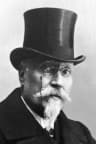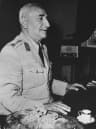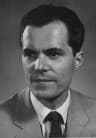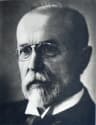
Doğulub
May 18, 1891
Ronsdorf, Germany
Vəfat edib
September 14, 1970
Santa Monica, United States
Tanındığı sahə
German philosopher and logician
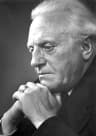
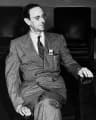
Rudolf Carnap (1891–1970) was Germany best known for German philosopher and logician.
Paul Rudolf Carnap (May 18, 1891 – September 14, 1970) was a German philosopher and logician. He was a major member of the Vienna Circle and advocated logical positivism, profoundly influencing 20th-century analytic philosophy. His rigorous approach redefined philosophical inquiry, leaving a lasting scholarly impact.
Fəsil
Həyat fəsilləri
Fəsil 1 · 1891· Fəsil 1 / 8
Remembering Rudolf Carnap
Rudolf Carnap (May 18, 1891 – September 14, 1970) was a German philosopher and logician whose rigorous and systematic approach profoundly shaped 20th-century analytic philosophy. He was a central intellectual force within the Vienna Circle, advocating for logical positivism and seeking to ground philosophical inquiry on a scientific foundation. Carnap's influential work spanned the philosophy of language, philosophy of science, and formal logic, establishing him as a pioneering figure in these disciplines. His insightful theories and methods continue to provide a framework for understanding the nature of knowledge and scientific explanation.
Fəsil 2 · 1891· Fəsil 2 / 8
Early Life and Origins
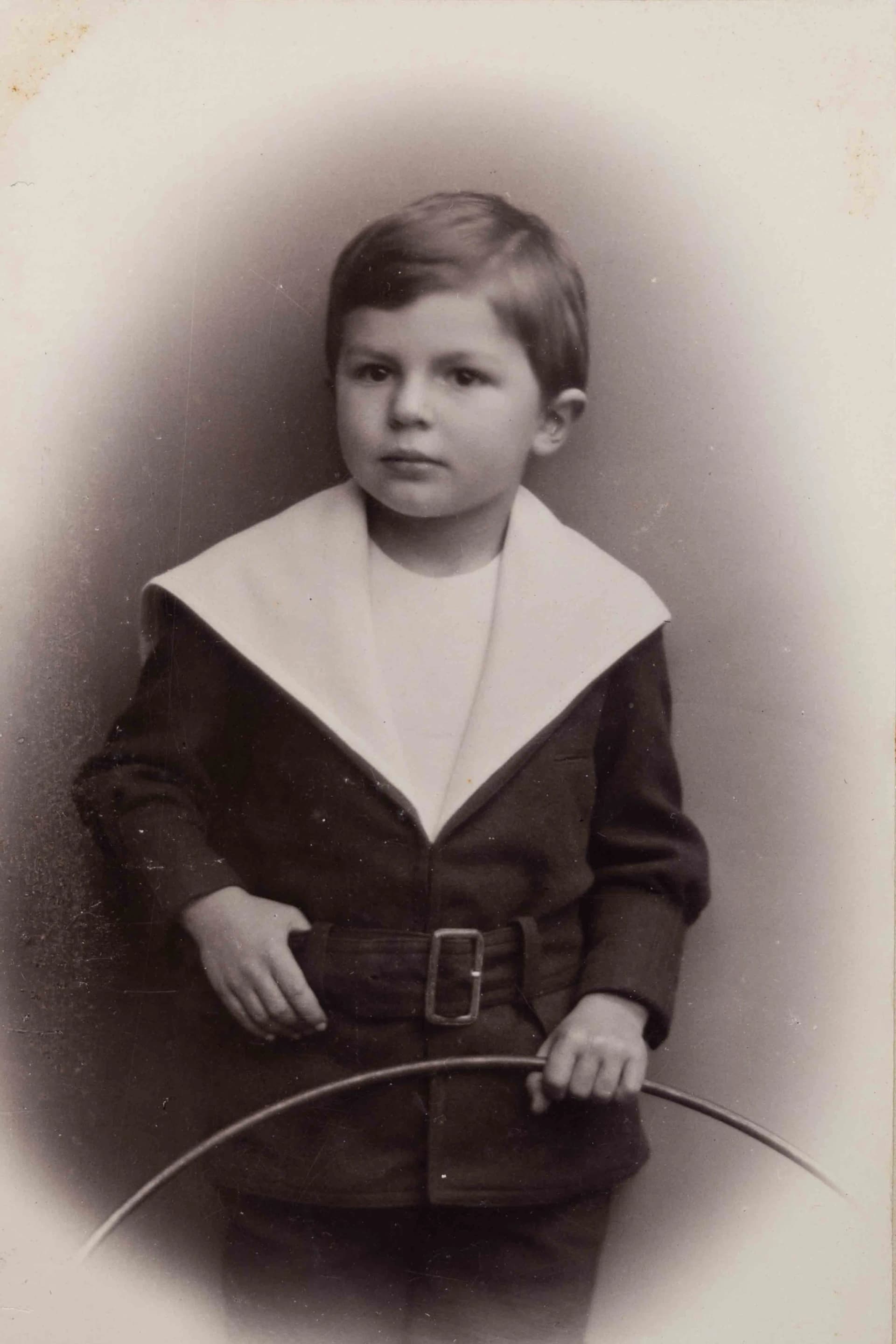
Rudolf Carnap was born on May 18, 1891, in Ronsdorf, Germany, a historical region now part of Wuppertal. While specific details about his family and early upbringing are not extensively documented, his intellectual journey began in an environment that fostered deep engagement with mathematics and science. This early period in Germany laid the groundwork for his later profound contributions to logic and philosophy, as he developed an appreciation for precision and clarity from a young age.
His formative education equipped him with the intellectual tools necessary to question established philosophical doctrines and pursue a new, scientifically informed path. The German intellectual landscape of the late 19th and early 20th centuries undoubtedly influenced his philosophical inclinations. Carnap's foundational studies prepared him for the complex theoretical work that would define his professional life.
Fəsil 3 · 1935· Fəsil 3 / 8
Career Beginnings
Carnap's early career saw him emerge as a polymath, proficient as an Esperantist, university teacher, philosopher, and logician in Europe before 1935. He became deeply involved with the burgeoning philosophical movements that would lead to the formation of the Vienna Circle, a group of thinkers dedicated to scientific philosophy. His initial work and discussions with these colleagues were instrumental in solidifying his own philosophical position and developing his influential ideas.
His early professional engagements provided the critical platform for his contributions to logical positivism, a philosophical school emphasizing empirical observation and logical analysis. These foundational years were crucial for his development, allowing him to establish connections and refine the arguments that would later define his major publications. This period marked the genesis of his lifelong commitment to philosophical rigor and clarity.
Fəsil 4· Fəsil 4 / 8
Major Achievements and Career Highlights
A significant highlight of Rudolf Carnap's career was his integral membership in the Vienna Circle, where he played a major role in shaping and articulating the tenets of logical positivism. He was a principal architect of this movement, which sought to eliminate metaphysics from philosophy and replace it with logical analysis of scientific language. His intellectual leadership within this influential group had a lasting impact on philosophical discourse.
After 1935, Carnap moved to the United States, continuing his academic pursuits and becoming a prominent figure in American philosophy. Here, he expanded his influence as an analytic philosopher and philosopher of science, contributing significantly to university education and research. His extensive academic output, including an impressive h-index of 22 from 68 published papers, testifies to his sustained productivity and scholarly impact throughout his career.
Fəsil 5· Fəsil 5 / 8
Personal Life
While specific biographical details about Rudolf Carnap's personal relationships or family life are not extensively provided, his dedication to his various professions—Esperantist, university teacher, philosopher, logician, philosopher of language, analytic philosopher, and philosopher of science—suggests a life deeply immersed in intellectual work. His commitment to clarity and precision was evident not just in his writings but also in his life's direction.
The significant life event of his relocation from Ronsdorf, Germany, to the United States after 1935 indicates a profound personal and professional transition. This move, likely influenced by the political climate in pre-World War II Europe, demonstrates his adaptability and unwavering commitment to his academic pursuits. Carnap's life was undeniably shaped by his scholarly identity and the intellectual challenges he embraced.
Fəsil 6 · 1928· Fəsil 6 / 8
Notable Works or Contributions
Rudolf Carnap's body of work includes several highly influential publications that remain cornerstones of 20th-century philosophy. His seminal "Der logische Aufbau der Welt" (first published in 1928, cited 560 times), translated as "The Logical Structure of the World," presented a systematic attempt to reconstruct all scientific concepts from basic sensory experiences. This work established him as a leading figure in logical empiricism and theory construction.
Another crucial contribution was "Logische Syntax der Sprache." (first published in 1934, cited 118 times), which articulated his formal theory of language, arguing that philosophical problems often arise from misunderstandings of logical syntax. He also authored "Untersuchungen zur allgemeinen Axiomatik" (published in 2000, 45 citations), which explored general axiomatics, and "Scheinprobleme in der Philosophie und andere metaphysikkritische Schriften" (published in 2005, 24 citations), directly addressing what he considered pseudo-problems in metaphysics. His autobiographical "Mein Weg in die Philosophie" (published in 1999, 15 citations) offered insights into his intellectual development, collectively solidifying his lasting impact as a philosopher of language and science.
Fəsil 7· Fəsil 7 / 8
Later Years
After settling in the United States, Rudolf Carnap continued his prolific academic career, teaching at various universities and contributing to philosophical journals. His later years were marked by ongoing engagement with the evolving landscape of analytic philosophy, where he continued to refine and defend his positions. He remained a respected voice in discussions concerning logic, epistemology, and the foundations of science.
Rudolf Carnap spent his final years in Santa Monica, United States, maintaining an active intellectual life until his passing on September 14, 1970. His sustained scholarship and commitment to his philosophical principles throughout these years demonstrated an unwavering dedication to the pursuit of knowledge. He left behind a rich legacy of publications and a generation of scholars influenced by his rigorous methods.
Fəsil 8· Fəsil 8 / 8
Legacy and Impact
Rudolf Carnap's legacy is characterized by his relentless pursuit of philosophical clarity, logical precision, and empirical grounding. His pioneering work as a major member of the Vienna Circle and a staunch advocate of logical positivism fundamentally reshaped the trajectory of 20th-century philosophy. He was instrumental in steering philosophy towards a more scientific and analytical approach, away from traditional metaphysical speculation.
His contributions to the philosophy of language and the philosophy of science established new paradigms for inquiry, influencing subsequent generations of analytic philosophers. Carnap's rigorous methodology and critical stance against unverifiable statements continue to resonate in contemporary philosophical and scientific debates. His enduring influence ensures that his name remains synonymous with intellectual rigor and the quest for a philosophy informed by science.
Anlarda bir həyat
Bir həyatı formalaşdıran anlar

FAQ
Tez-tez verilən
Rudolf Carnap nə vaxt vəfat edib?
Rudolf Carnap 14 sentyabr 1970 tarixində Santa Monica, United States-də, 79 yaşında vəfat edib.
Rudolf Carnap harada anadan olub?
Rudolf Carnap Ronsdorf, Germany-də 18 may 1891 tarixində anadan olub.
Rudolf Carnap ən çox nə ilə tanınır?
Rudolf Carnap ən çox German philosopher and logician ilə tanınır.
Rudolf Carnap öldüyü zaman neçə yaşında idi?
Rudolf Carnap öldüyü zaman 79 yaşında idi.
Rudolf Carnap-in milliyyəti nə idi?
Rudolf Carnap Germany-dan idi.
Xronologiya
Bir baxışda həyat
Foto qalereyası
Şəkillərdə bir həyat
Genişləndirmək üçün polaroidə klikləyin · 24 foto
QR kod
Bu bioqrafiyanı paylaş
Çap et və paylaş
Bu bioqrafiya səhifəsini ziyarət etmək üçün skan edin. Tədbirlər, sərgilər və ya təhsil materialları üçün çap edin.