Doğulub
September 29, 1920
Surrey, United Kingdom
Vəfat edib
April 10, 1992
Bodmin, United Kingdom
Tanındığı sahə
British biochemist
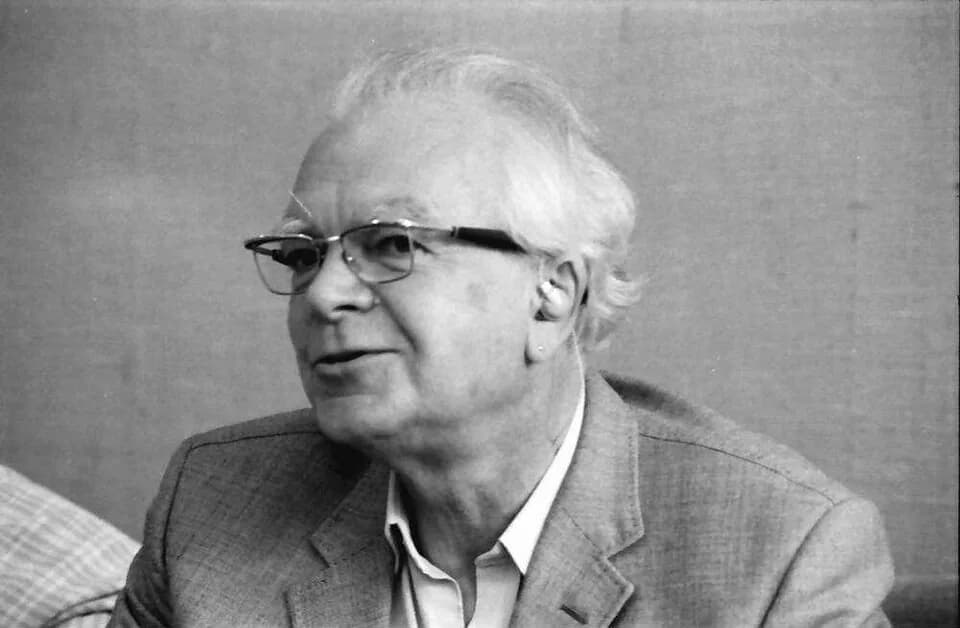
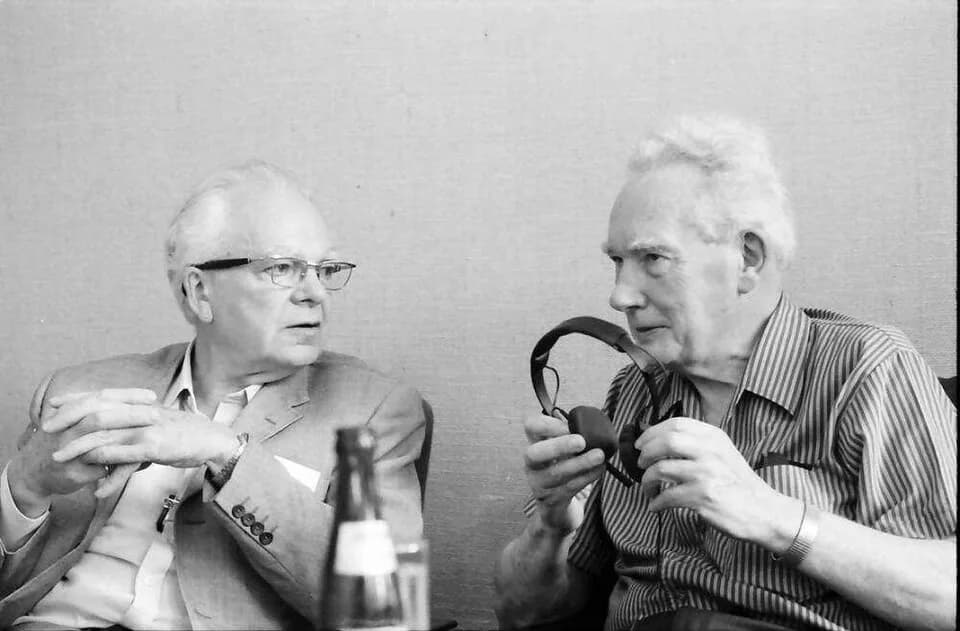
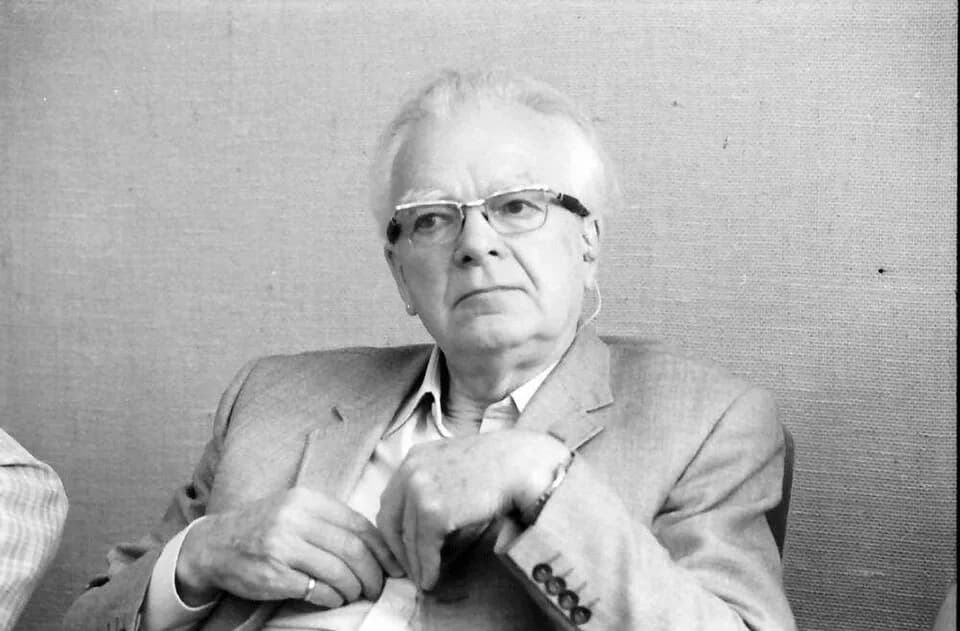
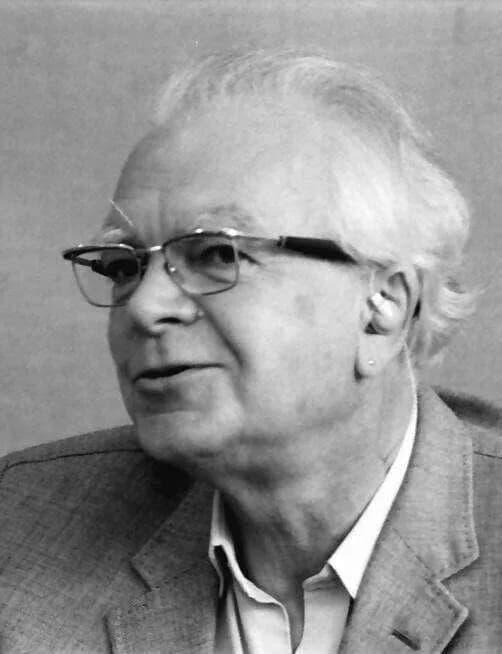
Peter D. Mitchell (1920–1992) was United Kingdom best known for British biochemist.
Peter D. Mitchell (September 29, 1920 – April 10, 1992) was a British biochemist from the United Kingdom. He received the 1978 Nobel Prize for Chemistry for his chemiosmotic mechanism of ATP synthesis, profoundly shaping our understanding of biological energy transfer.
Fəsil
Həyat fəsilləri
Fəsil 1 · 1920· Fəsil 1 / 7
Opening
Peter D. Mitchell, a distinguished British biochemist, stands as a towering figure in the scientific community, remembered for his revolutionary insights into how living organisms generate energy. Born on September 29, 1920, and passing on April 10, 1992, Mitchell's contributions profoundly reshaped our understanding of fundamental biological processes. His name is forever linked with the chemiosmotic mechanism, a theory that earned him the prestigious 1978 Nobel Prize in Chemistry.
Mitchell's work elucidated the intricate pathways of biological energy transfer, particularly the synthesis of adenosine triphosphate (ATP), often called the energy currency of life. His innovative ideas challenged conventional wisdom at the time, leading to a paradigm shift in biochemistry. Through meticulous research and visionary thinking, he provided a crucial framework for understanding cellular respiration and photosynthesis, processes vital for all life on Earth.
Fəsil 2 · 1920· Fəsil 2 / 7
Early Life and Origins
Peter D. Mitchell began his life's journey in Surrey, United Kingdom, where he was born on September 29, 1920. His early environment in the United Kingdom would shape the foundation for his scientific pursuits. While specific details of his early family life are not extensively documented, his later career indicates a strong intellectual curiosity and a dedication to scientific inquiry from a young age.
The path that led Mitchell to become a biochemist, chemist, and university teacher began with his education. Though explicit records of his academic institutions are not provided in detail, his ability to formulate complex theories and hold academic positions confirms a rigorous scientific training. This foundational learning equipped him with the analytical skills necessary to question established dogmas and propose new models in the field of biochemistry.
Fəsil 3· Fəsil 3 / 7
Career Beginnings
Mitchell’s professional life saw him take on various roles, primarily as a university teacher, chemist, and biochemist. These positions provided him with the platforms to pursue his research interests and develop his theoretical frameworks. His early work would have involved teaching and conducting experiments, laying the groundwork for his later, more significant discoveries in biological energy.
As a chemist and biochemist, Mitchell was immersed in the fascinating study of life's chemical processes, particularly those involving energy. The scientific community at the time grappled with complex questions about how cells generated ATP, a molecule essential for nearly all cellular functions. Mitchell's early investigations likely focused on these fundamental problems, setting the stage for his most famous theory.
Fəsil 4 · 1978· Fəsil 4 / 7
Major Achievements and Career Highlights
The crowning achievement of Peter D. Mitchell's career was undoubtedly the formulation of the chemiosmotic theory, which led to his recognition with the 1978 Nobel Prize in Chemistry. This theory provided a comprehensive explanation for ATP synthesis, a process previously shrouded in mystery. Before Mitchell's work, it was widely believed that ATP was generated through direct chemical coupling.
Mitchell's bold hypothesis, however, proposed a different mechanism: that the energy released from electron transport chains is conserved in the form of an electrochemical proton gradient across a membrane. This proton motive force, he suggested, then drives the synthesis of ATP by an enzyme complex. The sheer originality of this idea, which shifted the focus from direct chemical bonds to physical gradients across membranes, marked a significant turning point in biochemistry.
Fəsil 5· Fəsil 5 / 7
Notable Works or Contributions
Mitchell's most significant scientific contribution is the chemiosmotic theory, detailed through his publications and presentations throughout his career. This theory posits that the energy from redox reactions, such as those occurring in mitochondria and chloroplasts, is used to pump protons across a biological membrane, creating a proton gradient. This gradient represents stored energy, similar to water behind a dam, and the flow of protons back across the membrane through ATP synthase powers the production of ATP from ADP and inorganic phosphate.
His proposition, initially met with skepticism, provided a coherent and elegant explanation for how oxidative phosphorylation and photophosphorylation actually occur within cells. Mitchell demonstrated how this proton motive force provides the energetic drive for ATP production, fundamentally altering scientists' understanding of cellular power generation. The concept was revolutionary because it introduced a physical-chemical mechanism rather than a purely chemical one for biological energy transduction.
It is important to clarify that the academic publications listed with an h-index of 6 and titles such as “Trapping single human osteoblast-like cells from a heterogeneous population using a dielectrophoretic microfluidic device” (2010) are not attributed to Peter D. Mitchell, the Nobel laureate. These works were published long after his passing in 1992 and belong to a different researcher. Peter D. Mitchell's primary contribution remains his seminal work on the chemiosmotic theory and the elucidation of biological energy transfer.
Fəsil 6 · 1992· Fəsil 6 / 7
Later Years
Peter D. Mitchell continued his scientific pursuits and contributions throughout his life, further developing and defending his chemiosmotic theory. His final years saw the enduring acceptance and validation of his revolutionary ideas by the broader scientific community. He passed away on April 10, 1992, in Bodmin, United Kingdom, leaving behind an extraordinary scientific legacy.
His passing in Bodmin marked the end of a life dedicated to unraveling one of biology's most fundamental mysteries. Even in his later years, Mitchell's intellectual curiosity and commitment to rigorous scientific inquiry remained undimmed. The impact of his work continued to resonate, shaping future research directions and solidifying his place in the annals of science.
Fəsil 7· Fəsil 7 / 7
Legacy and Impact
The legacy of Peter D. Mitchell is immense, as his chemiosmotic theory fundamentally transformed the field of biochemistry and cellular biology. It provided a unified explanation for energy generation in mitochondria during respiration and in chloroplasts during photosynthesis. This principle is now a cornerstone of modern biology, taught in textbooks worldwide as a fundamental process.
His insights extended beyond mere theory, influencing research into a wide array of biological systems where membrane potential and ion gradients play crucial roles. The chemiosmotic mechanism provided a robust framework for understanding not just ATP synthesis but also nutrient transport, nerve impulse transmission, and flagellar rotation in bacteria. Mitchell's work demonstrated the power of physical chemistry in explaining biological phenomena, bridging disciplines in a significant way.
Mitchell’s courage to propose a radical idea, even against initial resistance, serves as an inspiration to scientists. His theory, once controversial, is now universally accepted and continues to underpin much of our understanding of how life harnesses and utilizes energy. Peter D. Mitchell's enduring contribution ensures his place as one of the most influential biochemists of the 20th century, whose work continues to inform and inspire new generations of scientists.
Anlarda bir həyat
Bir həyatı formalaşdıran anlar
FAQ
Tez-tez verilən
Peter D. Mitchell nə vaxt vəfat edib?
Peter D. Mitchell 10 aprel 1992 tarixində Bodmin, United Kingdom-də, 71 yaşında vəfat edib.
Peter D. Mitchell harada anadan olub?
Peter D. Mitchell Surrey, United Kingdom-də 29 sentyabr 1920 tarixində anadan olub.
Peter D. Mitchell ən çox nə ilə tanınır?
Peter D. Mitchell ən çox British biochemist ilə tanınır.
Peter D. Mitchell öldüyü zaman neçə yaşında idi?
Peter D. Mitchell öldüyü zaman 71 yaşında idi.
Peter D. Mitchell-in milliyyəti nə idi?
Peter D. Mitchell United Kingdom-dan idi.
Xronologiya
Bir baxışda həyat
Foto qalereyası
Şəkillərdə bir həyat
Genişləndirmək üçün polaroidə klikləyin · 21 foto
QR kod
Bu bioqrafiyanı paylaş
Çap et və paylaş
Bu bioqrafiya səhifəsini ziyarət etmək üçün skan edin. Tədbirlər, sərgilər və ya təhsil materialları üçün çap edin.