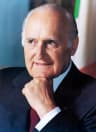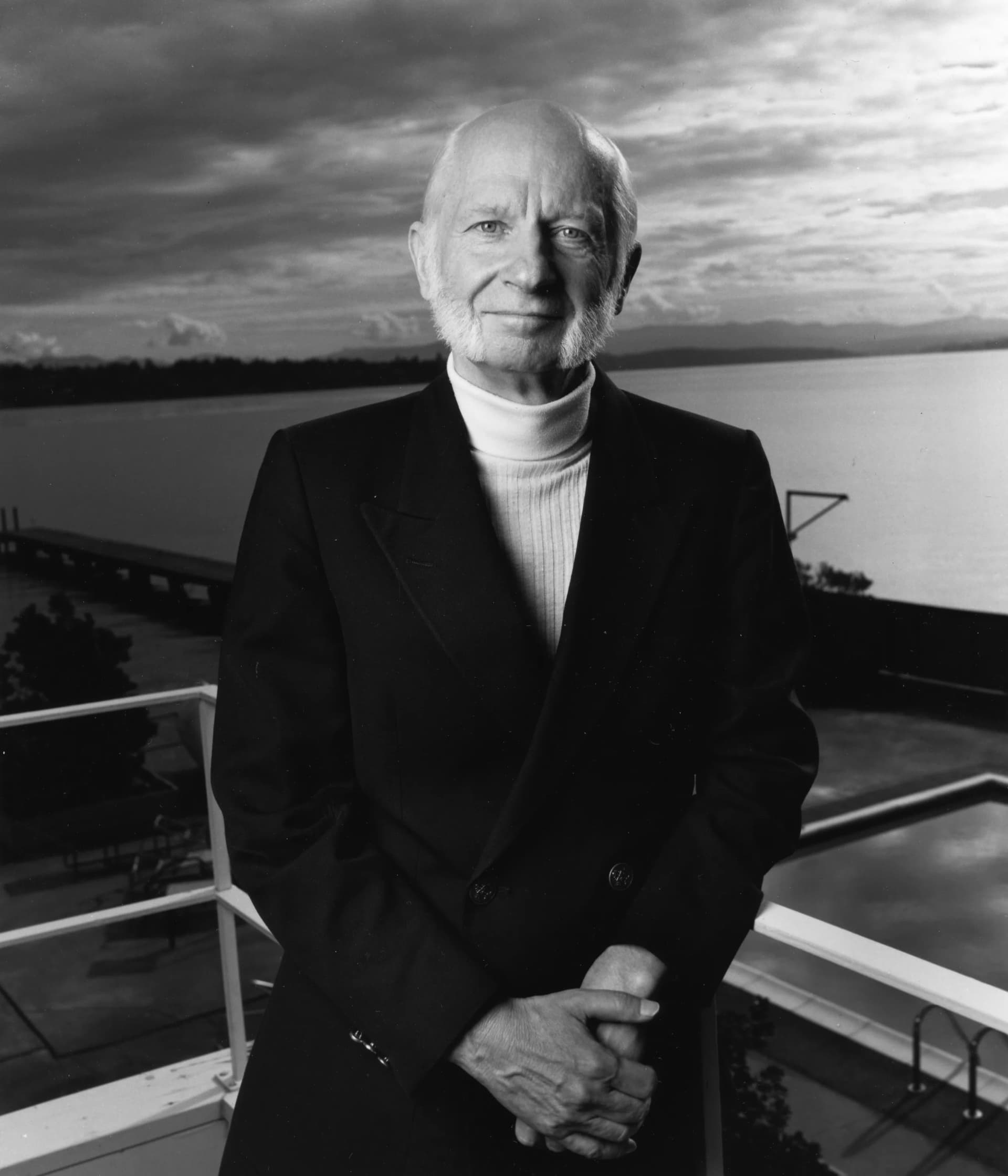
Doğulub
September 9, 1922
Görlitz, Germany
Vəfat edib
March 7, 2017
Seattle, United States
Tanındığı sahə
German physicist
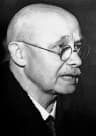
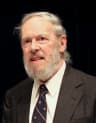
Hans Georg Dehmelt (1922–2017) was Germany best known for German physicist.
Hans Georg Dehmelt (September 9, 1922 – March 7, 2017) was a German physicist. He co-developed the ion trap technique, earning a Nobel Prize in Physics in 1989. His work enabled high precision measurement of the electron magnetic moment, leaving a scientific legacy.
Fəsil
Həyat fəsilləri
Fəsil 1 · 1922· Fəsil 1 / 7
Introduction
Hans Georg Dehmelt, born September 9, 1922, and deceased on March 7, 2017, was a German and American physicist whose work significantly influenced modern physics. As a university teacher and physicist, Dehmelt was recognized with the Nobel Prize in Physics in 1989. This honor celebrated his co-development of the ion trap technique, a method crucial for high precision measurements.
Fəsil 2 · 1922· Fəsil 2 / 7
Early Life and Origins
Hans Georg Dehmelt was born in Görlitz, Germany, on September 9, 1922. His early life in Germany laid the foundation for a career dedicated to scientific inquiry. Dehmelt pursued his studies in physics, developing an early interest in the fundamental properties of matter and energy.
Fəsil 3· Fəsil 3 / 7
Career Beginnings
Dehmelt began his professional journey as a physicist and university teacher, engaging with complex theoretical and experimental challenges. His early research focused on nuclear quadrupol resonance, as evidenced by his publications from the 1950s. These formative years established his expertise in precision measurement techniques.
Fəsil 4 · 1989· Fəsil 4 / 7
Major Achievements and Career Highlights
A defining moment in Hans Georg Dehmelt's career was the award of the Nobel Prize in Physics in 1989. He shared one-half of the prize with Wolfgang Paul for their independent development of the ion trap technique. This innovative method allowed for the isolation and study of individual charged particles, pushing the boundaries of experimental physics. The technique proved particularly effective for the high precision measurement of the electron magnetic moment.
Fəsil 5 · 1951· Fəsil 5 / 7
Notable Works or Contributions
Hans Georg Dehmelt's scientific output included seven published papers, contributing to his h-index of 5. Among his most cited works is "Quadrupol-Resonanzfrequenzen von Cl- und Br-Kernen in kristallinem Dichloräthylen und Methylbromid" from 1951, which gathered 84 citations. Another significant paper was "Quadrupol-Resonanzfrequenzen von J127-Kernen in kristallinen kovalenten Jodverbindungen," also published in 1951, receiving 38 citations. He also published "über das Quadrupolresonanzspektrum in kristallinem Antimontrichlorid und das Verhältnis der Antimonkernquadrupolmomente" and "Quadrupolresonanzfrequenzen des kristallinen Broms" in the same year. His 1953 paper, "Nachtrag zu „Kernquadrupolspektren in zwei Bortrialkylen“," further demonstrated his sustained research activity.
Fəsil 6 · 2017· Fəsil 6 / 7
Later Years
Hans Georg Dehmelt continued to contribute to the scientific community in his later years, building on his established legacy. He passed away on March 7, 2017, in Seattle, United States, concluding a long and impactful life dedicated to physics research. His contributions remained relevant and influential throughout his lifetime and beyond.
Fəsil 7· Fəsil 7 / 7
Legacy and Impact
The ion trap technique, co-developed by Hans Georg Dehmelt, has become a cornerstone in modern experimental physics. This method continues to be vital for conducting high precision measurements, including the determination of fundamental constants. His work ensured that future generations of physicists could explore the most subtle properties of subatomic particles, solidifying his place in scientific history.
Anlarda bir həyat
Bir həyatı formalaşdıran anlar



FAQ
Tez-tez verilən
Hans Georg Dehmelt nə vaxt vəfat edib?
Hans Georg Dehmelt 7 mart 2017 tarixində Seattle, United States-də, 94 yaşında vəfat edib.
Hans Georg Dehmelt harada anadan olub?
Hans Georg Dehmelt Görlitz, Germany-də 9 sentyabr 1922 tarixində anadan olub.
Hans Georg Dehmelt ən çox nə ilə tanınır?
Hans Georg Dehmelt ən çox German physicist ilə tanınır.
Hans Georg Dehmelt öldüyü zaman neçə yaşında idi?
Hans Georg Dehmelt öldüyü zaman 94 yaşında idi.
Hans Georg Dehmelt-in milliyyəti nə idi?
Hans Georg Dehmelt Germany-dan idi.
Xronologiya
Bir baxışda həyat
Foto qalereyası
Şəkillərdə bir həyat
Genişləndirmək üçün polaroidə klikləyin · 4 foto
QR kod
Bu bioqrafiyanı paylaş
Çap et və paylaş
Bu bioqrafiya səhifəsini ziyarət etmək üçün skan edin. Tədbirlər, sərgilər və ya təhsil materialları üçün çap edin.