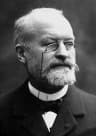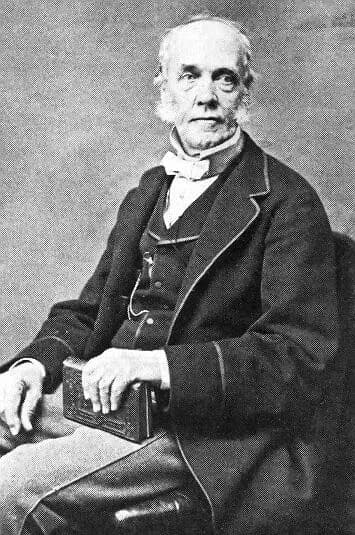
Gebore
June 18, 1799
Bolton, United Kingdom
Oorlede
October 5, 1880
Maidenhead, United Kingdom
Bekend vir
English merchant and astronomer
William Lassell (1799–1880) was United Kingdom best known for English merchant and astronomer.
William Lassell (June 18, 1799 – October 5, 1880) was an English merchant and astronomer from Bolton, United Kingdom. He is celebrated for his significant improvements to the reflecting telescope, leading to the discovery of four planetary satellites. His work greatly advanced observational astronomy.
Hoofstuk
Lewenshoofstukke
Hoofstuk 1 · 1799· Hoofstuk 1 van 7
An Enduring Legacy in the Cosmos
William Lassell (June 18, 1799 – October 5, 1880) was an English merchant, astronomer, and physicist whose contributions significantly advanced the field of observational astronomy. He is most celebrated for his innovative improvements to the reflecting telescope, which directly enabled his subsequent discoveries of four planetary satellites. His dual life as a successful businessman and a dedicated scientist allowed him to pursue his passion for understanding the universe.
Lassell's work demonstrated how personal ingenuity and scientific rigor could lead to significant advancements, even when pursued outside traditional academic institutions. His name remains associated with some of the earliest detailed observations of our solar system's more distant inhabitants, shaping our understanding of planetary systems beyond Earth.
Hoofstuk 2 · 1799· Hoofstuk 2 van 7
Early Life and Origins
William Lassell was born on June 18, 1799, in Bolton, located within the United Kingdom. Growing up in a period of burgeoning scientific curiosity, his early environment likely fostered a methodical approach to life, combining commercial acumen with an inquisitive spirit. His origins as a merchant suggest a background rooted in practical application and meticulous detail.
Details of his early education are not extensively documented, yet his later achievements in physics and astronomy point to a keen intellect and a self-driven pursuit of knowledge. This foundation, built in his native Bolton, set the stage for a life that would eventually balance commerce with the demanding discipline of astronomical observation.
Hoofstuk 3· Hoofstuk 3 van 7
Career Beginnings as a Visionary Observer
Lassell initially established himself as a successful merchant, a profession that provided the financial means and organizational skills crucial for his scientific pursuits. His passion for astronomy began to take shape as he recognized the limitations of existing astronomical instruments of his time. He was not content merely to observe; he aimed to improve the very tools of observation.
His early work was characterized by a meticulous dedication to improving the reflecting telescope. He understood that clearer, more powerful instruments were essential to pushing the boundaries of discovery in the night sky. This drive to enhance optical technology became a defining feature of his initial contributions to astronomy.
Hoofstuk 4· Hoofstuk 4 van 7
Major Achievements and Career Highlights
William Lassell's most celebrated achievements stem directly from his ingenious improvements to the reflecting telescope. Through his dedication to optical engineering, he created instruments capable of unprecedented clarity and light-gathering power. These superior telescopes allowed him to make observations that were simply beyond the reach of his contemporaries.
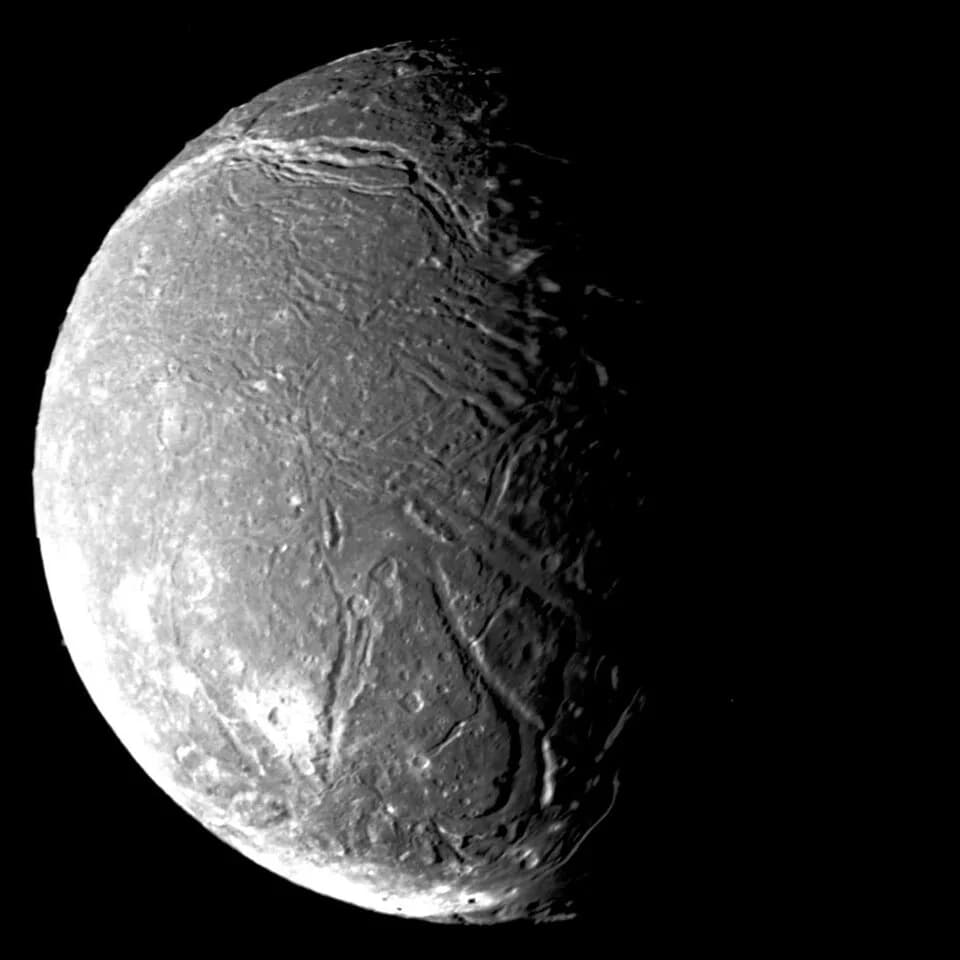
Equipped with his enhanced instruments, Lassell embarked on systematic sky surveys, leading to his most significant discoveries: four planetary satellites. These findings greatly expanded humanity's known catalog of celestial bodies within our solar system, providing crucial data for understanding orbital mechanics and planetary formation. His academic output reflects this dedication, with an h-index of 4 across 75 published papers, showcasing a consistent and impactful scientific career.
Hoofstuk 5 · 1863· Hoofstuk 5 van 7
Notable Works and Contributions to Astronomy
Lassell's rigorous observational work is documented in a series of academic publications, each contributing to the growing body of astronomical knowledge. His paper, "Observations of Mars" from 1863, garnered 7 citations, reflecting its relevance to the study of the Red Planet. This work provided valuable data that helped map and understand Mars's surface features.
His studies extended to the outer solar system, as evidenced by his "Observations of satellites of Saturn," which received 5 citations. These detailed observations contributed to the complex understanding of Saturn's ring system and its numerous moons. His focus on these distant worlds underscored his ability to push the observational limits of his era.
Further demonstrating his broad astronomical interests, Lassell published "Observations of the Nebula of Orion, made at Valletta, with the Twenty-foot Equatoreal" in 1880, which received 2 citations. This work highlights his efforts to study deep-sky objects, even in his later years, utilizing powerful instruments. Moreover, his specific interest in Neptune's moon led to "The Satellite of Neptune" (1 citation) and an earlier work, "Account of the Re-mounting of his Observatory, with some Observations of the Satellite of Neptune" from 1854, which, despite receiving 0 citations, documented his persistent efforts to refine his observatory and observe this then-newly discovered planet and its companion.
Hoofstuk 6 · 1880· Hoofstuk 6 van 7
Later Years and Enduring Dedication
Even in his later years, William Lassell maintained an active engagement with astronomy, continuing to refine his observations and publish his findings. His 1880 publication on the Orion Nebula demonstrates his sustained scientific curiosity and commitment right up to the end of his life. This late work, made with a twenty-foot equatoreal telescope, underscores his lifelong pursuit of astronomical excellence.
William Lassell passed away on October 5, 1880, in Maidenhead, United Kingdom. His final contributions cemented a legacy of continuous improvement in observational techniques and a relentless drive to discover more about the cosmos. His death marked the end of a life well-spent in the dual pursuit of commerce and scientific enlightenment.
Hoofstuk 7· Hoofstuk 7 van 7
Legacy and Impact
William Lassell's impact on astronomy is multi-faceted, stemming from his unique blend of practical engineering skill and observational prowess. His improvements to the reflecting telescope made more powerful instruments accessible, setting a new standard for astronomical observation. These advancements were not merely technical; they directly translated into concrete scientific discoveries.
His identification of four new planetary satellites stands as a direct consequence of his superior instrumentation and patient observation. These discoveries enriched the astronomical community's understanding of our solar system's composition and dynamics. Lassell's career serves as an inspiration, showcasing how a dedicated individual, even outside of conventional academic structures, can significantly contribute to the expansion of human knowledge through innovation and persistent inquiry.
'n Lewe in momente
Die momente wat 'n lewe gevorm het
Gereelde Vrae
Gereelde vrae
Wanneer is William Lassell oorlede?
William Lassell is op 5 Oktober 1880 in Maidenhead, United Kingdom oorlede op die ouderdom van 81.
Waar is William Lassell gebore?
William Lassell is in Bolton, United Kingdom gebore op 18 Junie 1799.
Waarvoor is William Lassell die bekendste?
William Lassell is die bekendste vir English merchant and astronomer.
Hoe oud was William Lassell met sy/haar dood?
William Lassell was 81 jaar oud met sy/haar dood.
Wat was William Lassell se nasionaliteit?
William Lassell was van United Kingdom.
Tydlyn
Lewe in 'n oogopslag
Fotogalery
'n Lewe in prente
Klik enige polaroid om uit te brei · 25 foto's
QR-kode
Deel Hierdie Biografie
Druk en Deel
Skandeer om hierdie biografiebladsy te besoek. Druk vir geleenthede, uitstallings of opvoedkundige materiaal.