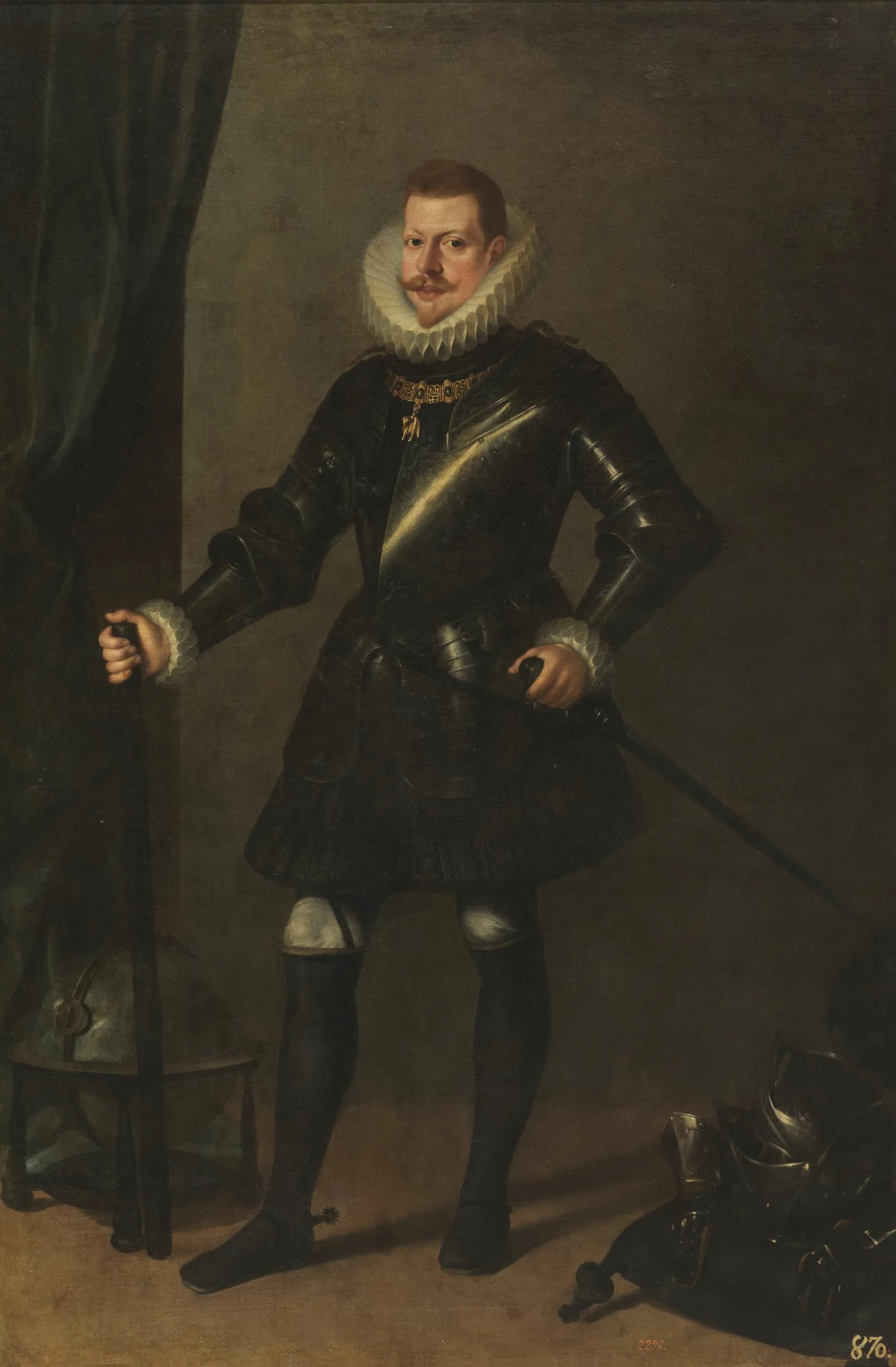
Gebore
April 24, 1578
Madrid, Spain
Oorlede
March 31, 1621
Madrid, Spain
Bekend vir
King of Castilla and León and King of Aragon and Portugal
Philip III of Spain (1578–1621) was Spain best known for King of Castilla and León and King of Aragon and Portugal.
Philip III of Spain (April 24, 1578 – March 31, 1621) was a ruler from Madrid, Spain. He reigned as King of Spain and Portugal during the Iberian Union, also holding numerous other European titles. His governance maintained a vast Habsburg empire for over two decades.
'n Lewe in momente
Die momente wat 'n lewe gevorm het
Hoofstuk
Lewenshoofstukke
Hoofstuk 1 · 1578· Hoofstuk 1 van 7
Early Life and Origins
Philip III entered the world on April 24, 1578, in Madrid, the heart of Spain. He was born into the highest echelons of European royalty, directly inheriting the legacy of the prestigious House of Habsburg. His father was King Philip II of Spain, a monarch of considerable power and influence, and his mother was Anna of Austria, Philip II's fourth wife.
The familial ties within the House of Habsburg were notably close, reflecting a common practice among European royal houses to consolidate power and maintain dynastic purity. Philip II and Anna of Austria shared a particularly intricate relationship, being both uncle and niece, as well as cousins. This pattern of extensive intermarriage was a defining characteristic of the Habsburg dynasty, influencing the personal and political aspects of the era.
Hoofstuk 2 · 1598· Hoofstuk 2 van 7
Career Beginnings
Philip III's path to becoming a ruler was directly tied to his birthright within the Spanish monarchy. He formally took up the reins of power in 1598, upon the death of his esteemed father, King Philip II. This ascension to the throne immediately placed him at the helm of one of the world's most expansive empires.
At the outset of his reign, Philip inherited the immense and intricate responsibilities associated with the Iberian Union. This significant political arrangement meant he simultaneously held the crowns of both Spain and Portugal, a union that profoundly impacted global trade, exploration, and international relations. His initial task was to navigate the complexities of governing such a diverse and geographically widespread dominion, which included numerous European territories and vast overseas possessions.
Hoofstuk 3 · 1598· Hoofstuk 3 van 7
Major Achievements and Career Highlights
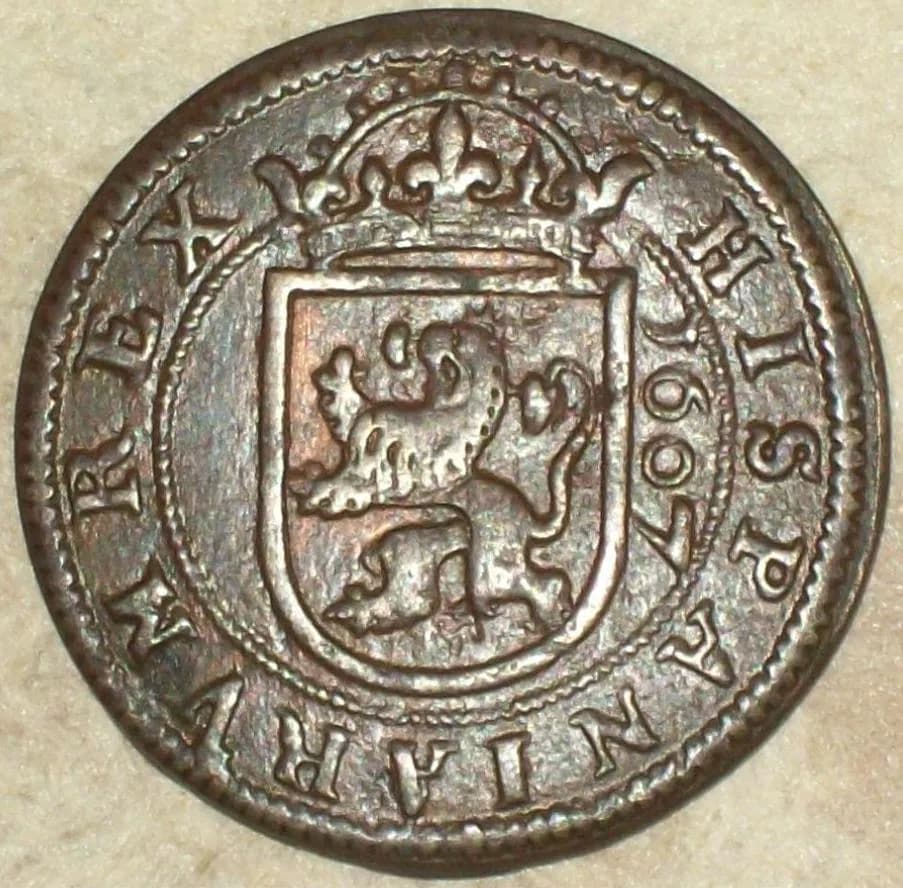
Throughout his reign, which spanned from 1598 until his death in 1621, Philip III held an impressive array of royal and noble titles, underscoring the breadth of his authority. He was not only King of Spain and Portugal, presiding over the Iberian Union, but also King of Castilla and León. Furthermore, he ruled as King of Aragon, thus consolidating his control over the diverse regions of the Iberian Peninsula.
Beyond the peninsula, Philip's influence extended significantly into other crucial European territories. He bore the titles of King of Naples and Sicily, commanding considerable power in the Italian peninsula, and was the esteemed Duke of Milan. Additionally, he governed as Lord of the Seventeen Provinces, a region historically important for its economic and strategic value. His unwavering governance ensured the continuation of the Iberian Union and the vast Habsburg imperial structure for over two decades, a testament to his enduring role.
Hoofstuk 4· Hoofstuk 4 van 7
Personal Life
Philip III's personal life was inextricably linked to his dynastic heritage as a member of the venerable House of Habsburg. Born to King Philip II and Anna of Austria, his very existence was a continuation of this powerful European family line. The close familial relationship of his parents, who were uncle and niece, as well as cousins, was a direct reflection of the Habsburgs' strategy for maintaining and consolidating their dynastic influence through strategic marriages.
As a monarch, his individual identity was largely subsumed by his public duties and the weighty responsibilities of his numerous crowns. He was, by definition, a public figure from birth, trained to rule. While specific personal hobbies or relationships outside of his immediate family are not detailed in historical records, his life would have been shaped by the expectations of the court and the constant demands of overseeing a vast, interconnected empire.
Hoofstuk 5· Hoofstuk 5 van 7
Notable Works or Contributions
Philip III's primary contributions to history are encapsulated within his role as a sovereign ruler. His "work" involved the rigorous and continuous governance of the expansive Spanish Empire. During his tenure, he notably presided over the Iberian Union, a monumental political and economic entity that exerted influence across continents.
His reign from 1598 to 1621 ensured the prolonged integration of Spain and Portugal under a unified crown. This period was crucial for shaping colonial policies and maintaining a dominant position in global affairs. By continuing to rule as King of Naples, Sicily, Duke of Milan, and Lord of the Seventeen Provinces, he directly contributed to the geopolitical stability and economic flow within these significant European territories, thereby sustaining the imperial structure established by his predecessors.
Hoofstuk 6 · 1621· Hoofstuk 6 van 7
Later Years
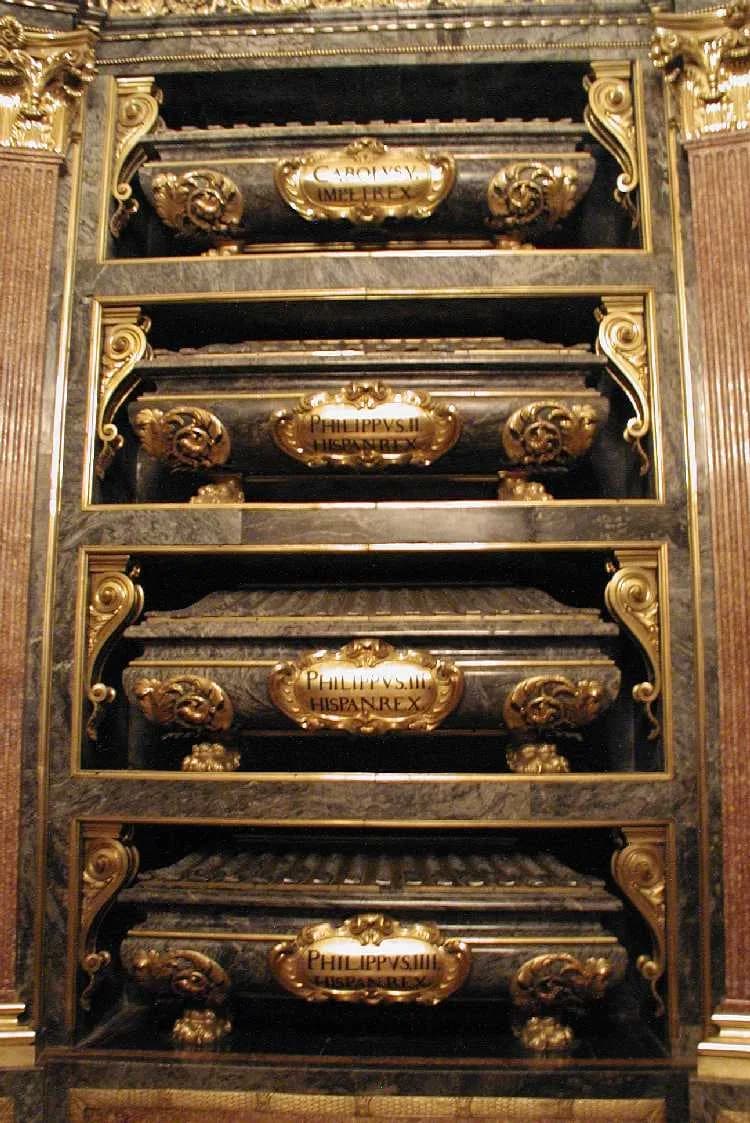
Philip III continued his extensive reign over his composite monarchy until his death in 1621. He passed away on March 31, 1621, in Madrid, the very city where he had been born over four decades prior. His death brought to a close a tenure of twenty-three years as a prominent European monarch.
The later years of his rule were undoubtedly marked by the ongoing complexities of administering a vast and geographically dispersed empire. Managing the diverse interests of Spain, Portugal, and their numerous overseas territories, alongside significant European holdings, remained a constant endeavor. His passing in the heart of his capital concluded a significant chapter in the history of the Habsburg dynasty and the Iberian Union.
Hoofstuk 7· Hoofstuk 7 van 7
Legacy and Impact
The legacy of Philip III is intrinsically linked to his sustained leadership of the Iberian Union, a cornerstone of his historical impact. His reign ensured the continuation of this formidable political entity, which effectively united the crowns of Spain and Portugal. This enduring union held profound implications for global trade, colonial expansion, and European power dynamics during the early 17th century.
As King of Spain and Portugal, and the simultaneous ruler of Naples, Sicily, Milan, and the Seventeen Provinces, Philip III maintained and managed an empire of unparalleled breadth. His period on the throne contributed significantly to the geopolitical configuration and cultural exchanges of early modern Europe. He is remembered for his governance that preserved a vast and influential imperial structure during a pivotal historical period, ensuring the continuity of Habsburg dominion.
Gereelde Vrae
Gereelde vrae
Wanneer is Philip III of Spain oorlede?
Philip III of Spain is op 31 Maart 1621 in Madrid, Spain oorlede op die ouderdom van 42.
Waar is Philip III of Spain gebore?
Philip III of Spain is in Madrid, Spain gebore op 24 April 1578.
Waarvoor is Philip III of Spain die bekendste?
Philip III of Spain is die bekendste vir King of Castilla and León and King of Aragon and Portugal.
Hoe oud was Philip III of Spain met sy/haar dood?
Philip III of Spain was 42 jaar oud met sy/haar dood.
Wat was Philip III of Spain se nasionaliteit?
Philip III of Spain was van Spain.
Tydlyn
Lewe in 'n oogopslag
Fotogalery
'n Lewe in prente
Klik enige polaroid om uit te brei · 48 foto's
QR-kode
Deel Hierdie Biografie
Druk en Deel
Skandeer om hierdie biografiebladsy te besoek. Druk vir geleenthede, uitstallings of opvoedkundige materiaal.