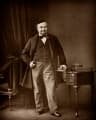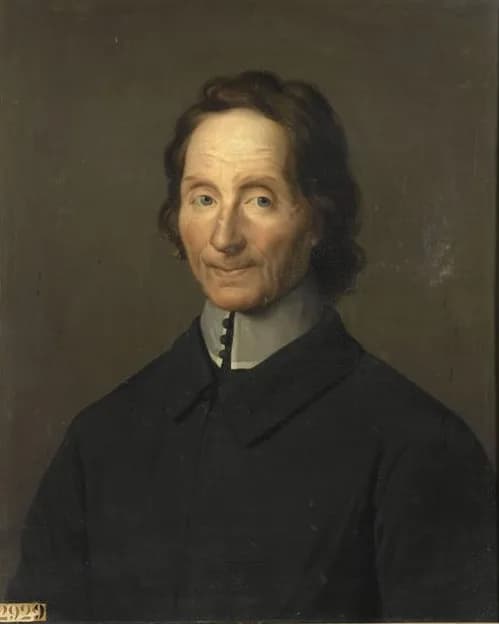
Gebore
August 6, 1638
Paris, France
Oorlede
October 13, 1715
Paris, France
Bekend vir
French philosopher
Nicolas Malebranche (1638–1715) was France best known for French philosopher.
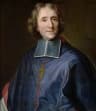
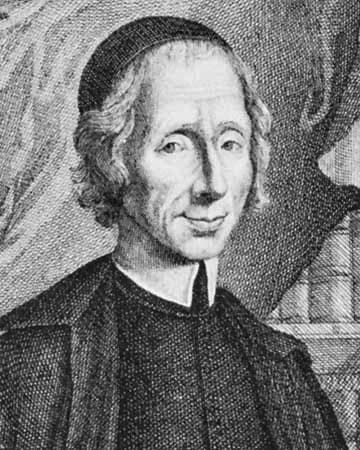
Nicolas Malebranche (August 6, 1638 – October 13, 1715) was a French Oratorian Catholic priest and rationalist philosopher from Paris. He synthesized the thought of St. Augustine and Descartes to demonstrate God's active role in all aspects of the world. He is best known for developing the doctrines of vision in God, occasionalism, and ontologism.
Hoofstuk
Lewenshoofstukke
Hoofstuk 1 · 1638· Hoofstuk 1 van 6
Early Life and Origins
Nicolas Malebranche was born on August 6, 1638, in Paris, France, during a period of intense intellectual and religious ferment. Growing up in the French capital, he was exposed to the rich philosophical traditions that flourished in 17th-century France. His early education likely included classical studies typical of young men destined for scholarly pursuits, providing him with the foundation in Latin, theology, and philosophy that would serve him throughout his career.
The young Malebranche showed early signs of the intellectual curiosity and religious devotion that would define his life's work. His upbringing in Paris, a center of both religious and philosophical activity, exposed him to the competing currents of thought that he would later attempt to synthesize in his mature philosophical system.
Hoofstuk 2· Hoofstuk 2 van 6
Career Beginnings
Malebranche's intellectual journey began with his decision to join the Oratorian order, becoming a Catholic priest committed to both spiritual service and scholarly pursuit. The Oratorians were known for their emphasis on education and intellectual rigor, making them an ideal fit for someone of Malebranche's scholarly temperament. This religious calling provided him with the institutional support and intellectual freedom necessary to pursue his ambitious philosophical projects.
His early work as both priest and scholar positioned him uniquely to address the tension between faith and reason that characterized much of 17th-century thought. The Oratorian tradition emphasized the compatibility of rational inquiry with religious belief, a perspective that would become central to Malebranche's philosophical approach.
Hoofstuk 3· Hoofstuk 3 van 6
Major Achievements and Career Highlights
Malebranche's greatest achievement was his successful synthesis of the thought of St. Augustine and René Descartes, two towering figures who had previously seemed difficult to reconcile. He developed this synthesis to demonstrate the active role of God in every aspect of the world, creating a philosophical system that was both rationally rigorous and theologically sound.
His most celebrated contributions to philosophy include his doctrines of vision in God, occasionalism, and ontologism. The doctrine of vision in God proposed that we see all things in God rather than through independent mental representations. Occasionalism argued that God is the only true cause of all events, with apparent secondary causes being merely occasions for divine action. These ideas positioned Malebranche as a major figure in the development of modern philosophical thought.
Throughout his career, Malebranche engaged in important philosophical debates with other leading thinkers of his time. His work attracted both admirers and critics, establishing him as a central figure in the intellectual conversations that shaped the Enlightenment period.
Hoofstuk 4· Hoofstuk 4 van 6
Notable Works and Contributions
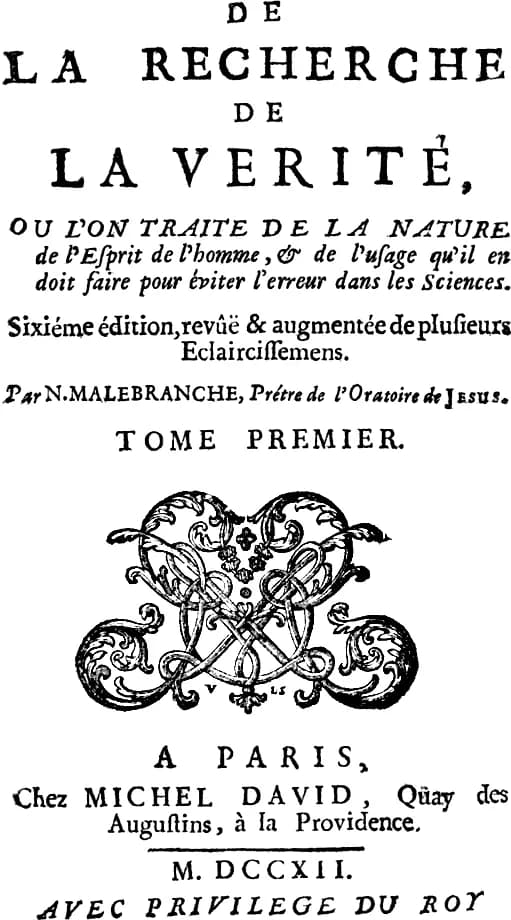
Malebranche's philosophical output was both extensive and influential, with several works becoming classics of philosophical literature. His "De la recherche de la vérité" (The Search for Truth) stands as one of his most important contributions, laying out his systematic approach to knowledge and reality. This work demonstrated his ability to combine rigorous philosophical analysis with clear, accessible writing.
Among his other significant works are "Méditations chrétiennes et métaphysiques" (Christian and Metaphysical Meditations) and "Traité de la nature et de la grâce" (Treatise on Nature and Grace), both of which explored the relationship between divine action and natural phenomena. His "Entretien d'un philosophe chrétien" showed his skill in philosophical dialogue, presenting complex ideas through accessible conversations.
Malebranche also engaged in scholarly debates through works like "Réponse à une dissertation de Mr. Arnauld," demonstrating his willingness to defend and refine his philosophical positions. His complete works, published as "Oeuvres complètes," preserve the full scope of his intellectual contributions for future generations.
Hoofstuk 5· Hoofstuk 5 van 6
Later Years and Continued Influence
Throughout his later years, Malebranche continued to develop and refine his philosophical system while maintaining his duties as an Oratorian priest. He remained intellectually active until the end of his life, engaging with contemporary philosophical debates and continuing to write on questions of metaphysics, epistemology, and theology.
His position in Paris allowed him to remain connected to the intellectual currents of his time while developing his distinctive philosophical voice. The respect he earned from both philosophical and theological communities testified to his success in bridging these sometimes conflicting domains of thought.
Hoofstuk 6· Hoofstuk 6 van 6
Legacy and Impact
Malebranche's influence on subsequent philosophical development cannot be overstated. His synthesis of Augustinian and Cartesian thought provided a model for how rational philosophy could be pursued within a framework of religious belief. His doctrines of occasionalism and vision in God influenced later philosophers, including George Berkeley and other idealist thinkers.
His approach to the relationship between divine action and natural causation contributed to ongoing debates about the nature of causation that continue in contemporary philosophy. The sophistication of his arguments and the originality of his solutions to fundamental philosophical problems ensure his place among the great thinkers of the early modern period.
Nicolas Malebranche died on October 13, 1715, in his beloved Paris, leaving behind a rich intellectual legacy that continues to reward careful study. His life's work stands as a testament to the possibility of pursuing rigorous philosophical inquiry while remaining faithful to deep religious convictions, making him a unique and valuable voice in the history of Western thought.
'n Lewe in momente
Die momente wat 'n lewe gevorm het
Gereelde Vrae
Gereelde vrae
Wanneer is Nicolas Malebranche oorlede?
Nicolas Malebranche is op 13 Oktober 1715 in Paris, France oorlede op die ouderdom van 77.
Waar is Nicolas Malebranche gebore?
Nicolas Malebranche is in Paris, France gebore op 6 Augustus 1638.
Waarvoor is Nicolas Malebranche die bekendste?
Nicolas Malebranche is die bekendste vir French philosopher.
Hoe oud was Nicolas Malebranche met sy/haar dood?
Nicolas Malebranche was 77 jaar oud met sy/haar dood.
Wat was Nicolas Malebranche se nasionaliteit?
Nicolas Malebranche was van France.
Tydlyn
Lewe in 'n oogopslag
Fotogalery
'n Lewe in prente
Klik enige polaroid om uit te brei · 23 foto's
QR-kode
Deel Hierdie Biografie
Druk en Deel
Skandeer om hierdie biografiebladsy te besoek. Druk vir geleenthede, uitstallings of opvoedkundige materiaal.