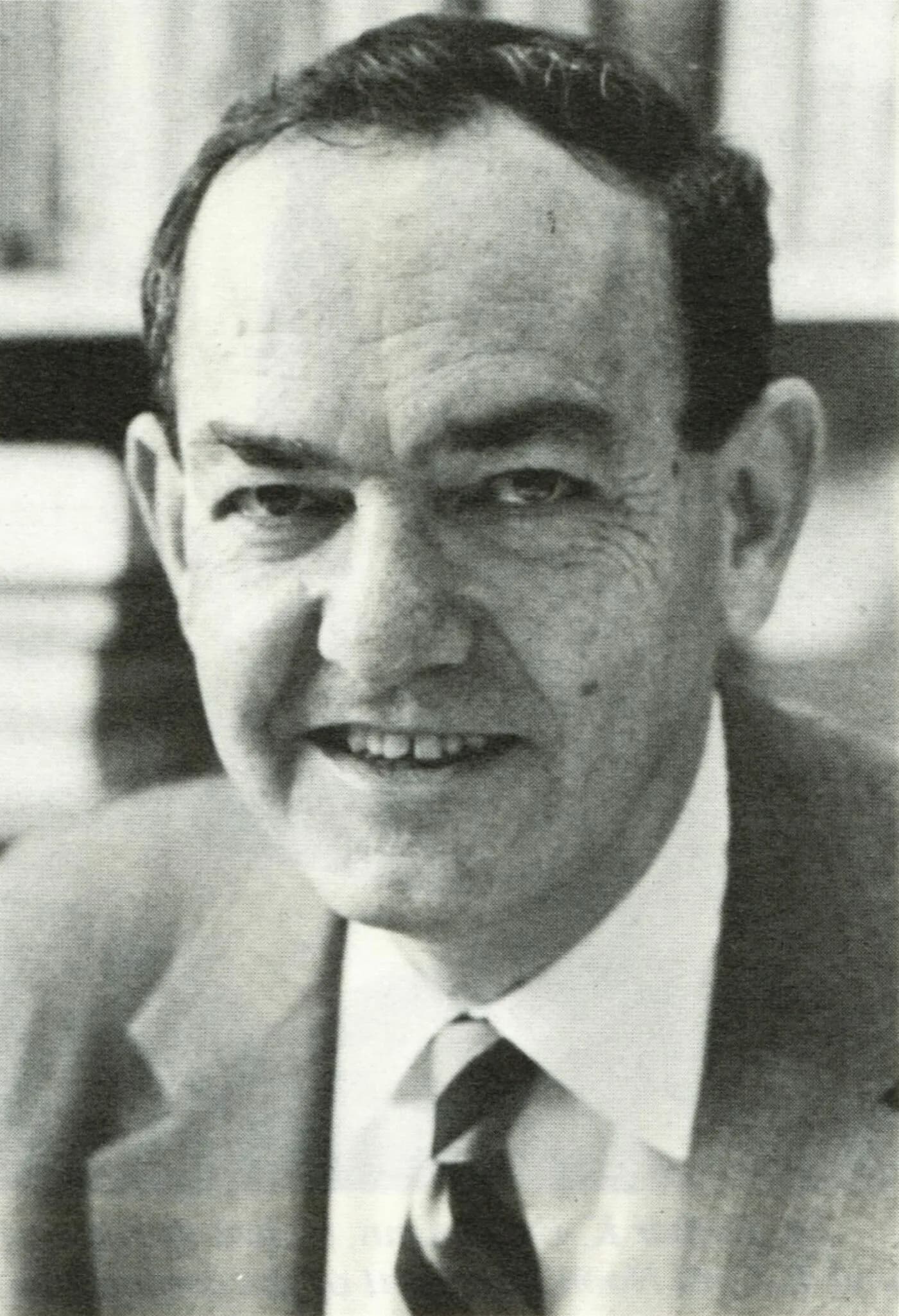
Gebore
June 15, 1916
Milwaukee, United States
Oorlede
February 9, 2001
Pittsburgh, United States
Bekend vir
American political scientist, economist, sociologist, and psychologist
Herbert Simon (1916–2001) was United States best known for American political scientist, economist, sociologist, and psychologist.
Herbert Simon (June 15, 1916 – February 9, 2001) was an American scholar, economist, and computer scientist from Milwaukee. He received the Nobel Memorial Prize for his pioneering research into organizational decision-making and is known for "bounded rationality." His work influenced fields from computer science to cognitive psychology.
Hoofstuk
Lewenshoofstukke
Hoofstuk 1 · 1916· Hoofstuk 1 van 8
Opening
Herbert Alexander Simon, born on June 15, 1916, and passing on February 9, 2001, was an extraordinary American scholar whose intellectual pursuits spanned an impressive array of fields. He was recognized as an American political scientist, economist, sociologist, and psychologist, also serving as a computer scientist, university teacher, and social scientist throughout his distinguished career. Simon's contributions significantly reshaped our understanding of human decision-making and organizational behavior, particularly through his theories of "bounded rationality" and "satisficing." His exceptional work earned him both the prestigious ACM Turing Award in 1975 and the Nobel Memorial Prize in Economic Sciences in 1978, solidifying his enduring legacy.
Hoofstuk 2 · 1916· Hoofstuk 2 van 8
Early Life and Origins
Herbert Simon began his journey in Milwaukee, United States, where he was born on June 15, 1916. Details of his early family life and specific upbringing are not extensively provided in public records, yet his environment clearly fostered a curiosity that led him to explore diverse academic disciplines. This foundational period undoubtedly influenced his later interdisciplinary approach to research and problem-solving, setting the stage for a career characterized by an eagerness to bridge conventional academic boundaries.
Hoofstuk 3· Hoofstuk 3 van 8
Career Beginnings
While specific details about his very first professional steps are not listed, Herbert Simon's broad range of professions suggests an early dedication to academic and scientific inquiry. His career quickly evolved to encompass roles as a political scientist, economist, and sociologist, indicating a foundational interest in human systems and behavior. These early explorations into various social sciences provided the rich intellectual groundwork for his later, more specialized, and highly influential research on decision-making. His initial work laid the foundation for his eventual focus on the mechanisms of human thought and organizational processes.
Hoofstuk 4 · 1975· Hoofstuk 4 van 8
Major Achievements and Career Highlights
Herbert Simon's career was marked by numerous significant achievements that brought him international recognition. In 1975, he, alongside Allen Newell, was honored with the ACM Turing Award, acknowledging their pioneering contributions to artificial intelligence and cognitive psychology. Just three years later, in 1978, Simon received the Nobel Memorial Prize in Economic Sciences for his significant research into the decision-making process within economic organizations. These two awards highlight his unique ability to integrate insights from diverse fields into a coherent and powerful framework for understanding complex human behavior. His concepts of "bounded rationality" and "satisficing" became cornerstones of modern economic and organizational theory.
Hoofstuk 5· Hoofstuk 5 van 8
Personal Life
Information regarding Herbert Simon's personal life, beyond his extensive professional and academic endeavors, is not detailed in the available records. His public persona was largely defined by his relentless pursuit of knowledge and his prolific contributions to scholarship across multiple disciplines. While specific family relationships or personal interests are not provided, his life's work stands as a testament to his dedication and intellectual rigor.
Hoofstuk 6 · 1984· Hoofstuk 6 van 8
Notable Works or Contributions
Herbert Simon's scholarly output was extensive, demonstrating an h-index of 5 with at least 9 notable papers. Among his most impactful works are "Protocol Analysis: Verbal Reports as Data" (1984), which garnered 7806 citations, and "Verbal reports as data" (1980), showing 4676 citations, reflecting their enduring influence. These publications highlight his expertise in cognitive processes and research methodology.
He continued to explore the complex aspects of human cognition with works like "How to Study Thinking in Everyday Life: Contrasting Think-Aloud Protocols With Descriptions and Explanations of Thinking" (1998, 673 citations). His research also included "Context effects in letter perception: comparison of two theories" (1988, 77 citations) and "Significant Samples : The Psychological Study of Eminent Individuals" (2004, 62 citations). His primary research interest consistently revolved around decision-making processes within organizations, a theme unifying his diverse academic pursuits.
Hoofstuk 7 · 1998· Hoofstuk 7 van 8
Later Years
Herbert Simon remained intellectually active throughout his later years, continuing to publish significant research, as evidenced by his 1998 publication, "How to Study Thinking in Everyday Life." He concluded his remarkable life on February 9, 2001, in Pittsburgh, United States. Even after his passing, his work continued to be recognized and cited, with "Significant Samples: The Psychological Study of Eminent Individuals" appearing posthumously in 2004, showcasing the lasting relevance of his inquiries. His death marked the end of an era for interdisciplinary scholarship.
Hoofstuk 8· Hoofstuk 8 van 8
Legacy and Impact
The legacy of Herbert Simon is vast and continues to resonate deeply across several academic fields. His ideas significantly influenced computer science, shaping early research in artificial intelligence and cognitive modeling. In economics, his theories of "bounded rationality" and "satisficing" offered crucial alternatives to traditional rational choice models, providing a more realistic understanding of economic behavior. Furthermore, his work shaped cognitive psychology, particularly through his methods for studying human thought processes. Simon's unique ability to synthesize knowledge from seemingly disparate disciplines ensures his place as a seminal figure whose insights continue to inform research and practice today.
'n Lewe in momente
Die momente wat 'n lewe gevorm het

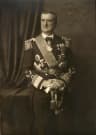
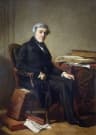
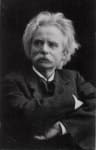
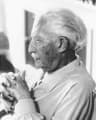
![Herbert Simon - Collection of Carnegie Mellon University: Herbert A. Simon - commissioned portrait, "Herbert[1] asked me to do this portrait because he felt the first one Image:Herbert simon tan d.jpg](/_next/image?url=https%3A%2F%2Fcdn.whowasthisguy.com%2Fgallery_wikimedia_commons_1784820221511_1_8510be3ac5.webp&w=1920&q=75)

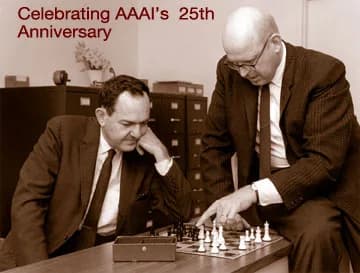
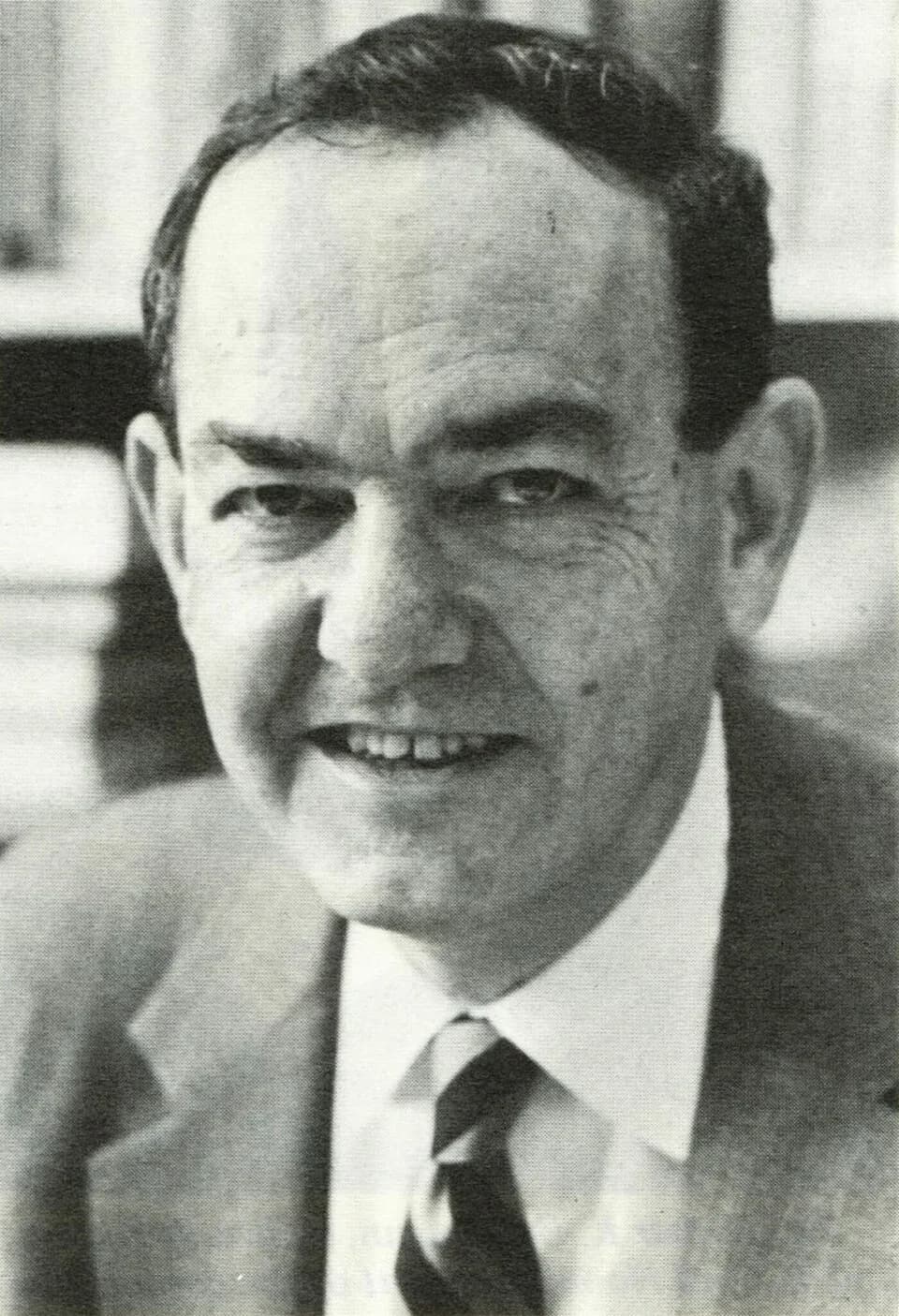
Gereelde Vrae
Gereelde vrae
Wanneer is Herbert Simon oorlede?
Herbert Simon is op 9 Februarie 2001 in Pittsburgh, United States oorlede op die ouderdom van 84.
Waar is Herbert Simon gebore?
Herbert Simon is in Milwaukee, United States gebore op 15 Junie 1916.
Waarvoor is Herbert Simon die bekendste?
Herbert Simon is die bekendste vir American political scientist, economist, sociologist, and psychologist.
Hoe oud was Herbert Simon met sy/haar dood?
Herbert Simon was 84 jaar oud met sy/haar dood.
Wat was Herbert Simon se nasionaliteit?
Herbert Simon was van United States.
Tydlyn
Lewe in 'n oogopslag
Fotogalery
'n Lewe in prente
Klik enige polaroid om uit te brei · 21 foto's
QR-kode
Deel Hierdie Biografie
Druk en Deel
Skandeer om hierdie biografiebladsy te besoek. Druk vir geleenthede, uitstallings of opvoedkundige materiaal.