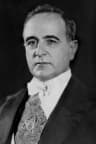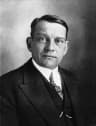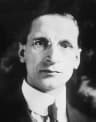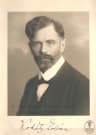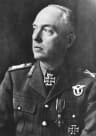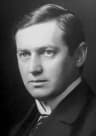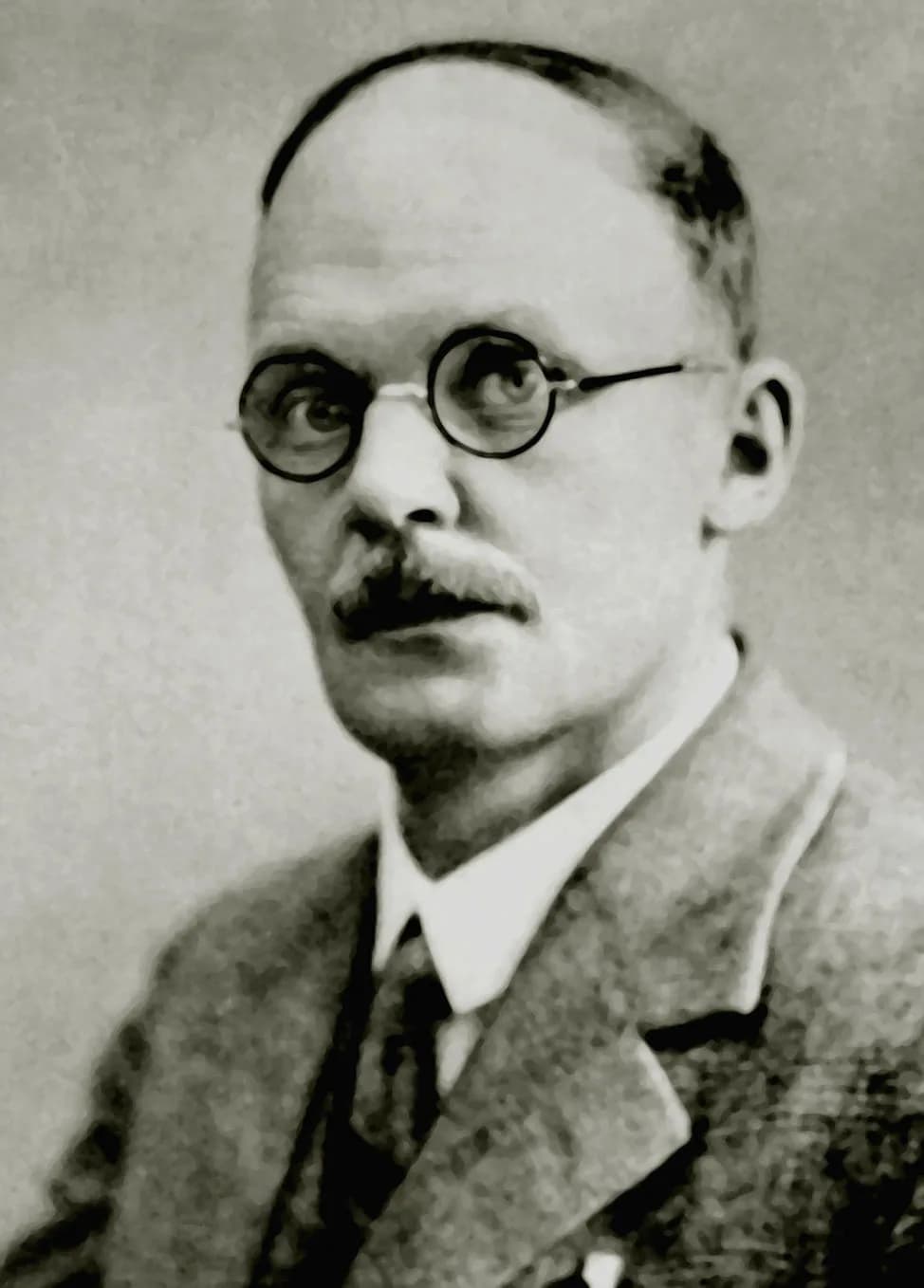
Gebore
September 30, 1882
Neustadt an der Weinstraße, Germany
Oorlede
September 24, 1945
Potsdam, Germany
Bekend vir
German physicist
Hans Geiger (1882–1945) was Germany best known for German physicist.
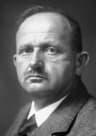
Hans Geiger (September 30, 1882 – September 24, 1945) was a German physicist known for inventing the Geiger counter. His work also led to the discovery of the atomic nucleus through the Rutherford scattering experiments. His contributions significantly advanced the field of nuclear physics.
Hoofstuk
Lewenshoofstukke
Hoofstuk 1 · 1882· Hoofstuk 1 van 7
Opening Tribute
Today, we honor the life and extraordinary contributions of Johannes "Hans" Wilhelm Geiger, a renowned German physicist. Born on September 30, 1882, and passing on September 24, 1945, Hans Geiger dedicated his career to exploring the fundamental nature of matter. His pioneering work as a scientist, inventor, and university teacher significantly shaped our understanding of the atomic world.
Hoofstuk 2· Hoofstuk 2 van 7
Early Life and Origins
Hans Geiger began his life's journey in Neustadt an der Weinstraße, Germany. Growing up in this picturesque region, he developed an early curiosity for the natural world. This foundational period undoubtedly influenced his path toward a distinguished scientific career.
His early education set the stage for rigorous academic pursuits. Though specific details of his family life are not widely documented, his upbringing fostered an environment where scientific inquiry could flourish. This formative period prepared him for the advanced studies that would lead to his significant discoveries.
Hoofstuk 3· Hoofstuk 3 van 7
Career Beginnings
Hans Geiger pursued a career as an experimental physicist, a field that demanded precision and meticulous observation. His early work involved deep engagement with scientific instruments and laboratory techniques. These initial experiences honed his skills, making him a formidable figure in experimental science.
He quickly established himself within the scientific community. His commitment to empirical investigation became a hallmark of his professional approach. This dedication laid the groundwork for the significant research collaborations that would define his most famous achievements.
Hoofstuk 4· Hoofstuk 4 van 7
Major Achievements and Career Highlights
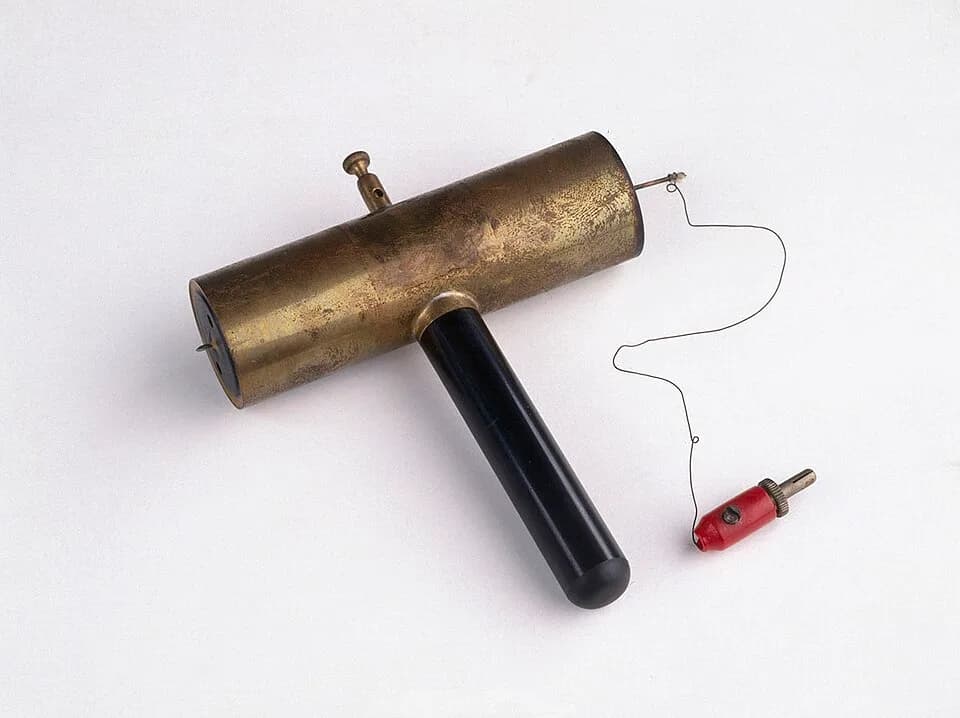
Among his most enduring legacies is the invention of the Geiger counter, a revolutionary device for detecting ionizing radiation. This invention, developed in the early 20th century, transformed fields from medical diagnostics to environmental monitoring. It allowed scientists to measure radiation with unprecedented accuracy and portability.
Geiger also played a crucial role in the famous Rutherford scattering experiments. These experiments, conducted alongside Ernest Rutherford, provided critical evidence for the existence of the atomic nucleus. Their findings dramatically altered the prevailing model of atomic structure, moving science closer to our modern understanding.
Another significant contribution was the Bothe–Geiger coincidence experiment. This collaboration confirmed the principle of conservation of energy in light-particle interactions. Such meticulous experimental verification was essential for solidifying foundational theories in quantum mechanics.
Hoofstuk 5· Hoofstuk 5 van 7
Notable Works or Contributions
The Geiger counter stands as a clear example of his inventive genius, making the invisible world of radiation detectable. This instrument has since become indispensable in countless scientific and industrial applications. Its development underscored Geiger's ability to translate complex theoretical physics into practical tools.
His involvement in the Rutherford scattering experiments yielded significant insights into atomic structure. The discovery of the atomic nucleus, often referred to as the Rutherford model, fundamentally redefined how scientists perceived the atom. This work remains a cornerstone of nuclear physics education and research.
The Bothe–Geiger coincidence experiment showcased his mastery of experimental design. By meticulously observing coincidences in particle detections, he helped confirm a vital principle of energy conservation at the quantum level. This experiment demonstrated his keen analytical mind and dedication to empirical proof.
Hoofstuk 6 · 1945· Hoofstuk 6 van 7
Later Years
As his career progressed, Hans Geiger continued to contribute as a laboratory director and university teacher. Even as the world faced turbulent times, he remained committed to scientific inquiry and education. He passed away on September 24, 1945, in Potsdam, Germany, leaving behind a legacy of significant scientific advancements.
Hoofstuk 7· Hoofstuk 7 van 7
Legacy and Impact
Hans Geiger's work fundamentally reshaped the field of nuclear physics. His inventions and experimental confirmations provided the tools and evidence necessary for deeper explorations into atomic and subatomic phenomena. The Geiger counter, in particular, continues to be a widely recognized and utilized instrument globally.
His contributions laid essential groundwork for future generations of physicists. The discovery of the atomic nucleus and the verification of energy conservation are cornerstones of modern physics. Hans Geiger's name remains synonymous with innovation and rigorous scientific investigation.
'n Lewe in momente
Die momente wat 'n lewe gevorm het
Gereelde Vrae
Gereelde vrae
Wanneer is Hans Geiger oorlede?
Hans Geiger is op 24 September 1945 in Potsdam, Germany oorlede op die ouderdom van 62.
Waar is Hans Geiger gebore?
Hans Geiger is in Neustadt an der Weinstraße, Germany gebore op 30 September 1882.
Waarvoor is Hans Geiger die bekendste?
Hans Geiger is die bekendste vir German physicist.
Hoe oud was Hans Geiger met sy/haar dood?
Hans Geiger was 62 jaar oud met sy/haar dood.
Wat was Hans Geiger se nasionaliteit?
Hans Geiger was van Germany.
Tydlyn
Lewe in 'n oogopslag
- 1882
Opening Tribute
- 1945
Later Years
Fotogalery
'n Lewe in prente
Klik enige polaroid om uit te brei · 21 foto's
QR-kode
Deel Hierdie Biografie
Druk en Deel
Skandeer om hierdie biografiebladsy te besoek. Druk vir geleenthede, uitstallings of opvoedkundige materiaal.