Gebore
September 4, 1768
Saint-Malo, France
Oorlede
July 4, 1848
former 10th arrondissement of Paris, France
Bekend vir
French writer, politician and historian
François-Auguste-René de Chateaubriand (1768–1848) was France best known for French writer, politician and historian.
François-Auguste-René de Chateaubriand (September 4, 1768 – July 4, 1848) was a French writer, politician, and historian from Saint-Malo, France. He served as Minister of Foreign Affairs and influenced 19th-century French literature as a key Romantic figure. His diplomatic roles and extensive writings left a lasting cultural and political impact.
'n Lewe in momente
Die momente wat 'n lewe gevorm het

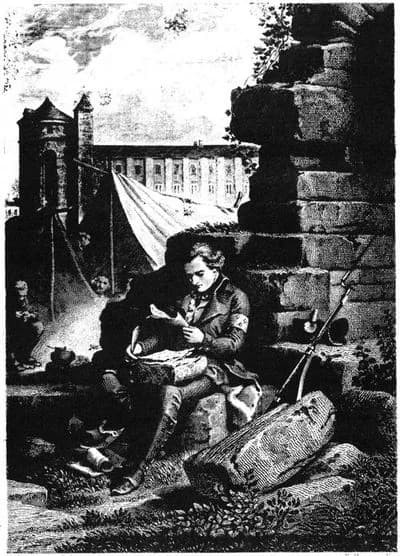
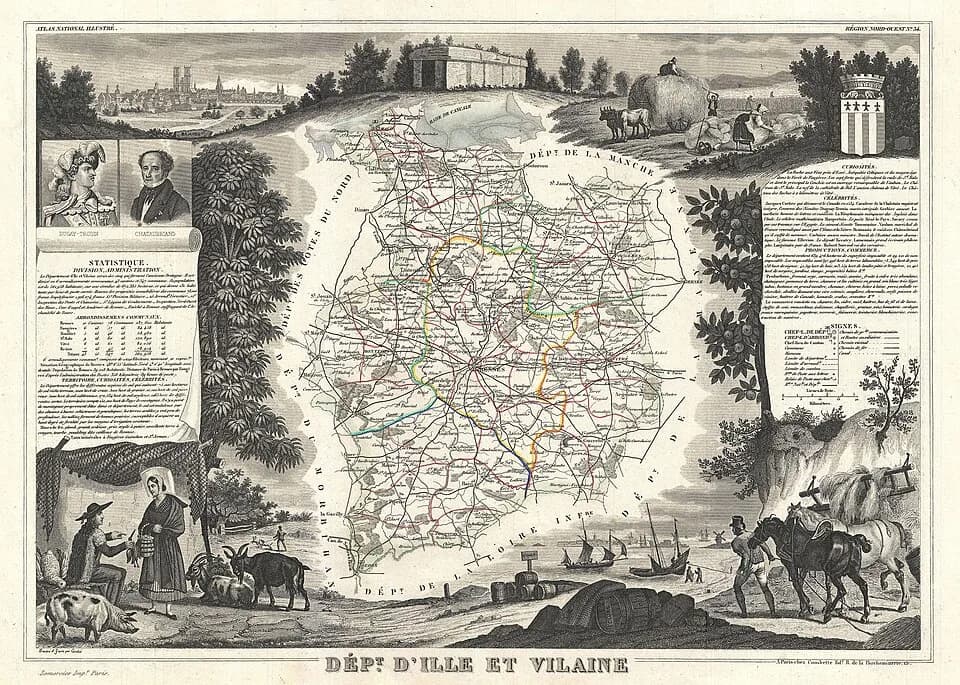
Hoofstuk
Lewenshoofstukke
Hoofstuk 1 · 1768· Hoofstuk 1 van 8
Opening
François-Auguste-René de Chateaubriand (1768-1848) was an eminent French writer, politician, and historian, whose extensive work profoundly influenced French literature of the 19th century. Recognized as a pivotal figure in the Romantic movement, he skillfully combined literary artistry with a significant career in diplomacy and government. His life reflected the tumultuous political shifts of his era, which he eloquently captured in his numerous writings and public service.
Hoofstuk 2 · 1768· Hoofstuk 2 van 8
Early Life and Origins
Born on September 4, 1768, in the historic port city of Saint-Malo, France, François-René de Chateaubriand hailed from an ancient aristocratic family originating from Brittany. This noble lineage deeply influenced his identity, instilling in him a strong sense of tradition and a committed royalist political disposition from a young age. His early environment fostered an appreciation for history and culture, setting the stage for his future intellectual pursuits.
Hoofstuk 3· Hoofstuk 3 van 8
Career Beginnings
Chateaubriand's professional journey began with diverse roles, including military service, before he fully embraced his calling as a writer. He quickly distinguished himself as a poet, journalist, and essayist, translating his early life experiences and observations into compelling literary forms. These initial endeavors were crucial in developing his distinctive voice and establishing the foundations for his dual career in both literature and politics.
Hoofstuk 4 · 1822· Hoofstuk 4 van 8
Major Achievements and Career Highlights
His political career reached its zenith when he served as the Minister of Foreign Affairs for France from 1822 to 1824, a testament to his diplomatic acumen and influence. Prior to this high-ranking position, Chateaubriand represented France as an ambassador to several key European powers. He held diplomatic postings in Sweden, Prussia, the United Kingdom, and the Papal States, demonstrating his significant engagement in international relations and contributing to France's global standing.
Hoofstuk 5· Hoofstuk 5 van 8
Personal Life
While explicit details of Chateaubriand's personal relationships are not extensively provided, his aristocratic upbringing and staunch royalist convictions shaped his worldview and public persona. His life was largely dedicated to his literary craft and political responsibilities, which often intertwined. He frequently drew upon his travels and personal reflections to enrich his expansive body of work, making his experiences a vital part of his creative output.
Hoofstuk 6· Hoofstuk 6 van 8
Notable Works and Contributions
Chateaubriand's literary output was extensive and varied, securing his place as one of France's most important writers. Among his significant works are "Hodoiporiko," a journey narrative, and "Recollections of Italy, England and America," which offered keen observations on different cultures and societies. His "Voyages en Amérique, en Italie, etc." further showcased his experiences as a traveler and observer of the world.
His political insights were articulated in works such as "Mémoire sur la captivité de madame la duchesse de Berry" and "De l'abolition de la censure," which engaged directly with the pressing issues of his time. He also authored "De Buonaparte, des Bourbons, et de la nécessité de se rallier a nos princes légitimes..." a reflection of his royalist loyalties. These writings positioned him as a commentator on contemporary political events.
Without doubt, "Mémoires d'outre-tombe" (Memoirs from Beyond the Grave) stands as his magnum opus, a comprehensive autobiography that offers unparalleled insight into his life, the French Revolution, and the subsequent Bourbon Restoration. Other notable publications include "Remarques sur les affaires du moment," "Guía literaria de Roma," and "Du rétablissement de la censure par l'ordonnance du 24 juin 1827," highlighting his diverse interests and extensive literary skill.
Hoofstuk 7· Hoofstuk 7 van 8
Later Years
In his final decades, Chateaubriand remained a prolific writer, dedicating much of his time to crafting his monumental "Mémoires d'outre-tombe." He continued to reflect on the historical transformations he had witnessed and played a part in. Despite the changes in the political climate, he maintained his intellectual vigor and literary productivity, cementing his legacy through his ongoing contributions.
Hoofstuk 8 · 1848· Hoofstuk 8 van 8
Legacy and Impact
François-Auguste-René de Chateaubriand passed away on July 4, 1848, in the former 10th arrondissement of Paris, France, leaving behind an indelible mark on French letters and politics. His pioneering approach to prose and his exploration of themes such as nature, melancholy, and individualism were foundational to the development of 19th-century Romanticism. Through his roles as a writer, politician, and diplomat, he profoundly influenced generations, ensuring his enduring relevance in literary and historical discourse.
Gereelde Vrae
Gereelde vrae
Wanneer is François-Auguste-René de Chateaubriand oorlede?
François-Auguste-René de Chateaubriand is op 4 Julie 1848 in former 10th arrondissement of Paris, France oorlede op die ouderdom van 79.
Waar is François-Auguste-René de Chateaubriand gebore?
François-Auguste-René de Chateaubriand is in Saint-Malo, France gebore op 4 September 1768.
Waarvoor is François-Auguste-René de Chateaubriand die bekendste?
François-Auguste-René de Chateaubriand is die bekendste vir French writer, politician and historian.
Hoe oud was François-Auguste-René de Chateaubriand met sy/haar dood?
François-Auguste-René de Chateaubriand was 79 jaar oud met sy/haar dood.
Wat was François-Auguste-René de Chateaubriand se nasionaliteit?
François-Auguste-René de Chateaubriand was van France.
Tydlyn
Lewe in 'n oogopslag
Fotogalery
'n Lewe in prente
Klik enige polaroid om uit te brei · 48 foto's
QR-kode
Deel Hierdie Biografie
Druk en Deel
Skandeer om hierdie biografiebladsy te besoek. Druk vir geleenthede, uitstallings of opvoedkundige materiaal.