Biografie · King of Spain (1784–1833) (r. 1808; 1813–1833)

8 min read · 1,534 words

Ferdinand VII of Spain

1784 · 1833

Jare geleef
48
Foto's
50
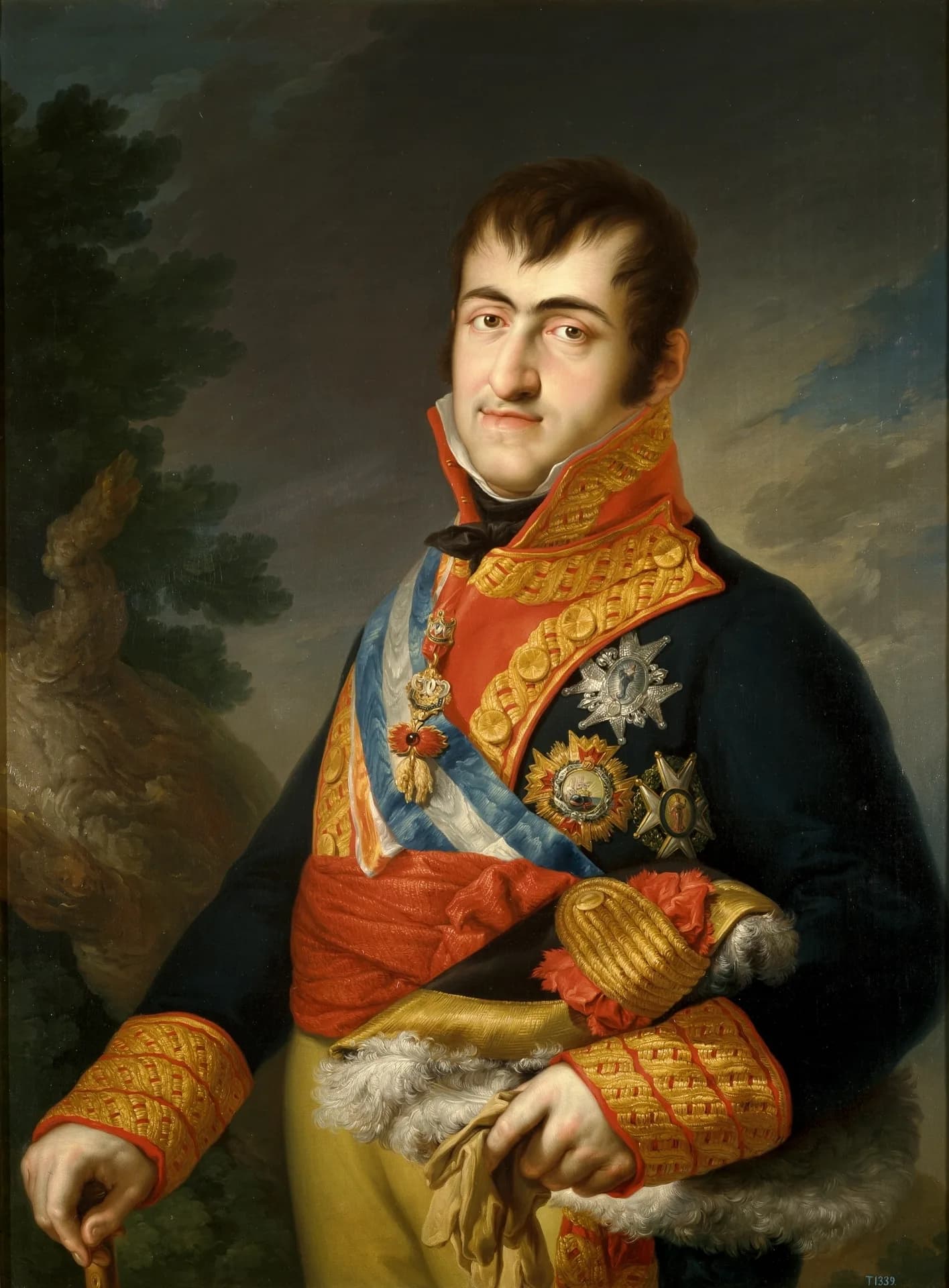
Ferdinand VII of Spain portrait

Gebore

October 14, 1784

Royal Monastery of San Lorenzo de El Escorial, Spain

Oorlede

September 29, 1833

Royal Palace of Madrid, Spain

Bekend vir

King of Spain (1784–1833) (r. 1808; 1813–1833)

Ferdinand VII of Spain (October 14, 1784 – September 29, 1833) was a ruler from Spain. He reigned as King of Spain in two periods, first in 1808 and then from 1813 until his death in 1833. His rule spanned a crucial and complex time in Spanish history.

'n Lewe in momente

Die momente wat 'n lewe gevorm het
Geskryf in English

Hoofstuk

Lewenshoofstukke

Hoofstuk 1 · 1784· Hoofstuk 1 van 6

Opening

Ferdinand VII of Spain (October 14, 1784 – September 29, 1833), a significant ruler whose profession was King of Spain, navigated the tumultuous early 19th century, leaving a lasting mark on his nation's history. His life, spanning from his birth in the Royal Monastery of San Lorenzo de El Escorial to his death in the Royal Palace of Madrid, encompassed periods of profound political change and challenges to royal authority. He is remembered for two distinct reigns: a brief period in 1808, followed by a more extended rule from 1813 until his passing in 1833, both of which unfolded against a backdrop of continental shifts. These years saw him transition from a figure initially hailed with hope to one later viewed with considerable controversy, underscoring the complexities of his royal tenure.

As monarch, Ferdinand VII presided over Spain during a period of immense internal strife and external pressures, shaping the course of the Spanish state for generations to come. His reign witnessed the profound consequences of foreign occupation, the struggle for national sovereignty, and the persistent internal debates over political systems. Understanding his time as king offers deep insights into the challenges faced by traditional monarchies during an age of burgeoning liberalism and revolutionary fervor. His story is intrinsically linked to the broader European developments of his era, reflecting the intricate power dynamics and ideological conflicts that defined the early 1800s.

Hoofstuk 2 · 1784· Hoofstuk 2 van 6

Early Life and Origins

Ferdinand VII of Spain was born on October 14, 1784, within the hallowed confines of the Royal Monastery of San Lorenzo de El Escorial, a site deeply symbolic of Spanish monarchy and faith. This majestic location, situated in the Guadarrama mountains, served not only as a royal palace but also as a monastery, basilica, and pantheon for Spanish royalty, thus imbuing his birthplace with profound historical and dynastic significance. His birth here immediately placed him within the highest echelons of Spanish society, destining him from his earliest moments for a life of governance and royal responsibility. The very atmosphere of El Escorial, with its austere grandeur, would have surrounded the young prince, shaping his understanding of his heritage and future duties.

Growing up within the Spanish court, Ferdinand's early years were spent under the shadow of his royal parents, absorbing the traditions and protocols of the Bourbon dynasty. While specific details of his upbringing and education are not provided, it can be inferred that his instruction would have been rigorous, focusing on the classical education deemed appropriate for a future sovereign, including languages, history, and military strategy. His formative experiences within the opulent yet constrained environment of the palace undoubtedly prepared him for the formidable challenges he would later face as the ultimate ruler of Spain. The expectations placed upon a prince of his standing were immense, setting the stage for his eventual ascension to the throne during a particularly volatile period in European history.

Hoofstuk 3 · 1808· Hoofstuk 3 van 6

Career Beginnings

Ferdinand VII's initial ascension to the throne occurred under extraordinarily challenging circumstances in 1808, marking the tumultuous beginning of his career as a ruler. This brief period of kingship was characterized by the immediate and overwhelming influence of external powers, fundamentally altering the traditional mechanisms of Spanish succession. The political environment in Spain at this time was deeply fractured, with popular discontent rising against the existing administration and its foreign policy decisions. His first reign thus began not in triumph, but amidst severe political instability and national crisis, hinting at the difficulties that would define much of his time as monarch.

During this initial phase, Ferdinand VII was widely known and referred to as *el Deseado*, meaning "the Desired One," reflecting the hopes and aspirations the Spanish populace placed upon him. This epithet underscored the widespread public longing for a change in leadership and a strong monarch who could restore order and national dignity. The popular sentiment that hailed him as *el Deseado* speaks volumes about the collective desire for a leader capable of navigating the kingdom through its profound political and social upheavals. This early popularity, however, would prove to be a complex and evolving aspect of his public image, significantly shifting over the course of his subsequent rule.

Hoofstuk 4 · 1808· Hoofstuk 4 van 6

Major Achievements and Career Highlights

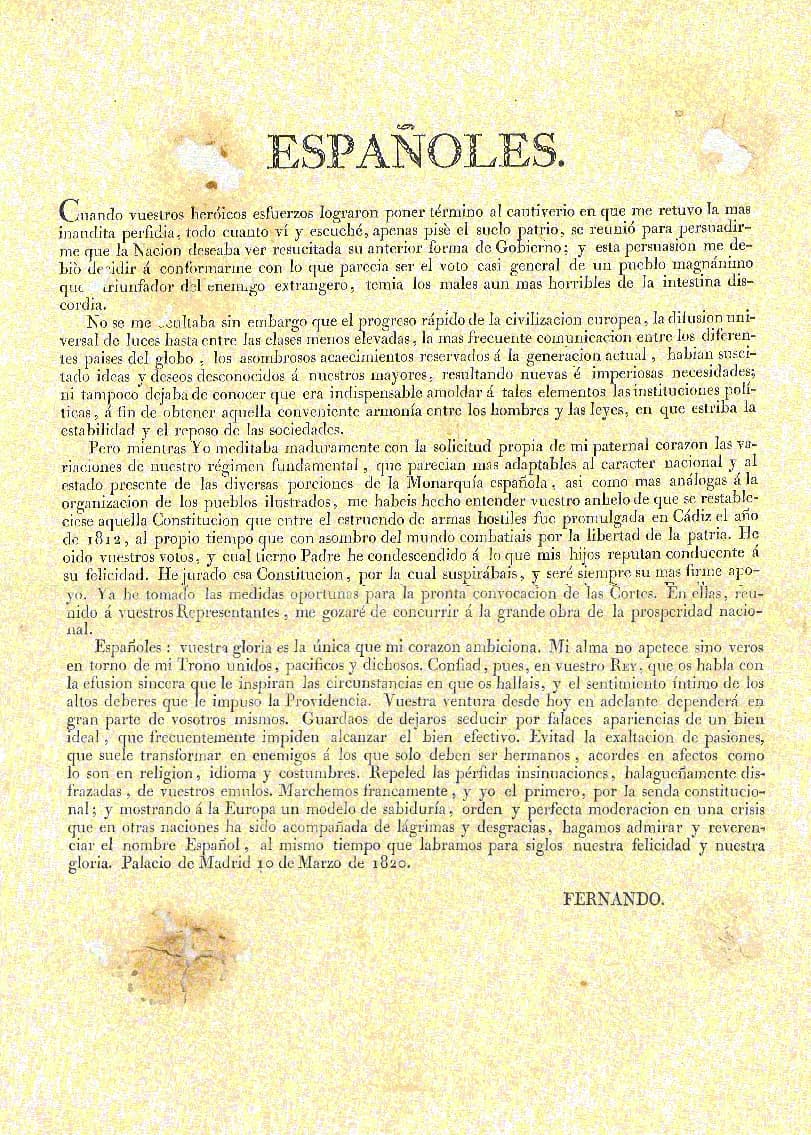
Ferdinand VII's career as King of Spain is defined by two distinct and significant periods of rule: a short reign in 1808 and a more substantial tenure from 1813 until his death in 1833. The return to the throne in 1813, following a period of intense national struggle against foreign occupation, represented a restoration of the Bourbon monarchy, yet it was met with a complex array of expectations and challenges. This second, longer reign would see him attempt to reassert royal authority and consolidate power in a nation deeply transformed by war and nascent liberal ideas. His efforts to re-establish traditional order were a defining characteristic of this prolonged period of his kingship.

A significant aspect of his rule involved the navigation of Spain's internal political landscape, marked by persistent tensions between absolutist and liberal factions. Ferdinand VII's decisions during these years profoundly influenced the direction of Spanish governance, from the reintroduction of the Inquisition to the suppression of liberal movements, showcasing his commitment to a more traditional form of monarchy. His actions as sovereign were consistently aimed at reinforcing the crown's prerogative and stemming the tide of revolutionary sentiment that had swept across Europe. These choices, while controversial, were central to his philosophy of governance and his understanding of royal duty.

The transition in his public perception from *el Deseado* to *el Rey Felón* (the "Felon King" or "Traitor King") after 1813 represents a profound shift in his relationship with his subjects and is a major highlight in understanding his political standing. This change in epithet signifies the disillusionment felt by many, particularly those who had hoped for a more liberal constitutional monarchy upon his return. His long second reign, therefore, was not merely a period of static rule, but a dynamic era of conflict over the very definition of Spanish nationhood and the powers of its sovereign. His rule continued until his passing, leaving a legacy deeply intertwined with the ideological struggles of his time.

Hoofstuk 5 · 1813· Hoofstuk 5 van 6

Later Years

Ferdinand VII's later years, spanning from 1813 until his death in 1833, were characterized by the complex task of governing a nation grappling with its post-war identity and profound ideological divisions. His court at the Royal Palace of Madrid, the very place of his death, became the center of a continued struggle to stabilize the Spanish crown and restore order after years of upheaval. During this period, the King's efforts to centralize power and uphold absolutist principles often brought him into direct conflict with burgeoning liberal movements. His policies during these final decades significantly shaped the political atmosphere that would define Spain for years to come.

The epithet *el Rey Felón*, which became associated with him during these later years, reflects the growing opposition and criticism he faced from segments of the population. This stark contrast to his earlier designation as *el Deseado* underscores the evolving political sentiment and the deep rifts within Spanish society regarding the nature of governance. His reign concluded on September 29, 1833, at the Royal Palace of Madrid, bringing to an end a period of significant royal authority and marking a transition for the Spanish monarchy into new political landscapes. His passing signaled the end of an era defined by his singular leadership and determination to uphold traditional monarchical power.

Hoofstuk 6 · 1813· Hoofstuk 6 van 6

Legacy and Impact

The legacy of Ferdinand VII of Spain is complex and highly debated, reflecting the turbulent era in which he ruled as monarch. His two distinct reigns, particularly the long period from 1813 to 1833, profoundly influenced the political trajectory of Spain, setting the stage for continued conflicts between traditionalism and reform. He is remembered as a ruler who, after being initially hailed with immense popular hope as *el Deseado*, later faced considerable condemnation from various factions, earning the contrasting title of *el Rey Felón*. This transformation in public perception stands as a powerful symbol of the ideological battles that characterized his time on the throne.

Ferdinand VII's impact on Spain was primarily felt through his persistent efforts to restore absolute monarchy and to suppress liberal movements that sought to establish constitutional governance. His policies had far-reaching consequences, contributing to a deeply polarized political environment that would persist long after his death. His determination to maintain royal prerogative, especially after his return from exile, solidified his image as a staunch defender of the old order in a rapidly changing world. These actions underscore his unwavering commitment to his understanding of kingship and his dynastic responsibilities.

Ultimately, Ferdinand VII's rule, culminating in his death in the Royal Palace of Madrid, left Spain with a complex inheritance, including a deeply entrenched conflict over national identity and political structure. His reign represents a critical chapter in Spanish history, marked by royal resilience, popular aspirations, and ideological clashes. The story of Ferdinand VII remains central to understanding the forces that shaped modern Spain, a testament to the enduring influence of its rulers. His life continues to be studied as a key example of monarchical power navigating the revolutionary currents of the early 19th century.

Fotogalery

'n Lewe in prente

Klik enige polaroid om uit te brei · 45 foto's

QR-kode

Deel Hierdie Biografie

Druk en Deel

Skandeer om hierdie biografiebladsy te besoek. Druk vir geleenthede, uitstallings of opvoedkundige materiaal.
Wie was Ferdinand VII of Spain? | WhoWasThisGuy.com